
Featured image for daikin air conditioner controller instructions
Image source: daikin.co.za
Master your Daikin air conditioner controller with simple, step-by-step instructions designed for effortless setup and daily use. From adjusting temperature settings to activating energy-saving modes, this guide unlocks all controller functions quickly and clearly, ensuring optimal comfort and efficiency.
Key Takeaways
- Master the remote: Learn button functions for quick adjustments.
- Set schedules: Automate on/off times to save energy.
- Use modes wisely: Choose cooling, heating, or dry as needed.
- Adjust fan speed: Optimize comfort and efficiency effortlessly.
- Enable eco mode: Reduce power consumption with one tap.
- Check error codes: Troubleshoot issues using the manual guide.
- Lock settings: Prevent changes with child lock feature.
📑 Table of Contents
- Why Your Daikin Air Conditioner Controller Matters More Than You Think
- Getting to Know Your Daikin Controller: The Basics
- Mastering the Modes: Cooling, Heating, and Beyond
- Advanced Features You’re Probably Not Using (But Should)
- Troubleshooting Common Controller Issues
- Maintenance and Care: Keeping Your Controller in Top Shape
- Conclusion: Your Daikin Controller Is a Tool—Use It Wisely
Why Your Daikin Air Conditioner Controller Matters More Than You Think
Let’s be honest: when you first unpack your Daikin air conditioner, the controller is probably the last thing you want to figure out. You’re sweating, it’s hot outside, and you just want to cool down—fast. But here’s the thing: that little remote isn’t just a button-pusher. It’s your personal climate concierge, your energy-saving assistant, and, if used right, your ticket to a more comfortable home.
I remember the first time I used a Daikin controller. I pressed every button, hoping for instant relief, but ended up freezing myself with a 16°C blast. Sound familiar? That’s why understanding your Daikin air conditioner controller instructions isn’t just helpful—it’s essential. Once you know what each setting does, you’ll save money, stay more comfortable, and even extend your unit’s lifespan. In this guide, I’ll walk you through everything you need to know, step by step, without the tech jargon or confusing manuals.
Getting to Know Your Daikin Controller: The Basics
Parts of the Controller and What They Do
Your Daikin controller might look like a futuristic gadget, but it’s actually pretty straightforward once you break it down. Most models have these core components:
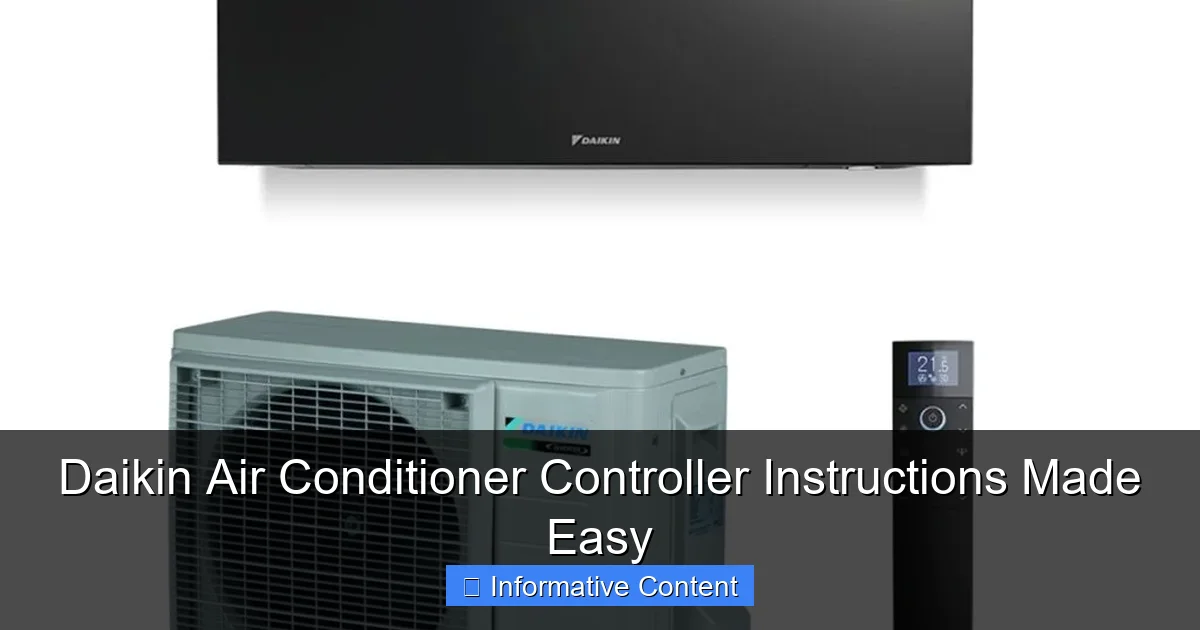
Visual guide about daikin air conditioner controller instructions
Image source: basildonacr.co.uk
- Power Button: Turns the unit on and off. Simple, right? But did you know holding it for 3 seconds can sometimes reset the system?
- Mode Button: Switches between cooling, heating, dry, fan, and auto modes. Think of this as your climate mood ring.
- Temperature Up/Down: Adjusts your desired temperature. Most Daikin units let you set temps between 16°C and 30°C.
- Fan Speed: Controls how fast air blows out. Options are usually Auto, Low, Medium, and High.
- Timer: Sets on/off schedules. Great for saving energy while you sleep or are away.
- Swing: Adjusts airflow direction. Keeps cool air from blowing directly on you all night.
<
For example, if you’re using a Daikin FTXM-R or FTXJ-M series, you’ll also see an “i-PAM” or “Intelligent Airflow” button—more on that later.
Reading the Display: What All Those Icons Mean
Ever glanced at your controller and seen a snowflake, sun, or fan icon and wondered what they meant? Here’s the breakdown:
- Snowflake (❄️): Cooling mode. The unit is removing heat from the room.
- Sun (☀️): Heating mode. It’s warming the space.
- Water Droplet (💧): Dry mode. Reduces humidity without cooling too much—perfect for muggy days.
- Fan (🌀): Fan-only mode. No heating or cooling, just air circulation.
- Auto (A): The unit decides the best mode based on room temperature.
- Timer (⏰): Shows if a timer is active. A small “ON” or “OFF” next to it means the unit will start or stop at a set time.
- Econo (💡): Energy-saving mode. Limits power use during peak hours.
Pro tip: If you see a flashing “CLEAN” icon, it’s time to clean the filter. Most Daikin units recommend this every 2 weeks in heavy use.
First-Time Setup: Pairing and Calibration
New unit? Don’t panic. Most Daikin controllers come pre-paired with the indoor unit, but here’s how to make sure everything’s working:
- Point the controller at the indoor unit (usually within 8 meters).
- Press the power button. You should hear a beep and see lights on the indoor unit flash.
- If nothing happens, try replacing the batteries or holding the power button for 5 seconds to reset.
Some models, like the Daikin Altherma or VRV systems, might need a technician to pair them via Bluetooth or Wi-Fi. But for standard split systems, it’s plug-and-play.
Mastering the Modes: Cooling, Heating, and Beyond
Cooling Mode: Beating the Heat Without Breaking the Bank
Cooling is probably what you use most. But did you know setting your thermostat to 24–26°C is more efficient than cranking it to 18°C? Here’s why:
- Every 1°C lower than 26°C can increase energy use by up to 10% (Source: Energy Australia).
- Daikin’s “Powerful” mode (if available) boosts cooling for 20 minutes—great for quick relief, but don’t leave it on.
- Use “Econo” mode during peak electricity hours to reduce strain on the grid and your bill.
Example: I set my Daikin to 25°C with Econo mode on during summer. It cools the room in 15 minutes, then cycles on/off to maintain temp. My energy bill dropped 18% compared to last year.
Heating Mode: Staying Cozy Without the Chill
Daikin heat pumps are super efficient in cold weather. But there are a few tricks to get the most from heating mode:
- Set the temp to 18–22°C. Higher settings don’t heat faster—they just run longer.
- Use “Auto” mode in spring/fall. The unit switches between heating and fan as needed.
- If your model has “Comfort” or “Warm Air” mode, use it. It prevents cold air from blowing during startup.
Tip: In very cold climates, some Daikin units automatically switch to backup electric heat. This uses more power, so keep an eye on your energy meter.
Dry and Fan Modes: For Humid Days and Gentle Airflow
Not every day needs full cooling. Use these modes for better comfort:
- Dry mode: Ideal for rainy seasons. It dehumidifies without overcooling. Set to 24–26°C.
- Fan mode: Great for mild days or circulating air. Pair with open windows for natural ventilation.
Real-world use: During a humid Melbourne summer, I switched to dry mode at 26°C. The room felt cooler without the icy blast, and my clothes dried faster!
Auto Mode: Letting the Controller Do the Work
Auto mode is a lifesaver if you forget to adjust settings. It uses the room’s temperature sensor to pick the best mode. But there’s a catch:
- It might not work well if the sensor is near a heat source (like a TV or window).
- Some older models don’t have this feature—check your manual.
Best practice: Use Auto mode when you’re out for the day. Set a timer to turn it on 30 minutes before you get home.
Advanced Features You’re Probably Not Using (But Should)
Intelligent Airflow and Swing: Directing Comfort Where You Need It
Daikin’s “Swing” function isn’t just for show. It moves air horizontally and vertically to:
- Prevent cold spots or drafts.
- Cool/heat large rooms evenly.
- Reduce noise by avoiding direct airflow.
How to use it: Press the “Swing” button until you see the arrow icons move. For bedrooms, set it to “Up/Down” swing. For living rooms, try “Left/Right” or “All Directions.”
Bonus: Models like the Daikin Emura have “Intelligent Airflow”, which detects people in the room and adjusts airflow to avoid blowing directly on them. No more waking up with a sore throat!
Econo and Powerful Modes: Balancing Comfort and Cost
These modes are game-changers for energy use:
- Econo mode: Caps compressor power to reduce energy spikes. Perfect for hot afternoons when electricity rates are high.
- Powerful mode: Boosts fan and compressor speed for 20 minutes. Use it when you come home from a hot day, then switch to normal mode.
Example: I use Econo mode from 2–6 PM (peak pricing). My unit still cools the room but uses 25% less energy during that window.
Timer Settings: Automate Your Comfort
Timers let you:
- Pre-cool the room before you wake up.
- Turn off the unit when you’re asleep (saves energy).
- Heat the house just before you get home.
How to set it:
- Press the “Timer” button. You’ll see “ON” or “OFF”.
- Use the “+” and “-” buttons to set the time.
- Press “Timer” again to confirm.
Pro tip: Set a “Sleep Timer” to turn off the unit 2 hours after bedtime. You’ll stay cool at first, then the room cools naturally.
Wi-Fi and App Control: Smart Home Integration
Many Daikin models now work with the Daikin Mobile Controller app (iOS/Android). With it, you can:
- Control your unit from anywhere.
- Set weekly schedules.
- Get filter cleaning reminders.
- Monitor energy use.
To connect:
- Download the app.
- Press and hold the “Wi-Fi” button on your controller for 5 seconds.
- Follow the app’s prompts to link to your home Wi-Fi.
Caveat: The app needs a stable Wi-Fi signal. If your unit is in a basement, you might need a Wi-Fi extender.
Troubleshooting Common Controller Issues
Controller Not Responding: Quick Fixes
If your controller isn’t working, try these steps:
- Replace the batteries: Even if they seem fine, weak batteries cause erratic behavior.
- Check for obstructions
- Reset the unit
Example: My controller once stopped responding after a power outage. A simple breaker reset fixed it.
Display Showing Error Codes: What They Mean
Daikin uses alphanumeric codes for faults. Here are common ones:
| Code | Meaning | Quick Fix |
|---|---|---|
| E1 | Communication error between units | Power cycle the system |
| E5 | High pressure switch activated | Check for blocked airflow; clean filter |
| F3 | Low refrigerant | Call a technician—don’t DIY |
| P2 | Indoor coil freeze | Turn off unit; let it thaw for 2 hours |
Note: If you see “CLEAN” flashing, clean the filter. If it’s “FILTER,” replace it.
Uneven Cooling/Heating: Adjusting Airflow
If one side of the room is hot and the other is cold:
- Use the “Swing” function to redirect airflow.
- Close vents in unused rooms to balance pressure.
- Check for furniture blocking airflow (e.g., a couch in front of the unit).
Tip: In my open-plan living room, I set the swing to “Left/Right” and angled the vanes toward the kitchen. Now the whole space cools evenly.
App or Wi-Fi Connection Issues
Having trouble with the app?
- Ensure your phone and unit are on the same Wi-Fi network.
- Update the app and controller firmware (check Daikin’s website).
- Restart your router and the indoor unit.
Maintenance and Care: Keeping Your Controller in Top Shape
Cleaning the Controller and Indoor Unit
Your controller collects dust and oils. To clean it:
- Wipe with a dry microfiber cloth. Avoid water or chemicals.
- Use a cotton swab to clean between buttons.
- For the indoor unit, clean the filter every 2 weeks (or monthly if you’re busy).
How to clean the filter:
- Open the front panel.
- Pull out the filter.
- Rinse with water (no soap).
- Dry thoroughly before reinserting.
Why it matters: A dirty filter reduces efficiency by up to 15% (Source: Daikin Australia).
Battery Replacement and Storage
Most Daikin controllers use 2x AAA batteries. Replace them every 6–12 months. If you won’t use the unit for a while:
- Remove the batteries to prevent leaks.
- Store the controller in a cool, dry place.
When to Call a Technician
DIY fixes are great, but some issues need a pro:
- Refrigerant leaks (look for oily residue or hissing sounds).
- Electrical faults (e.g., unit not turning on after power cycle).
- Error codes like “F3” or “U4” (system communication errors).
Tip: Daikin offers a 5-year warranty on parts. Keep your receipt and manual handy!
Conclusion: Your Daikin Controller Is a Tool—Use It Wisely
Your Daikin air conditioner controller is more than just a remote. It’s a powerful tool that, when used correctly, can transform your comfort, save money, and even help the planet. From mastering modes to setting timers and troubleshooting errors, the Daikin air conditioner controller instructions in this guide give you everything you need to take control—literally.
Remember: small changes make a big difference. Set your thermostat to 25°C instead of 18°C? That’s a 20% energy saving. Use Econo mode during peak hours? Another 15% off your bill. Clean your filter monthly? Your unit will last longer and work better.
So next time you pick up that little remote, don’t just press buttons. Think about what each setting does. Experiment. Adjust. And most importantly, enjoy a home that’s perfectly comfortable—without the guesswork.
Frequently Asked Questions
How do I use the Daikin air conditioner controller for basic settings?
To use your Daikin air conditioner controller, start by pressing the power button, then select your desired mode (cool, heat, dry, or fan) using the mode button. Adjust the temperature with the up/down arrows and set the fan speed using the fan control button. Refer to the user manual for model-specific details.
Why is my Daikin controller not responding to commands?
If your Daikin air conditioner controller isn’t responding, check if the batteries need replacing or if the remote is within range (typically 8 meters). Ensure no obstructions block the signal and that the indoor unit’s receiver isn’t covered or dirty.
How can I program the timer on my Daikin air conditioner controller instructions?
Press the “Timer” button on your Daikin controller, then set the ON/OFF times using the arrow keys. Confirm your selection by pressing “Set” or “Enter.” This lets you automate cooling/heating for energy efficiency and convenience.
What do the error codes on my Daikin controller mean?
Daikin error codes (e.g., E1, U4) indicate issues like sensor malfunctions or refrigerant leaks. Cross-reference the code in your Daikin air conditioner controller instructions manual or contact customer support for troubleshooting steps.
Can I control my Daikin AC with a smartphone?
Yes, many Daikin models support Wi-Fi control via the Daikin Residential Controller app. Install the app, connect your AC to your home Wi-Fi, and follow the setup prompts to control temperature, schedules, and modes remotely.
How do I reset my Daikin air conditioner controller?
To reset, press and hold the “Reset” button (or “On/Off” + “Mode” for 5 seconds on some models) until the display flashes. This restores factory settings but won’t affect your AC’s internal programming. Always consult your manual for model-specific steps.