
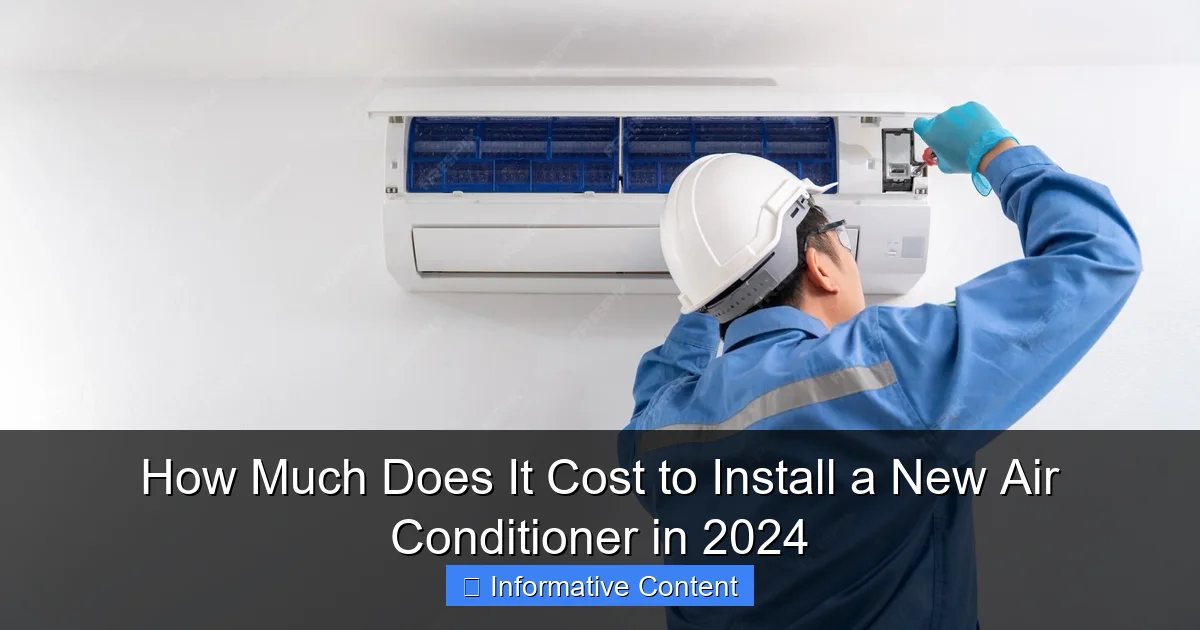
Featured image for cost to install a new air conditioner
Image source: img.freepik.com
The average cost to install a new air conditioner in 2024 ranges from $3,800 to $7,500, depending on unit size, efficiency, and labor complexity. High-efficiency models and ductwork modifications can push prices above $10,000, making upfront research and multiple quotes essential for budget planning.
Key Takeaways
- AC installation costs range from $3,800 to $7,500 in 2024.
- Unit size and efficiency significantly impact total installation expenses.
- Labor costs vary by region, complexity, and contractor rates.
- Old system removal adds $500–$1,000 if not included upfront.
- Rebates and tax credits can lower costs by up to 30%.
- Ductwork upgrades may add $1,500+ to your project budget.
- Get 3+ quotes to ensure fair pricing and quality service.
📑 Table of Contents
- How Much Does It Cost to Install a New Air Conditioner in 2024?
- Factors That Influence the Cost to Install a New Air Conditioner
- Breakdown of Installation Costs (With Real-World Examples)
- How to Save Money on AC Installation (Without Sacrificing Quality)
- Choosing the Right Contractor (And Avoiding Scams)
- Long-Term Value: Beyond the Upfront Cost
- Conclusion: Your AC Installation Game Plan
How Much Does It Cost to Install a New Air Conditioner in 2024?
Let’s face it—summer heat can be brutal. One minute you’re sipping lemonade on the porch, and the next, you’re melting into your couch, dreaming of ice-cold air. If your AC is on its last legs or you’re installing one for the first time, you’re probably wondering: how much will this actually cost me in 2024? The truth? It’s not a one-size-fits-all answer. From the type of unit to your home’s size and even where you live, the price tag can vary widely. But don’t sweat it—I’ve been there, done that, and learned a few tricks along the way. In this guide, I’ll break down everything you need to know about the cost to install a new air conditioner, so you can make a smart, stress-free decision.
Whether you’re upgrading an old system or starting from scratch, this isn’t just about buying a box and calling it a day. Installation involves labor, permits, equipment, and sometimes even home modifications. The good news? With a little research and planning, you can avoid sticker shock and get a system that keeps your home cool and your wallet happy. Let’s dive in and unpack the real cost to install a new air conditioner in 2024—no jargon, no fluff, just the facts you need.
Factors That Influence the Cost to Install a New Air Conditioner
Before you start calling HVAC companies, it’s important to understand what drives the price of your AC installation. Think of it like buying a car—sure, the base model is one price, but add in upgrades, taxes, and delivery, and the total can climb fast. The same goes for air conditioners. Here are the key factors that determine how much you’ll pay.
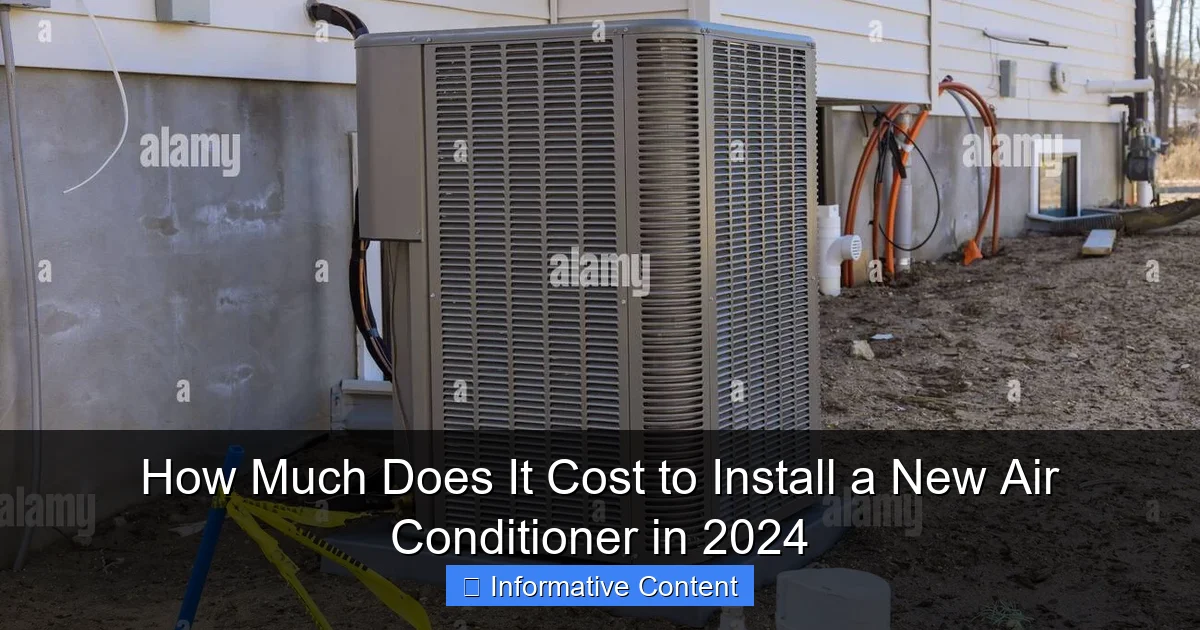
Visual guide about cost to install a new air conditioner
Image source: c8.alamy.com
Type of Air Conditioner
The first big decision is which type of AC you need. Each has its own price range and installation complexity.
- Central Air Conditioner: The most common choice for whole-home cooling. Costs typically range from $3,800 to $7,500 installed. These require ductwork, which can add to labor and material costs if you’re retrofitting an older home.
- Ductless Mini-Split: Great for homes without ducts or for room-specific cooling. Expect to pay $3,000 to $8,000 per indoor unit, depending on capacity and number of zones. Installation is less invasive, but each zone adds cost.
- Window Units: Budget-friendly at $150 to $800 per unit, but only cool one room. Installation is DIY-friendly, but not ideal for whole-home comfort.
- Portable ACs: Cheapest option ($200–$600), but inefficient and noisy. Not a long-term solution for most homes.
Pro tip: If you’re unsure which type fits your needs, consider your home’s layout, ductwork, and how many rooms you want to cool. A central system might cost more upfront but save money on energy bills in the long run.
Size and Capacity (Tonnage)
Air conditioners are measured in tons—not actual weight, but cooling capacity. One ton equals 12,000 BTUs (British Thermal Units) per hour. Most homes need 1.5 to 5 tons, depending on square footage, insulation, and climate.
- 1.5–2 tons: 600–900 sq. ft. ($2,500–$4,000 installed)
- 2.5–3 tons: 900–1,500 sq. ft. ($3,500–$5,500)
- 4–5 tons: 1,800–2,500 sq. ft. ($5,000–$8,000+)
Here’s a real-world example: A 1,200 sq. ft. home in Phoenix (hot desert climate) needs a 3-ton unit, while the same size home in Seattle (mild summers) might only need 2 tons. Oversizing or undersizing wastes money and reduces efficiency.
Energy Efficiency (SEER Rating)
The Seasonal Energy Efficiency Ratio (SEER) measures how efficiently an AC uses electricity. Higher SEER = lower energy bills. As of 2024, the U.S. Department of Energy requires a minimum SEER of 14 in the South and 13 in the North.
- 14–16 SEER: $3,000–$5,000 installed
- 17–20 SEER: $4,500–$7,000 (better long-term savings)
- 21+ SEER: $6,000–$10,000+ (premium efficiency, often with smart features)
While a 21 SEER unit costs more upfront, it can save you $200–$400 per year on energy. Think of it as an investment in your comfort and the planet.
Labor and Installation Complexity
Labor typically accounts for 30–50% of the total cost. Factors that increase labor time (and cost) include:
- Removing and disposing of the old unit ($100–$500)
- Installing or repairing ductwork ($1,000–$5,000)
- Electrical upgrades (e.g., new circuit breaker or wiring: $500–$2,000)
- Permits and inspections ($100–$500)
- Difficult access (e.g., attic, tight crawl spaces, multi-story homes)
Anecdote: My neighbor in a two-story colonial paid an extra $800 just to run refrigerant lines through a narrow attic. Always ask installers about potential “surprise” labor charges upfront.
Location and Regional Pricing
Where you live plays a huge role in the cost to install a new air conditioner. Labor rates, demand, and climate all impact pricing. For example:
- High-cost areas (e.g., California, NYC): +20–30% vs. national average
- Hot climates (e.g., Texas, Florida): Higher demand = higher prices in summer
- Rural areas: May have fewer installers, but lower labor rates
According to 2024 data from the U.S. Bureau of Labor Statistics, HVAC technician wages range from $20–$50/hour nationwide, with coastal cities on the higher end.
Breakdown of Installation Costs (With Real-World Examples)
Now let’s get specific. Below is a detailed cost breakdown for common AC installations in 2024, based on national averages and real quotes I’ve collected from homeowners and contractors.
Example 1: Central AC Replacement (Standard 3-Ton, 16 SEER)
- Equipment: $2,200–$2,800
- Labor (removal + installation): $1,200–$1,800
- Refrigerant lineset (if replacement needed): $300–$600
- Condensate drain line: $100–$300
- Permit/inspection: $150
- Total: $3,950–$5,650
Scenario: Sarah in Atlanta replaced her 12-year-old AC with a 3-ton, 16 SEER unit. Her existing ductwork was in good shape, so no major repairs were needed. She paid $4,800 total and qualified for a $300 rebate from her utility company.
Example 2: Ductless Mini-Split (Two-Zone, 24,000 BTU)
- Two indoor units + outdoor condenser: $3,500–$4,500
- Labor (drilling, mounting, refrigerant charging): $1,500–$2,500
- Electrical hookup (new breaker): $400
- Permit: $200
- Total: $5,600–$7,600
Scenario: Mike in Portland installed a two-zone mini-split in his 1920s bungalow (no ducts). The installer had to drill through thick brick walls, adding $600 to labor. Total cost: $6,900.
Example 3: Central AC Installation (New Ductwork Required)
- 3-ton, 18 SEER unit: $3,000
- Ductwork installation (1,500 sq. ft.): $3,500–$4,500
- Labor (AC + ducts): $2,000–$3,000
- Insulation/sealing ducts: $500
- Permit/inspection: $200
- Total: $9,200–$11,200
Scenario: The Thompsons in Denver added central AC to their 1950s ranch. They chose high-efficiency ducts with insulation, which added cost but improved comfort and energy savings. Total: $10,500.
Hidden Costs to Watch For
Even with a detailed quote, some costs might not be obvious:
- Disposal fees: Some companies charge extra to haul away your old unit.
- Thermostat upgrades: A smart thermostat ($200–$400) can boost efficiency but isn’t always included.
- Warranty extensions: Factory warranties often cover parts only. Labor warranties cost extra ($100–$500).
- Maintenance plans: Annual tune-ups ($100–$200) can prevent breakdowns but are optional.
Tip: Always ask installers: “Is this quote all-inclusive?” and “What’s not covered?”
How to Save Money on AC Installation (Without Sacrificing Quality)
Let’s be real—AC installation is expensive. But with smart planning, you can keep costs down without cutting corners. Here are my top money-saving strategies.
Get Multiple Quotes (And Compare Apples to Apples)
Always get at least three quotes. But don’t just compare the bottom line—compare what’s included. One installer might offer a “$4,000 system” but exclude duct sealing or thermostat upgrades. Ask:
- What brand/model is the AC?
- Is the SEER rating specified?
- Does labor include cleanup and disposal?
- Is the warranty transferable if you sell?
Anecdote: I once got quotes ranging from $4,200 to $6,500 for the same 3-ton unit. The cheapest installer skipped attic insulation—a $500 add-on. The middle quote ($5,200) included everything. Always check the fine print!
Time Your Purchase Strategically
HVAC companies are busiest in summer, so prices peak. For the best deals:
- Fall (September–November): Demand drops, so installers offer discounts. My neighbor saved $800 by installing in October.
- Spring (March–April): Good for pre-summer tune-ups and early installations.
- Avoid May–August: Rush jobs = higher prices and longer wait times.
Look for Rebates and Tax Credits
Federal, state, and utility incentives can save you hundreds. In 2024:
- Federal tax credit (Energy Efficient Home Improvement Credit): 30% of installation cost (up to $600) for qualifying ACs (SEER ≥ 16).
- Utility rebates: Many companies offer $200–$500 rebates for high-efficiency units. Check your provider’s website.
- State programs: Some states (e.g., California, New York) have additional incentives for ductless systems or solar-ready units.
Example: A $6,000 installation with a 30% tax credit = $1,800 back. That’s a net cost of $4,200!
Consider Financing Options
If you can’t pay upfront, many installers offer financing. Watch out for:
- 0% interest for 12–24 months: Great if you can pay it off quickly. But if you don’t, interest can jump to 15–25%.
- FHA Title 1 loans: Low-interest loans for home improvements (up to $25,000).
- HELOC: Home equity line of credit—lower rates but puts your home at risk.
Tip: Always read the fine print on financing. A “0%” offer might have hidden fees.
DIY vs. Professional Installation
Some AC types (like window units) can be DIY, but never attempt central or mini-split installation yourself. Refrigerant handling, electrical work, and permits require licensed pros. One mistake can void warranties, create safety hazards, or lead to expensive repairs.
Choosing the Right Contractor (And Avoiding Scams)
Your AC is only as good as the installer. A shoddy job can lead to leaks, inefficiency, or even carbon monoxide risks. Here’s how to find a trustworthy pro.
Verify Licenses and Insurance
Always ask:
- Is the company licensed in your state?
- Do they carry liability and workers’ comp insurance?
- Are technicians EPA-certified for refrigerant handling?
Red flag: A contractor who won’t provide proof of insurance. If they get hurt on your property, you could be liable.
Check Reviews and References
Google, Yelp, and the Better Business Bureau are your friends. Look for patterns in reviews—e.g., “great communication” or “left a mess.” Also, ask the company for references from recent customers. Call them and ask:
- Did the job stay on budget?
- Were there any surprises?
- Would you hire them again?
Ask About the Installation Process
A good installer will:
- Do a load calculation to size your AC correctly.
- Inspect your ductwork (if applicable) for leaks or damage.
- Explain how they’ll protect your home (e.g., drop cloths, shoe covers).
- Walk you through the system after installation.
Anecdote: My installer spent 30 minutes showing me how to change filters and set the thermostat. That little bit of education saved me from future headaches.
Get a Detailed Contract
Never pay in full upfront. A solid contract should include:
- Equipment model and serial number
- Labor and material costs (itemized)
- Start and completion dates
- Warranty terms
- Payment schedule (e.g., 50% deposit, 50% on completion)
Red flag: A contractor who demands 100% upfront or cash-only payments.
Long-Term Value: Beyond the Upfront Cost
The cost to install a new air conditioner isn’t just about the price tag—it’s about long-term value. A well-installed, efficient system pays off in comfort, savings, and peace of mind.
Energy Savings Over Time
Let’s say you spend $6,000 on a 20 SEER unit instead of $4,000 on a 14 SEER model. If you use 2,000 hours of AC per year:
- 14 SEER: 17.14 kWh/hour → $411/year (at $0.12/kWh)
- 20 SEER: 12.00 kWh/hour → $288/year
- Annual savings: $123
- Payback period: $2,000 extra ÷ $123/year ≈ 16 years
Factor in rising energy costs, and high-efficiency units often pay for themselves faster.
Increased Home Value
A modern AC system can boost your home’s resale value. According to Remodeling Magazine, a midrange HVAC upgrade recoups 70–80% of its cost at resale. Buyers love energy-efficient features!
Reliability and Maintenance
Newer units have fewer breakdowns. Most come with 10-year compressor warranties and 5-year parts coverage. Annual maintenance ($100–$200) can extend lifespan by 5–10 years.
Environmental Impact
High-efficiency ACs use less electricity, reducing your carbon footprint. Plus, newer refrigerants (like Puron) are ozone-friendly.
Final thought: Think of your AC as a long-term investment. The right system keeps you cool for 15+ years—and saves you money every summer.
Conclusion: Your AC Installation Game Plan
So, how much does it cost to install a new air conditioner in 2024? On average, expect to pay $3,800 to $7,500 for a standard central AC, with ductless mini-splits and ductwork adding $1,000–$4,000 more. But remember: the cheapest option isn’t always the best. Focus on:
- Getting multiple detailed quotes
- Choosing the right size and efficiency for your home
- Hiring a licensed, insured pro
- Timing your purchase for off-peak deals
- Claiming rebates and tax credits
Your AC is more than a machine—it’s your summer sanctuary. With the right system and installer, you’ll enjoy years of cool, quiet comfort. And hey, when the temperature hits 100°F, you’ll be the one sipping lemonade in peace, not melting into your couch. Stay cool, my friend.
| AC Type | Capacity | SEER Range | Installation Cost Range |
|---|---|---|---|
| Central Air | 2–5 tons | 14–21+ | $3,800–$11,200 |
| Ductless Mini-Split | 1–4 zones | 18–30+ | $3,000–$12,000 |
| Window Unit | 5,000–24,000 BTU | 8–12 | $150–$800 (DIY) |
| Portable AC | 8,000–14,000 BTU | 9–12 | $200–$600 (DIY) |
Frequently Asked Questions
What is the average cost to install a new air conditioner in 2024?
The average cost to install a new air conditioner ranges from $3,800 to $7,500 in 2024, depending on unit size, efficiency, and labor complexity. Factors like ductwork modifications or high-end brands can push costs higher.
How much does a new AC unit cost with installation for a 2,000 sq ft home?
For a 2,000 sq ft home, expect to pay $4,500–$8,000 for a new AC unit and installation, including a 3–4 ton unit and basic labor. Ductwork repairs or zoning systems will add to the total.
Does the type of air conditioner affect the installation cost?
Yes, the type of AC unit significantly impacts installation costs. Central air systems average $3,500–$7,500, while ductless mini-splits cost $3,000–$10,000, depending on the number of zones and complexity.
Are permits included in the cost to install a new air conditioner?
Permit costs ($100–$500) are often separate from installation quotes and depend on local regulations. Reputable HVAC contractors will handle permits but may charge extra for processing and inspections.
How long does it take to install a new air conditioner, and does labor cost vary?
Most installations take 1–3 days, with labor costs ranging from $500 to $2,500 (or $75–$150/hour). Complex jobs, like retrofitting older homes, increase time and labor expenses.
Can I reduce the cost to install a new air conditioner with rebates or tax credits?
Yes! Many regions offer rebates (up to $1,000) or federal tax credits (e.g., 30% for ENERGY STAR units) to offset installation costs. Check local utility programs and the ENERGY STAR website for eligible models.