
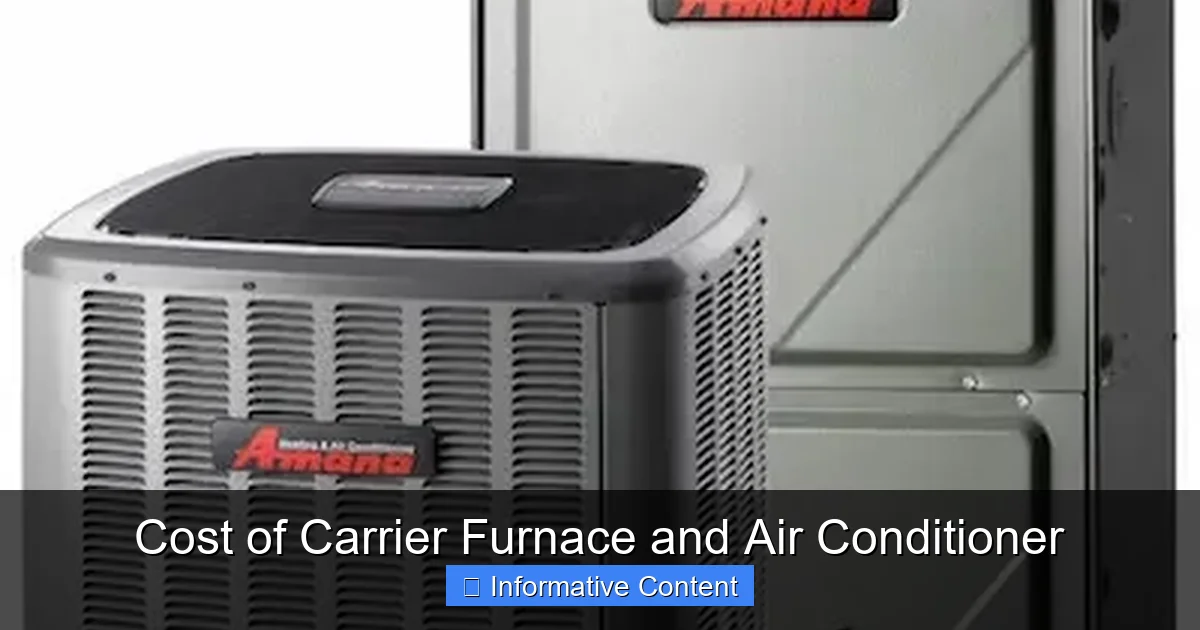
Understanding the cost of a Carrier furnace and air conditioner is essential for homeowners planning HVAC upgrades. Prices vary based on model, efficiency, size, and installation complexity, but investing in Carrier ensures long-term reliability and energy savings.
If you’re considering upgrading your home’s heating and cooling system, you’ve probably come across the name Carrier. For over a century, Carrier has been a trusted leader in HVAC innovation, known for building reliable, energy-efficient furnaces and air conditioners. But with so many models, efficiency ratings, and pricing tiers, it’s easy to feel overwhelmed when trying to figure out the real cost of a Carrier furnace and air conditioner.
Whether you’re replacing an old system or installing HVAC for the first time, understanding the full scope of costs—equipment, installation, maintenance, and potential savings—is crucial. This guide breaks down everything you need to know about the cost of Carrier furnace and air conditioner systems, helping you make an informed decision that fits your budget and comfort needs.
From basic single-stage units to advanced variable-speed systems with smart thermostats, Carrier offers a wide range of options. And while the upfront price tag might seem steep, the long-term benefits—like lower energy bills, improved indoor air quality, and fewer repairs—can make it a smart investment. Let’s dive into the details so you can confidently navigate your HVAC upgrade.
Key Takeaways
- Carrier systems range from $3,500 to $12,000+: Costs depend on unit type, efficiency rating, and home size.
- High-efficiency models cost more upfront but save long-term: Units with high AFUE and SEER ratings reduce utility bills over time.
- Installation significantly impacts total cost: Labor, ductwork modifications, and permits can add $1,000–$4,000.
- Rebates and tax credits can lower out-of-pocket expenses: Federal and local incentives may cover 10–30% of system costs.
- Bundle deals offer better value: Purchasing a furnace and air conditioner together often includes discounts.
- Regular maintenance extends lifespan and performance: Annual servicing helps avoid costly repairs and maintains efficiency.
- Carrier offers reliable, innovative HVAC technology: Known for durability, smart features, and quiet operation.
📑 Table of Contents
Understanding Carrier Furnace and Air Conditioner Pricing
When it comes to the cost of a Carrier furnace and air conditioner, there’s no one-size-fits-all answer. Prices vary widely depending on several factors, including the type of system, efficiency ratings, size (measured in BTUs or tons), and whether you’re buying individual units or a complete system. On average, homeowners can expect to pay between $3,500 and $12,000 or more for a full Carrier HVAC system, including installation.
Let’s break this down. A basic Carrier furnace might start around $1,800 for the unit alone, while a high-efficiency model with advanced features can exceed $4,000. Similarly, Carrier air conditioners range from about $2,000 for a standard 14 SEER unit to over $5,000 for a top-tier 25 SEER model with variable-speed technology. When you combine both units—furnace and air conditioner—the total equipment cost typically falls between $4,000 and $9,000.
But that’s just the beginning. Installation costs can add another $1,500 to $4,000, depending on your home’s layout, existing ductwork, and local labor rates. For example, if your home needs new ductwork or electrical upgrades, those expenses will increase the total. Additionally, permits and inspections may be required, adding a few hundred dollars more.
It’s also important to consider the long-term value. While a higher-priced Carrier system may seem expensive now, it often pays for itself over time through energy savings. A furnace with a 98% AFUE (Annual Fuel Utilization Efficiency) rating, for instance, wastes only 2% of the fuel it burns, compared to older models that might waste 20% or more. Similarly, a high-SEER air conditioner uses less electricity to cool your home, which translates to lower monthly bills.
Factors That Influence the Cost of Carrier Systems
Several key factors determine how much you’ll pay for a Carrier furnace and air conditioner. Understanding these can help you budget more accurately and choose the right system for your needs.
First, **system type** plays a major role. Carrier offers single-stage, two-stage, and variable-speed furnaces and air conditioners. Single-stage units are the most affordable but run at full capacity whenever they’re on, which can lead to temperature swings and higher energy use. Two-stage systems offer better comfort and efficiency by adjusting output based on demand. Variable-speed models are the most advanced, modulating airflow and temperature precisely for maximum comfort and energy savings—but they come at a premium.
Next, **efficiency ratings** directly impact price. Furnaces are rated by AFUE, with higher percentages indicating better efficiency. Carrier’s Infinity series furnaces, for example, boast AFUE ratings up to 98.5%, making them some of the most efficient on the market. Air conditioners are rated by SEER (Seasonal Energy Efficiency Ratio), with modern units ranging from 14 SEER (the federal minimum) to 25 SEER or higher. The higher the SEER, the more you’ll pay upfront—but the greater your long-term savings.
**Home size and insulation** also matter. A larger home or one with poor insulation will require a more powerful system, which costs more. A professional HVAC contractor will perform a Manual J load calculation to determine the correct size for your home. Oversized or undersized units can lead to inefficiency, discomfort, and premature wear.
Finally, **geographic location** affects pricing. Labor rates, local regulations, and climate influence both equipment needs and installation costs. For instance, homes in colder regions may need higher-capacity furnaces, while those in hot, humid areas might benefit from advanced dehumidification features in their air conditioners.
Carrier Furnace Costs: What to Expect
Visual guide about Cost of Carrier Furnace and Air Conditioner
Image source: abihomeservices.com
When budgeting for a Carrier furnace, it’s helpful to understand the different product lines and what you get at each price point. Carrier offers three main tiers: Comfort, Performance, and Infinity. Each tier includes models with varying efficiency levels, features, and price tags.
The **Comfort series** is the most budget-friendly option, with furnaces starting around $1,800 for the unit. These models typically have AFUE ratings between 80% and 92%, making them suitable for milder climates or homeowners looking for a reliable, no-frills heating solution. While they lack advanced features like variable-speed blowers, they’re built with Carrier’s reputation for durability and come with solid warranties.
The **Performance series** offers a middle ground, with prices ranging from $2,500 to $3,500. These furnaces feature higher AFUE ratings (up to 96%) and often include two-stage or variable-speed operation for improved comfort and efficiency. You might also get features like quieter operation, better air filtration, and compatibility with smart thermostats.
At the top of the line is the **Infinity series**, with unit costs from $3,500 to $4,500 or more. These are Carrier’s premium furnaces, offering AFUE ratings up to 98.5%, variable-speed motors, and advanced communication capabilities with the Carrier Infinity control system. They’re designed for maximum energy savings, ultra-quiet performance, and precise temperature control.
For example, the Carrier Infinity 98 gas furnace costs around $4,200 for the unit. When installed, the total cost—including labor and materials—could reach $6,500 to $7,500. But with an AFUE of 98%, it can save hundreds of dollars per year on heating bills compared to an older 80% AFUE furnace.
Installation Costs for Carrier Furnaces
Installing a Carrier furnace isn’t just about swapping out the old unit. It involves careful planning, proper sizing, and often modifications to your home’s ductwork, venting, and electrical systems. As a result, installation can account for 30% to 50% of the total project cost.
On average, furnace installation labor ranges from $1,200 to $3,000. This includes removing the old furnace, installing the new one, connecting gas lines and electrical wiring, and testing the system. If your home needs new ductwork or a new flue, those costs can add $1,000 to $2,500 or more.
Permits and inspections are another consideration. Most municipalities require a permit for furnace installation, which can cost $100 to $300. An inspection ensures the system is installed safely and up to code.
It’s also worth noting that some HVAC contractors offer bundled pricing when you install both a furnace and air conditioner at the same time. This can save you 10% to 20% on labor compared to installing them separately.
Carrier Air Conditioner Costs: A Detailed Breakdown
Just like furnaces, Carrier air conditioners come in different tiers and efficiency levels, each with its own price range. The cost of a Carrier air conditioner depends on the model, SEER rating, size (in tons), and features.
The **Comfort series** air conditioners start around $2,000 for a 14 SEER unit. These are basic models designed for affordability and reliability. They’re a good choice if you’re on a tight budget or live in a region with mild summers.
The **Performance series** offers better efficiency and comfort, with prices from $2,800 to $4,000. These units typically have SEER ratings between 16 and 18 and may include features like two-stage compressors, which reduce energy use and improve humidity control.
The **Infinity series** is Carrier’s flagship line, with air conditioners costing $4,000 to $5,500 or more. These models boast SEER ratings up to 25 and feature variable-speed compressors, advanced diagnostics, and quiet operation. The Carrier Infinity 25 air conditioner, for instance, uses inverter technology to adjust cooling output continuously, matching your home’s needs precisely.
For example, a 3-ton Carrier Infinity 25 air conditioner might cost $5,200 for the unit. With installation, the total could reach $7,500 to $9,000. But with a SEER of 25, it could cut your cooling costs by 30% or more compared to a 10 SEER unit from the 1990s.
Installation and Additional Costs for Air Conditioners
Installing a central air conditioner involves more than just placing the outdoor unit. It requires connecting refrigerant lines, electrical wiring, and ductwork, as well as installing or upgrading the indoor air handler.
Labor costs for air conditioner installation typically range from $1,500 to $3,500. If your home doesn’t have existing ductwork, adding it can cost $3,000 to $7,000 or more, depending on the size and complexity.
Other potential costs include:
– **Permits:** $100–$300
– **Electrical upgrades:** $500–$1,500 (if your panel needs upgrading)
– **Thermostat installation:** $200–$500 (especially for smart thermostats)
– **Refrigerant lines:** $300–$800 (if new lines are needed)
Some homeowners also choose to install a **whole-home air purifier** or **humidifier** at the same time, which can add $500 to $1,500 to the project.
Bundled Systems: Furnace and Air Conditioner Packages
One of the best ways to save money on a Carrier furnace and air conditioner is to purchase them as a bundled system. HVAC contractors often offer discounts when you install both units together, since it reduces labor time and simplifies the process.
A typical Carrier bundle might include a Performance series furnace and a Performance series air conditioner, with a combined equipment cost of $5,000 to $7,000. With installation, the total could range from $7,500 to $10,000—significantly less than buying and installing each unit separately.
For example, a Carrier Performance 96 furnace ($3,000) paired with a Performance 18 air conditioner ($3,500) might cost $6,500 for the units. With installation, the total could be around $9,000. That’s a savings of $1,000 to $1,500 compared to individual installations.
Bundled systems also ensure compatibility between components, which can improve efficiency and simplify maintenance. Plus, many contractors offer financing options and extended warranties on complete systems.
Financing and Rebate Opportunities
The cost of a Carrier furnace and air conditioner can be a significant investment, but there are ways to make it more affordable. Many HVAC companies offer financing plans with low or no interest for qualified buyers. Carrier also partners with lenders to provide promotional financing, such as 0% APR for 36 months.
Additionally, federal, state, and local rebates can reduce your out-of-pocket costs. For example, the U.S. federal tax credit for energy-efficient home improvements allows you to claim 30% of the cost (up to $600 for furnaces and $600 for air conditioners) for qualifying systems installed in 2024. Some utility companies also offer rebates of $200 to $800 for high-efficiency HVAC units.
Be sure to check with your local utility provider and visit the Database of State Incentives for Renewables & Efficiency (DSIRE) to find available incentives in your area.
Long-Term Savings and Maintenance
While the upfront cost of a Carrier furnace and air conditioner may seem high, the long-term savings can be substantial. High-efficiency systems use less energy, which translates to lower utility bills. Over 10 to 15 years, these savings can easily offset the initial investment.
For example, upgrading from an 80% AFUE furnace to a 96% AFUE model can save $100 to $200 per year on heating costs. Similarly, replacing a 10 SEER air conditioner with a 20 SEER unit can cut cooling costs by 50%.
Regular maintenance is key to maximizing these savings. Carrier recommends annual servicing for both furnaces and air conditioners. This includes cleaning coils, checking refrigerant levels, inspecting electrical connections, and replacing filters. A well-maintained system runs more efficiently, lasts longer, and is less likely to break down.
Most Carrier systems come with a standard 10-year parts warranty, and some include a lifetime heat exchanger warranty on furnaces. Extended warranties are also available for added peace of mind.
Is a Carrier System Worth the Investment?
So, is the cost of a Carrier furnace and air conditioner worth it? For most homeowners, the answer is yes—especially if you plan to stay in your home for several years.
Carrier systems are built to last, with many units operating reliably for 15 to 20 years or more. They offer advanced features like quiet operation, smart home integration, and superior air quality. And with high efficiency ratings, they help reduce your carbon footprint while saving money on energy bills.
While there are cheaper alternatives on the market, they often come with shorter lifespans, higher repair costs, and lower efficiency. Investing in Carrier means investing in comfort, reliability, and long-term value.
Conclusion
The cost of a Carrier furnace and air conditioner varies based on model, efficiency, size, and installation requirements, but most homeowners can expect to pay between $7,000 and $12,000 for a complete system. While the upfront investment is significant, the long-term benefits—lower energy bills, improved comfort, and fewer repairs—make it a smart choice for many.
By understanding the factors that influence pricing, exploring bundled options, and taking advantage of rebates and financing, you can make the upgrade more affordable. And with proper maintenance, your Carrier system will keep your home comfortable for years to come.
Whether you’re replacing an aging unit or building a new home, Carrier offers a range of reliable, efficient HVAC solutions. Take the time to get multiple quotes, compare features, and choose a system that fits your budget and lifestyle. Your future self—and your utility bills—will thank you.
Frequently Asked Questions
How much does a Carrier furnace and air conditioner cost together?
The total cost of a Carrier furnace and air conditioner system typically ranges from $7,000 to $12,000, including equipment and installation. Prices vary based on model, efficiency, and home size.
Are Carrier systems more expensive than other brands?
Carrier systems are often priced at a premium due to their reliability, efficiency, and advanced features. However, they offer long-term value through energy savings and durability compared to some lower-cost brands.
Can I install a Carrier furnace and air conditioner myself?
No, HVAC installation requires licensed professionals due to safety, code compliance, and warranty requirements. DIY installation can void warranties and pose serious risks.
Do Carrier systems qualify for tax credits or rebates?
Yes, many Carrier furnaces and air conditioners qualify for federal tax credits and local rebates, especially high-efficiency models. Check current programs for eligibility.
How long do Carrier furnaces and air conditioners last?
With proper maintenance, Carrier systems typically last 15 to 20 years. Regular servicing helps extend lifespan and maintain efficiency.
Should I replace my furnace and air conditioner at the same time?
Replacing both units together is often more cost-effective and ensures compatibility. It can also qualify you for bundle discounts and reduce overall installation time.