
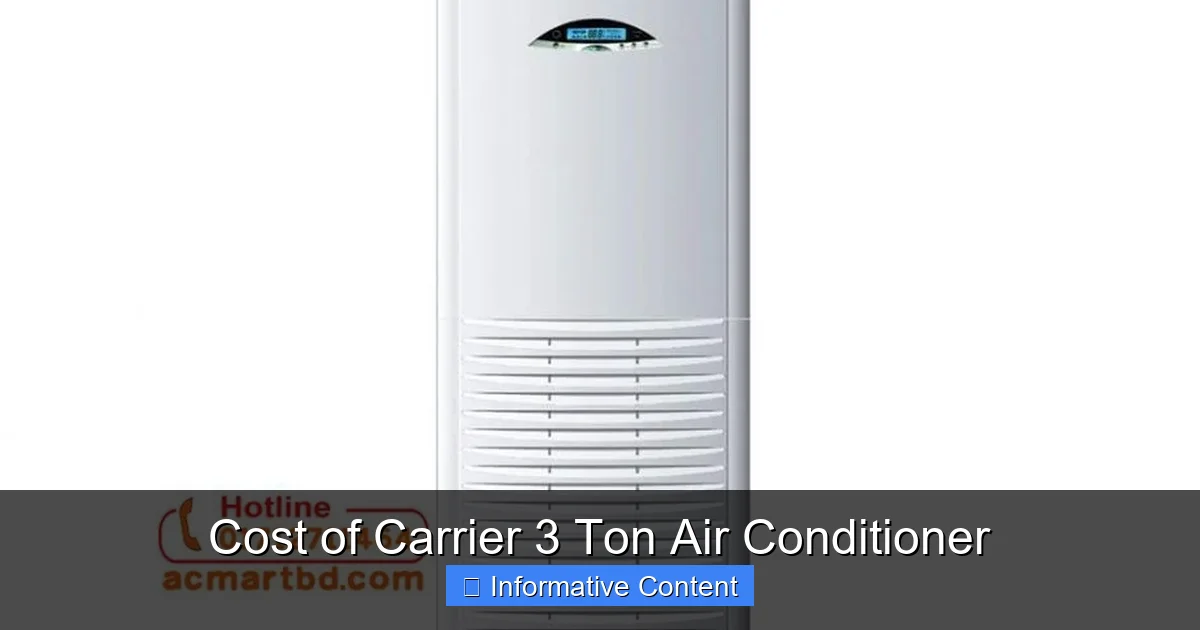
The cost of a Carrier 3 ton air conditioner typically ranges from $3,500 to $7,500, including equipment and professional installation. Prices vary based on model efficiency, features, and regional labor costs, but investing in a high-efficiency unit can lead to significant energy savings over time.
If you’re considering upgrading your home’s cooling system, you’ve probably come across the name Carrier. Known for reliability, innovation, and energy efficiency, Carrier is one of the most trusted brands in the HVAC industry. Among their popular offerings is the 3 ton air conditioner—a size that’s ideal for homes between 1,500 and 2,000 square feet. But what does it really cost to install a Carrier 3 ton air conditioner? The answer isn’t as simple as checking a price tag. The total cost depends on several factors, including the model you choose, your home’s existing infrastructure, installation complexity, and even where you live.
In this guide, we’ll break down every component that contributes to the cost of a Carrier 3 ton air conditioner. From the unit itself to labor, permits, and long-term savings, we’ll give you a clear, honest picture so you can make an informed decision. Whether you’re replacing an old system or installing AC for the first time, understanding these costs will help you budget wisely and avoid surprises. Plus, we’ll share practical tips to help you get the best value for your investment.
Let’s dive in and explore what you need to know about the cost of a Carrier 3 ton air conditioner—because staying cool shouldn’t mean breaking the bank.
Key Takeaways
- Unit Price Range: Carrier 3 ton AC units cost between $1,800 and $4,500, depending on the model and efficiency rating.
- Installation Costs: Professional installation adds $1,500 to $3,000, influenced by ductwork, electrical upgrades, and location.
- SEER Ratings Matter: Higher SEER (Seasonal Energy Efficiency Ratio) models cost more upfront but reduce monthly energy bills.
- Rebates and Incentives: Federal, state, and utility rebates can lower the total cost by $300–$1,500.
- Long-Term Savings: A high-efficiency Carrier 3 ton unit can save $200–$500 annually on cooling costs.
- Maintenance Adds Up: Annual servicing costs $100–$300 but extends system life and maintains performance.
- Warranty Coverage: Carrier offers 10-year compressor and parts warranties on most models, adding long-term value.
📑 Table of Contents
- Understanding the Basics: What Is a 3 Ton Air Conditioner?
- Breakdown of Carrier 3 Ton Air Conditioner Costs
- Factors That Influence the Total Cost
- Carrier 3 Ton Models: Comparing Features and Prices
- Long-Term Costs: Energy Bills and Maintenance
- Tips to Save Money on Your Carrier 3 Ton AC
- Conclusion: Is a Carrier 3 Ton Air Conditioner Worth the Cost?
Understanding the Basics: What Is a 3 Ton Air Conditioner?
Before we talk about cost, it’s important to understand what a “3 ton” air conditioner actually means. In HVAC terms, “tonnage” refers to the cooling capacity of an air conditioner, not its weight. One ton of cooling equals 12,000 BTUs (British Thermal Units) per hour. So, a 3 ton air conditioner can remove 36,000 BTUs of heat from your home each hour. This size is typically recommended for medium to large homes—usually between 1,500 and 2,000 square feet, depending on climate, insulation, and ceiling height.
Choosing the right size is crucial. An undersized unit will struggle to cool your home, leading to higher energy bills and frequent repairs. An oversized unit will cycle on and off too quickly, wasting energy and failing to dehumidify properly. That’s why a professional load calculation—like a Manual J calculation—is essential before purchasing. Carrier dealers often provide this service for free, ensuring you get the perfect fit for your home.
Now, why choose Carrier? Founded in 1915 by Willis Carrier, the inventor of modern air conditioning, the brand has a long history of innovation. Today, Carrier offers a wide range of 3 ton models, from budget-friendly options to high-efficiency, smart-enabled systems. Their units are known for durability, quiet operation, and advanced features like variable-speed compressors and Wi-Fi connectivity. But all that quality comes at a price—so let’s look at how much you can expect to pay.
Breakdown of Carrier 3 Ton Air Conditioner Costs
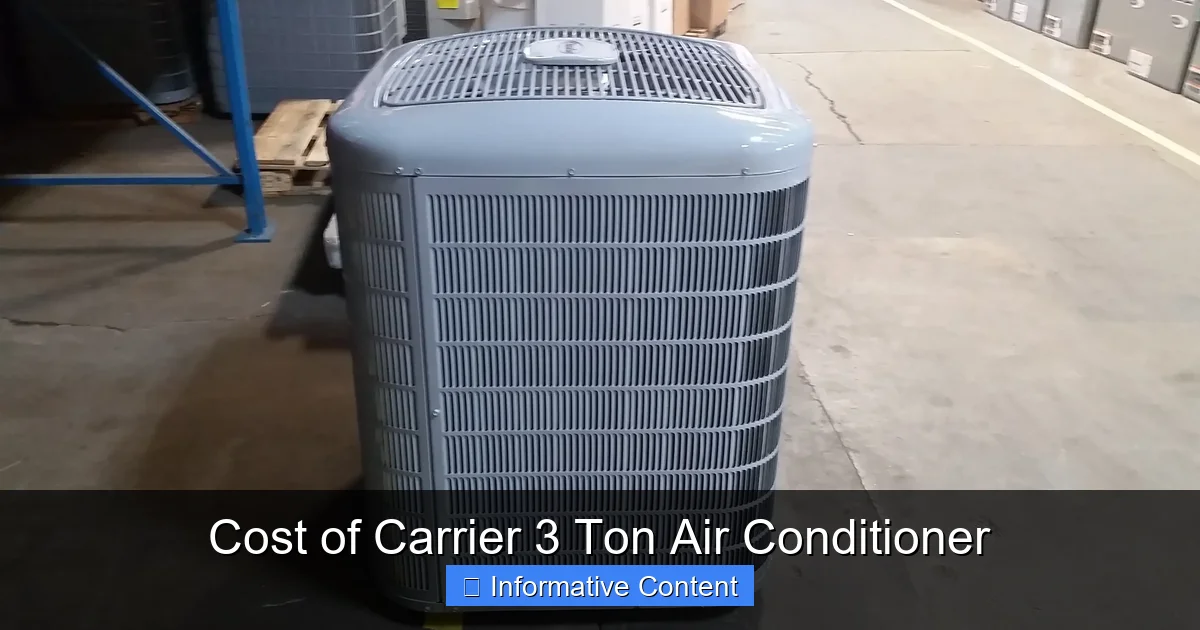
Visual guide about Cost of Carrier 3 Ton Air Conditioner
Image source: imageshack.com
The total cost of a Carrier 3 ton air conditioner isn’t just the price of the unit. It includes equipment, installation, permits, and sometimes upgrades to your home’s electrical or ductwork systems. Here’s a detailed breakdown of what you’re paying for.
Unit Cost: What You Pay for the Equipment
The price of the Carrier 3 ton air conditioner itself varies widely based on the model and efficiency rating. Entry-level models, such as those in the Comfort series, start around $1,800 to $2,500. These units offer reliable cooling with basic features and a standard SEER rating of 14 to 16.
Mid-range models, like the Performance series, cost between $2,500 and $3,500. These units typically have SEER ratings of 16 to 18 and include features like improved sound insulation, better humidity control, and longer warranties.
At the top end are the Infinity and Greenspeed series, which can cost $3,500 to $4,500 or more. These high-efficiency models boast SEER ratings of 19 to 21+, variable-speed compressors, and smart thermostats. They’re designed for maximum energy savings and ultra-quiet operation, making them ideal for homeowners who prioritize comfort and long-term savings.
For example, the Carrier Infinity 20 3-ton unit with a 20.5 SEER rating might cost around $4,200. While that’s a significant upfront investment, it can reduce your cooling costs by up to 40% compared to older, less efficient systems.
Installation Costs: Labor and Setup
Installation is often the most variable part of the total cost. Professional installation for a Carrier 3 ton air conditioner typically ranges from $1,500 to $3,000. This includes removing the old unit (if applicable), installing the new condenser and evaporator coil, connecting refrigerant lines, wiring, and testing the system.
Several factors influence installation cost:
– **Ductwork condition:** If your ducts are old, leaky, or improperly sized, they may need repairs or replacement, adding $500–$2,000.
– **Electrical upgrades:** Older homes may need a new circuit breaker or upgraded wiring, which can cost $200–$800.
– **Location and accessibility:** If your outdoor unit is hard to reach or requires special mounting (like on a roof), labor costs increase.
– **Permits and inspections:** Most areas require HVAC permits, which cost $50–$300 depending on your location.
For instance, replacing an existing system in a home with good ductwork and modern wiring might cost $1,800 for installation. But if you’re installing AC in a home that never had it, or if major upgrades are needed, the cost could easily reach $3,000 or more.
Additional Costs to Consider
Beyond the unit and installation, there are a few other expenses to keep in mind:
– **Thermostat:** A new smart thermostat (like the Carrier Côr or Infinity Touch) can cost $200–$500, including installation.
– **Extended warranties:** Carrier offers optional extended warranties that cover parts and labor for up to 10 years, costing $300–$600.
– **Annual maintenance:** While not required upfront, regular maintenance ($100–$300 per year) is essential to keep your system running efficiently and to maintain warranty coverage.
It’s also worth noting that some HVAC contractors offer bundled pricing—meaning they include the unit, installation, thermostat, and even a maintenance plan in one package. These can be a great value, especially if you’re comparing multiple quotes.
Factors That Influence the Total Cost
Now that you know the basic cost components, let’s look at the factors that can push your total higher or lower. Understanding these will help you budget more accurately and avoid unexpected expenses.
Geographic Location and Labor Rates
Where you live plays a big role in cost. Labor rates vary significantly by region. For example, installation in a major city like New York or San Francisco may cost 20–30% more than in a rural area in the Midwest. Additionally, climate affects demand—hotter regions like Arizona or Texas may have higher prices due to peak-season demand.
Home-Specific Factors
Every home is different, and that affects installation complexity. A single-story home with easy access to the outdoor unit will cost less to install than a multi-story home with limited space. Similarly, homes with well-maintained ductwork will save money compared to those needing duct repairs or redesign.
Model Efficiency and Features
As mentioned earlier, higher SEER ratings and advanced features increase the price. But they also offer long-term savings. For example, a 3 ton unit with a 16 SEER might cost $3,000, while a 20 SEER model costs $4,200. However, the higher-efficiency unit could save you $150–$300 per year on electricity, paying for the difference in just a few years.
Time of Year and Contractor Availability
Installing an air conditioner in spring or fall—before the summer rush—can save you money. Many contractors offer discounts during off-peak seasons. Conversely, summer installations may come with rush fees or limited availability.
Rebates and Incentives
Don’t overlook potential savings from rebates. Many utility companies and government programs offer incentives for installing high-efficiency HVAC systems. For example, the federal tax credit for energy-efficient home improvements (under the Inflation Reduction Act) can cover 30% of the cost of a qualifying Carrier unit, up to $600. Some states and utilities offer additional rebates of $200–$1,000.
Always ask your Carrier dealer about available rebates—they often have up-to-date information and can help you apply.
Carrier 3 Ton Models: Comparing Features and Prices
Carrier offers several 3 ton air conditioner models, each designed for different needs and budgets. Here’s a closer look at the most popular options.
Carrier Comfort Series
The Comfort series is the most affordable line, ideal for homeowners looking for reliable cooling without breaking the bank. These units typically have SEER ratings of 14–16 and come with a 10-year compressor warranty. Prices start around $1,800 for the unit, with total installed costs ranging from $3,500 to $5,000.
While they lack advanced features like variable-speed compressors, they’re a solid choice for milder climates or budget-conscious buyers.
Carrier Performance Series
Stepping up, the Performance series offers better efficiency (SEER 16–18) and quieter operation. Features include improved sound-dampening technology and better humidity control. Unit prices range from $2,500 to $3,500, with total costs of $4,500 to $6,500 installed.
This series is a great middle ground—offering noticeable energy savings and comfort improvements over the Comfort line.
Carrier Infinity Series
The Infinity series is Carrier’s premium offering, with SEER ratings up to 21 and advanced features like Greenspeed Intelligence (on select models). These systems use variable-speed technology to adjust cooling output precisely, improving comfort and efficiency.
Unit prices range from $3,500 to $4,500, and total installed costs can reach $6,500 to $7,500. However, the energy savings and enhanced comfort make them a worthwhile investment for many homeowners.
Carrier Greenspeed Intelligence
The Greenspeed series is the most advanced, using a unique inverter-driven compressor that modulates cooling output in small increments. This results in ultra-quiet operation, superior humidity control, and up to 50% energy savings compared to older systems.
These models are the most expensive, often exceeding $4,500 for the unit alone. But for those who prioritize comfort, efficiency, and smart home integration, they’re hard to beat.
Long-Term Costs: Energy Bills and Maintenance
When evaluating the cost of a Carrier 3 ton air conditioner, it’s important to look beyond the initial price. Long-term costs—especially energy bills and maintenance—can have a big impact on your total investment.
Energy Efficiency and Monthly Savings
A higher SEER rating means lower energy consumption. For example, upgrading from a 10 SEER to a 16 SEER unit can cut cooling costs by up to 35%. In a hot climate, that could mean saving $200–$500 per year.
Let’s say your current electric bill for cooling is $150 per month in summer. A high-efficiency Carrier 3 ton unit could reduce that to $90–$100, saving you $600–$720 over a six-month cooling season. Over 10 years, that’s $6,000–$7,200 in savings—more than covering the higher upfront cost.
Maintenance and Repairs
Regular maintenance is essential to keep your Carrier 3 ton air conditioner running efficiently. Annual tune-ups cost $100–$300 and include cleaning coils, checking refrigerant levels, inspecting electrical connections, and testing system performance.
Skipping maintenance can lead to reduced efficiency, higher bills, and costly repairs. For example, a dirty condenser coil can increase energy use by 30%. And if a major component like the compressor fails, repairs can cost $1,000 or more.
Carrier’s 10-year warranty covers parts, but labor and refrigerant may not be included. Consider an extended service plan to cover unexpected repairs.
Lifespan and Replacement
A well-maintained Carrier 3 ton air conditioner can last 15–20 years. However, efficiency declines over time, and older units use more energy. If your system is over 10 years old, replacing it with a new high-efficiency model may be more cost-effective than repairing it.
Tips to Save Money on Your Carrier 3 Ton AC
Installing a Carrier 3 ton air conditioner is a significant investment, but there are ways to reduce the cost without sacrificing quality.
Get Multiple Quotes
Always get at least three quotes from licensed Carrier dealers. Compare not just the price, but what’s included—warranty, thermostat, ductwork inspection, and rebate assistance.
Time Your Purchase
Buy in spring or fall to avoid peak-season markups. Some dealers offer 0% financing or rebates during promotional periods.
Look for Rebates and Tax Credits
Check with your utility company and visit the Database of State Incentives for Renewables & Efficiency (DSIRE) to find available rebates. The federal tax credit can save you hundreds.
Consider a Mid-Range Model
You don’t need the most expensive model to get great performance. The Performance series offers excellent efficiency and features at a more affordable price.
Maintain Your System
Regular maintenance keeps your system running efficiently and extends its life. It’s a small annual cost that prevents big repair bills.
Conclusion: Is a Carrier 3 Ton Air Conditioner Worth the Cost?
So, is the cost of a Carrier 3 ton air conditioner worth it? For most homeowners, the answer is yes. While the upfront investment ranges from $3,500 to $7,500, the long-term benefits—lower energy bills, improved comfort, and reliable performance—make it a smart choice.
Carrier’s reputation for quality, combined with their strong warranties and energy-efficient designs, ensures you’re getting a system built to last. Whether you choose the budget-friendly Comfort series or the high-tech Greenspeed model, you’re investing in a cooler, more comfortable home.
Remember, the cheapest option isn’t always the best. Focus on value—balancing upfront cost with long-term savings and reliability. And don’t forget to explore rebates and incentives to reduce your total expense.
With the right planning and a trusted Carrier dealer, you can enjoy efficient, quiet cooling for years to come—without overpaying.
Frequently Asked Questions
How much does a Carrier 3 ton air conditioner cost?
The cost of a Carrier 3 ton air conditioner ranges from $3,500 to $7,500, including the unit and professional installation. Prices vary based on model, efficiency, and location.
Is a 3 ton air conditioner enough for my home?
A 3 ton unit is typically suitable for homes between 1,500 and 2,000 square feet. However, factors like insulation, climate, and ceiling height also matter. A professional load calculation is recommended.
What SEER rating should I look for in a Carrier 3 ton AC?
Look for a SEER rating of at least 16 for good efficiency. Higher ratings (18–21+) offer greater energy savings but cost more upfront.
Are there rebates available for Carrier air conditioners?
Yes, many utility companies and government programs offer rebates for high-efficiency Carrier units. Federal tax credits can cover up to 30% of the cost, up to $600.
How long does a Carrier 3 ton air conditioner last?
With proper maintenance, a Carrier 3 ton air conditioner can last 15–20 years. Regular tune-ups help maintain efficiency and extend lifespan.
Can I install a Carrier 3 ton AC myself?
No, air conditioner installation requires licensed professionals due to electrical, refrigerant, and safety regulations. DIY installation can void warranties and pose serious risks.