
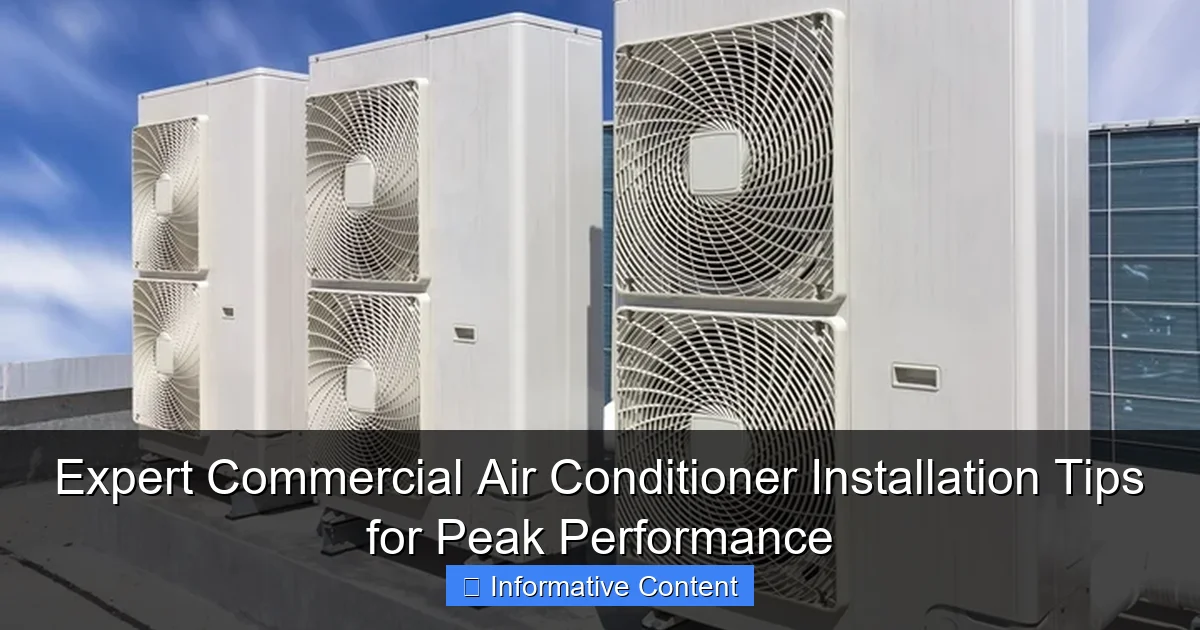
Featured image for commercial air conditioner installation
Image source: ambassadorhvacr.com
Proper commercial air conditioner installation is critical for maximizing efficiency, performance, and system longevity. Ensure correct sizing, optimal placement, and professional refrigerant handling to avoid costly breakdowns and energy waste—key factors that impact both comfort and operational costs in commercial environments.
Key Takeaways
- Plan carefully: Assess space, load, and layout before installation.
- Hire certified pros: Ensure technicians are licensed and experienced.
- Prioritize airflow: Optimize duct design and minimize obstructions.
- Follow manufacturer specs: Adhere to guidelines for refrigerant and electrical setup.
- Test thoroughly: Run performance checks post-install to confirm efficiency.
- Schedule maintenance: Prevent issues with routine inspections and cleaning.
📑 Table of Contents
- Why Proper Installation Matters for Your Commercial AC
- Choosing the Right System for Your Space
- Pre-Installation Planning: The Foundation of Success
- Key Steps in the Installation Process
- Post-Installation Checks and Testing
- Maintaining Performance Long-Term
- Data Table: Commercial AC Installation Checklist
- Final Thoughts: Invest in Quality from Day One
Why Proper Installation Matters for Your Commercial AC
Imagine this: it’s the middle of summer, and your office building is packed. Employees are working hard, clients are waiting in the lobby, and suddenly—the air conditioner gives up. The temperature rises, tempers flare, and productivity plummets. Now, you’re not just dealing with a hot office; you’re facing lost revenue and unhappy staff. This nightmare scenario is often the result of poor commercial air conditioner installation, not a faulty unit.
Commercial AC systems are the backbone of any business environment. They don’t just keep people comfortable; they protect sensitive equipment, maintain air quality, and even influence employee performance. But here’s the catch: even the most expensive, high-efficiency system will underperform if it’s not installed correctly. Think of it like buying a sports car and putting bicycle tires on it—no matter how powerful the engine, the ride won’t be smooth or safe.
Choosing the Right System for Your Space
Assessing Your Cooling Load
Before you even think about installation, you need to know what kind of system your space requires. This starts with a cooling load calculation—a fancy term for figuring out how much cooling power your building needs. It’s not as simple as “bigger is better.” Oversized units cycle on and off too frequently, wasting energy and causing uneven temperatures. Undersized units run constantly, driving up costs and wearing out faster.

Visual guide about commercial air conditioner installation
Image source: 5.imimg.com
For example, a 20,000-square-foot office building with large windows and a lot of electronic equipment will have a much higher cooling load than a warehouse of the same size with concrete walls and minimal heat sources. A professional load calculation considers factors like:
- Building size and layout
- Insulation quality
- Number of windows and their orientation
- Occupancy and internal heat sources (computers, lights, machinery)
- Local climate and seasonal weather patterns
I once consulted for a small retail store that had installed a system 30% larger than needed. They thought it would “future-proof” the space. Instead, it caused short cycling, high humidity levels, and skyrocketing energy bills. After downsizing and reconfiguring, their comfort improved, and energy costs dropped by 25%.
Types of Commercial AC Systems
Not all commercial air conditioners are created equal. The right choice depends on your building’s size, use, and existing infrastructure. Here are the most common types:
- Split Systems: Ideal for small to medium offices. The condenser sits outside, and the air handler is inside. They’re cost-effective and easy to install but may not suit very large spaces.
- Packaged Units: All components are housed in a single outdoor unit. Great for buildings with limited indoor space, like retail stores or restaurants. They’re efficient but may require more maintenance access planning.
- Variable Refrigerant Flow (VRF) Systems: The gold standard for large commercial spaces. They allow precise temperature control in different zones and are highly energy-efficient. However, they require expert installation and are more expensive upfront.
- Chilled Water Systems: Used in skyscrapers or large campuses. They use water as a cooling medium, which is then circulated through air handlers. Best for buildings with centralized HVAC needs.
One of my favorite projects involved a co-working space that needed different temperatures for private offices, open desks, and meeting rooms. We installed a VRF system, and the client was thrilled with the ability to customize cooling per zone. It was a game-changer for their tenant satisfaction.
Pre-Installation Planning: The Foundation of Success
Site Survey and Accessibility
You wouldn’t build a house without checking the foundation, right? The same applies to commercial air conditioner installation. A thorough site survey is non-negotiable. This includes:
- Checking roof load capacity for rooftop units
- Ensuring there’s enough clearance around outdoor units (typically 2-3 feet on all sides)
- Planning for refrigerant line routing and electrical connections
- Identifying potential obstacles (like trees, other equipment, or structural elements)
I once worked on a project where the team didn’t check the roof’s weight limit. They hoisted a unit up, and within hours, the roof started sagging. Not only was this a safety hazard, but it also delayed the project by weeks and cost the client thousands in repairs. Always verify structural integrity before installation begins.
Permits, Codes, and Regulations
Commercial HVAC work isn’t a DIY project—it’s regulated for a reason. Every state and municipality has its own building codes, electrical standards, and environmental regulations. Skipping permits or cutting corners can lead to:
- Fines and legal penalties
- Voided manufacturer warranties
- Insurance complications in case of accidents
- Difficulty selling the property later
For example, California has strict refrigerant handling requirements due to environmental concerns. If your installer doesn’t follow EPA Section 608 guidelines, you could face hefty fines. Always hire a licensed, insured contractor who knows local codes inside and out. Ask to see their credentials and past project references.
Scheduling and Coordination
Timing matters—especially in a commercial setting. You don’t want to shut down your business for a week while the AC is installed. Smart scheduling can minimize disruptions:
- Install during off-hours (evenings, weekends) if possible
- Coordinate with other trades (electricians, plumbers, roofers) to avoid conflicts
- Have a backup cooling plan (portable units, temporary fans) for critical areas
A restaurant client of mine needed a new system but couldn’t afford to close for more than a day. We split the installation into phases: outdoor unit first, then indoor components during a slow Tuesday. We used temporary spot coolers in the kitchen and dining area. The result? Minimal downtime and happy customers.
Key Steps in the Installation Process
Outdoor Unit Placement and Mounting
The outdoor unit (condenser) is the heart of your system. Its placement can make or break efficiency. Here’s what to watch for:
- Level Ground: The unit must sit on a flat, stable surface. Use concrete pads or vibration isolators to prevent shifting.
- Sun Exposure: Avoid direct sunlight if possible. Shade improves efficiency by 5-10%.
- Airflow: Keep 2-3 feet of clearance on all sides. Don’t place it next to walls, fences, or dense shrubs.
- Noise: Consider proximity to occupied spaces. Rooftop units are quieter for ground-floor offices.
I remember a hotel that installed their condenser right outside a conference room. Guests complained about noise during meetings. We relocated it to a side yard, and the problem vanished. A little planning goes a long way.
Refrigerant Line and Electrical Connections
This is where many installations go wrong. Poorly sized or routed refrigerant lines can cause leaks, reduced efficiency, and compressor failure. Key tips:
- Use the manufacturer’s recommended line sizes
- Keep lines as short and straight as possible
- Insulate both liquid and suction lines
- Test for leaks with a nitrogen charge before adding refrigerant
Electrical work is equally critical. Commercial ACs require heavy-duty circuits, proper grounding, and disconnect switches. One mistake here can lead to:
- Frequent breaker trips
- Fire hazards
- Motor burnout
Always hire a licensed electrician who understands HVAC requirements. I once saw a system fail because the installer used undersized wires. The compressor overheated within a month. Replacing it cost more than the entire installation.
Ductwork and Air Distribution
Even the best AC unit can’t deliver cool air if your ducts are a mess. For new installations, design ducts with:
- Minimal bends and turns
- Properly sized trunks and branches
- Sealed joints (use mastic, not duct tape)
- Adequate insulation (R-6 or higher in unconditioned spaces)
For retrofits, inspect existing ducts for leaks, blockages, or damage. One office building I worked on had 30% duct leakage due to poor seals. After sealing and balancing, their system efficiency improved by 20%.
Post-Installation Checks and Testing
System Startup and Calibration
You’ve installed the unit—now what? A proper startup is crucial for long-term performance. The installer should:
- Check refrigerant levels (superheat and subcooling)
- Test electrical components (voltage, amperage, phase balance)
- Verify thermostat operation
- Measure airflow at each register
- Check for unusual noises or vibrations
I always recommend a “test run” period of at least 48 hours. This catches issues like refrigerant leaks or electrical faults before they become major problems. One client ignored this step and later found a slow refrigerant leak. By then, the compressor was damaged—costing thousands in repairs.
Balancing and Commissioning
Balancing ensures even air distribution. Even if your system is powerful, poor airflow can leave some areas too hot or too cold. The process involves:
- Measuring static pressure
- Adjusting dampers to balance airflow
- Checking temperature differentials across the coil
Commissioning goes a step further. It’s a documented process that verifies the system meets design specifications. It includes:
- Performance testing
- Control system validation
- Operator training
- Documentation of all settings
For large buildings, commissioning can improve efficiency by 10-15%. It’s worth the investment.
Maintaining Performance Long-Term
Regular Maintenance Schedule
Installation isn’t the end—it’s just the beginning. A well-maintained system can last 15-20 years. Here’s a basic maintenance schedule:
- Monthly: Replace or clean air filters
- Quarterly: Check refrigerant levels, inspect electrical connections, clean condenser coils
- Biannually: Test safety controls, lubricate moving parts, inspect ductwork
- Annually: Full system tune-up, including compressor checks and airflow measurements
I once visited a building that hadn’t cleaned their condenser coils in five years. The fins were clogged with leaves and debris. After cleaning, their energy bills dropped by 30%—and the system ran quieter.
Monitoring and Upgrades
Modern commercial ACs often come with smart controls and remote monitoring. Use them! These systems can:
- Alert you to performance issues
- Track energy usage
- Optimize schedules based on occupancy
- Predict maintenance needs
For example, a retail chain I worked with installed smart thermostats in all locations. They saved 25% on energy costs by adjusting temperatures during closed hours and detecting equipment malfunctions early.
When to Consider a Replacement
Even with great maintenance, systems eventually wear out. Consider replacing if you notice:
- Frequent breakdowns
- Energy bills rising without usage changes
- Uneven cooling or poor air quality
- Refrigerant leaks (especially R-22, which is being phased out)
One manufacturing plant kept their 25-year-old chiller running until it failed catastrophically. The downtime cost them over $100,000 in lost production. Proactive replacement is almost always cheaper than emergency repairs.
Data Table: Commercial AC Installation Checklist
| Task | Frequency | Responsible Party | Notes |
|---|---|---|---|
| Cooling load calculation | Before installation | HVAC designer | Use ACCA Manual J or equivalent |
| Site survey | Before installation | Installer | Check roof load, clearances, access |
| Permit acquisition | Before installation | Installer/owner | Verify local code compliance |
| Refrigerant line installation | During installation | Installer | Pressure test before charging |
| Duct sealing | During installation | Installer | Use mastic, not tape |
| System startup | After installation | Installer | Check pressures, amperage, airflow |
| Air filter replacement | Monthly | Maintenance staff | Use MERV 8-13 filters |
| Condenser coil cleaning | Quarterly | HVAC technician | Use coil cleaner, not high pressure |
| Full system tune-up | Annually | HVAC technician | Includes refrigerant check |
Final Thoughts: Invest in Quality from Day One
When it comes to commercial air conditioner installation, cutting corners is never worth it. A well-installed system saves money, improves comfort, and protects your business from costly downtime. Think of it as an investment—not just an expense.
Remember, the cheapest bid isn’t always the best. Look for installers with:
- Proper licensing and insurance
- Experience with your type of building
- Strong references and reviews
- Clear communication and transparency
I’ve seen too many businesses regret hiring the “bargain” contractor. One hotel saved $5,000 on installation—but spent $25,000 in repairs over the next two years. Quality installation pays for itself.
At the end of the day, your commercial AC is more than a machine. It’s a critical part of your business operations. Treat it with the care it deserves, and it will keep your space cool, efficient, and productive for years to come. Whether you’re installing a new system or upgrading an old one, take the time to do it right. Your employees, your customers, and your bottom line will thank you.
Frequently Asked Questions
What should I look for in a professional commercial air conditioner installation service?
Choose a licensed, insured contractor with experience in commercial HVAC systems and a track record of reliable service. Verify they offer load calculations, proper ductwork design, and post-installation support to ensure optimal performance.
How long does a typical commercial air conditioner installation take?
Most installations take 3–7 days, depending on system complexity, building size, and ductwork modifications. A reputable installer will provide a detailed timeline during the initial consultation to minimize business disruption.
Why is proper sizing critical for commercial air conditioner installation?
Oversized or undersized units reduce efficiency, increase wear, and fail to maintain consistent temperatures. Professional load calculations ensure your system is perfectly matched to your space’s cooling demands.
Can I install a new commercial AC without replacing the existing ductwork?
It’s possible, but existing ductwork must be inspected for compatibility with the new system’s airflow requirements. Leaks, poor design, or inadequate sizing can undermine efficiency and require retrofitting.
What permits are needed for commercial air conditioner installation?
Most jurisdictions require HVAC permits for electrical, mechanical, and structural changes. Your installer should handle the permitting process and ensure compliance with local codes and energy standards.
How can I maintain peak performance after installation?
Schedule seasonal maintenance, clean filters regularly, and monitor refrigerant levels. A well-maintained commercial AC system operates efficiently and extends its lifespan, maximizing your investment.