
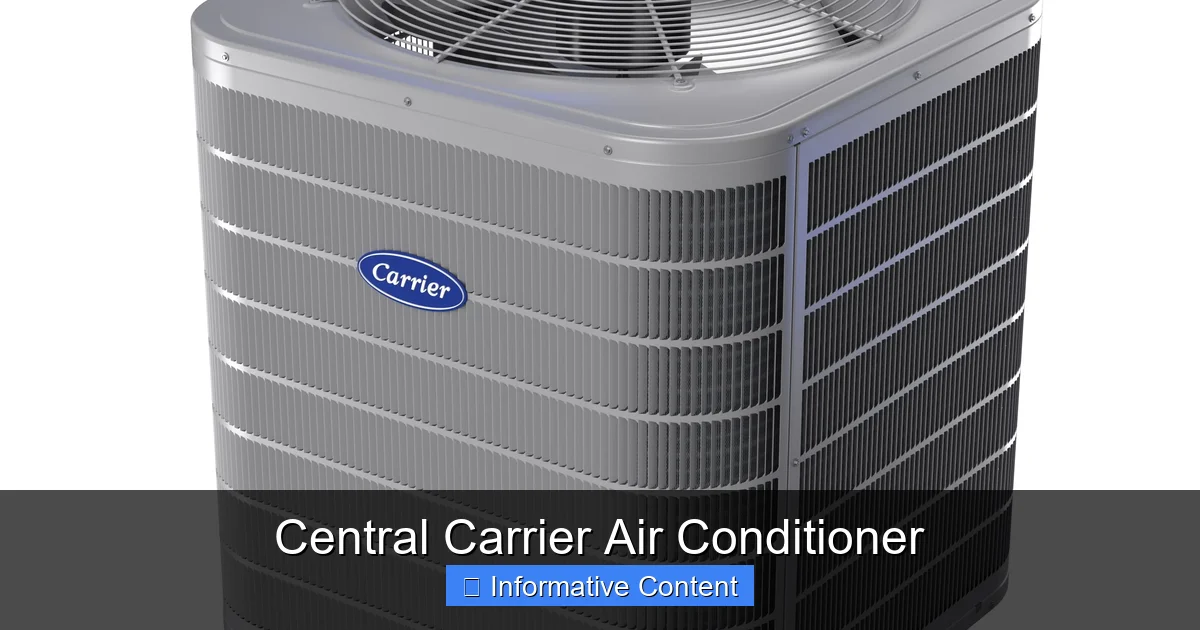
A central Carrier air conditioner is a trusted, energy-efficient HVAC solution designed to cool your entire home evenly and quietly. Known for reliability, smart technology, and long-term savings, Carrier systems combine advanced engineering with eco-friendly refrigerants to deliver consistent comfort year after year.
When the summer heat hits, there’s nothing more comforting than walking into a cool, refreshing home. But not all air conditioners are created equal. If you’re looking for a system that delivers consistent, whole-house cooling with minimal noise and maximum efficiency, a central Carrier air conditioner might be exactly what you need. Carrier has been a household name in HVAC for over a century, and their central air conditioning units are trusted by millions of homeowners across the U.S. and beyond.
What sets Carrier apart isn’t just their reputation—it’s their commitment to innovation, reliability, and energy savings. Whether you’re replacing an old unit or building a new home, choosing a central Carrier air conditioner means investing in a system designed to last. These units are engineered to handle extreme temperatures, reduce humidity, and keep your indoor air clean—all while using less energy than older models. And with features like smart thermostats and remote monitoring, you can control your comfort from anywhere.
But before you make a decision, it’s important to understand how these systems work, what features matter most, and how to get the best performance from your investment. In this guide, we’ll walk you through everything you need to know about central Carrier air conditioners—from how they operate to installation tips, maintenance, and cost considerations. By the end, you’ll have the knowledge to choose the right model for your home and enjoy cool, comfortable living for years to come.
Key Takeaways
- Energy Efficiency: Central Carrier air conditioners feature high SEER ratings (up to 26), reducing electricity bills and environmental impact.
- <>Advanced Technology: Many models include Wi-Fi connectivity, smart thermostats, and variable-speed compressors for precise temperature control.
- Quiet Operation: Carrier uses sound-dampening technology and insulated cabinets to keep noise levels as low as 51 decibels.
- Durability & Warranty: Built with corrosion-resistant materials and backed by strong warranties, including 10-year parts coverage on select units.
- Professional Installation Required: Proper sizing and installation by certified technicians ensure optimal performance and longevity.
- Eco-Friendly Refrigerants: Newer models use Puron® (R-410A) or next-gen refrigerants like Puron Advance™, which have lower global warming potential.
- Zoning Compatibility: Works seamlessly with zoning systems to cool different areas of your home independently, improving comfort and efficiency.
📑 Table of Contents
How a Central Carrier Air Conditioner Works
At its core, a central Carrier air conditioner uses the same basic principles as any central AC system: it removes heat from inside your home and releases it outside, leaving your indoor spaces cooler and more comfortable. But Carrier enhances this process with advanced engineering and smart design to improve efficiency, durability, and user control.
The system consists of two main components: an outdoor unit (condenser) and an indoor unit (evaporator coil), connected by refrigerant lines. When the thermostat signals that cooling is needed, the outdoor compressor kicks on, pumping refrigerant through the system. As warm air from your home is pulled into the ductwork by the furnace or air handler, it passes over the cold evaporator coil inside. The refrigerant absorbs heat from the air, cooling it down before it’s blown back into your living spaces.
Meanwhile, the heated refrigerant travels to the outdoor unit, where the condenser releases the heat into the air outside. The refrigerant then cools down and returns to the indoor coil to repeat the cycle. This continuous loop keeps your home at the desired temperature.
Key Components of a Central Carrier AC System
Understanding the parts of your system helps you appreciate why Carrier units are so effective. Here are the main components:
– **Compressor:** Often called the “heart” of the system, the compressor pressurizes the refrigerant and keeps it moving through the cycle. Carrier uses advanced compressors like the two-stage or variable-speed models, which adjust output based on cooling demand—saving energy and reducing wear.
– **Condenser Coil:** Located in the outdoor unit, this coil releases heat from the refrigerant into the outside air. Carrier uses corrosion-resistant aluminum coils that last longer and transfer heat more efficiently than older copper designs.
– **Evaporator Coil:** Inside your home, this coil absorbs heat from indoor air. Carrier’s coils are designed for maximum surface area and airflow, improving cooling performance and dehumidification.
– **Refrigerant Lines:** These insulated copper tubes carry refrigerant between the indoor and outdoor units. Carrier systems use high-quality lines to prevent leaks and maintain efficiency.
– **Thermostat:** While not part of the AC unit itself, the thermostat controls when the system turns on and off. Many Carrier systems are compatible with smart thermostats like the Carrier Infinity® Touch, allowing remote control, scheduling, and energy tracking.
– **Air Handler or Furnace:** This component houses the blower fan that circulates cooled air through your ductwork. In homes with a furnace, the AC shares the same air handler.
Carrier’s engineering ensures these components work together seamlessly, delivering reliable cooling even during peak summer days.
The Role of Refrigerant in Cooling
Refrigerant is the lifeblood of any air conditioning system. It’s the chemical that absorbs and releases heat as it changes between liquid and gas states. Older systems used R-22 (Freon), but due to environmental concerns, it’s being phased out. Modern Carrier air conditioners use Puron® (R-410A), a chlorine-free refrigerant that doesn’t harm the ozone layer.
Even better, newer Carrier models are transitioning to Puron Advance™ (R-32), which has a lower global warming potential (GWP) and improved energy efficiency. This shift reflects Carrier’s commitment to sustainability without sacrificing performance.
It’s important to note that refrigerant isn’t “used up” like gasoline—it’s a closed system. If your AC is low on refrigerant, it likely means there’s a leak, which should be repaired by a professional. Regular maintenance helps prevent such issues and keeps your system running efficiently.
Types of Central Carrier Air Conditioners
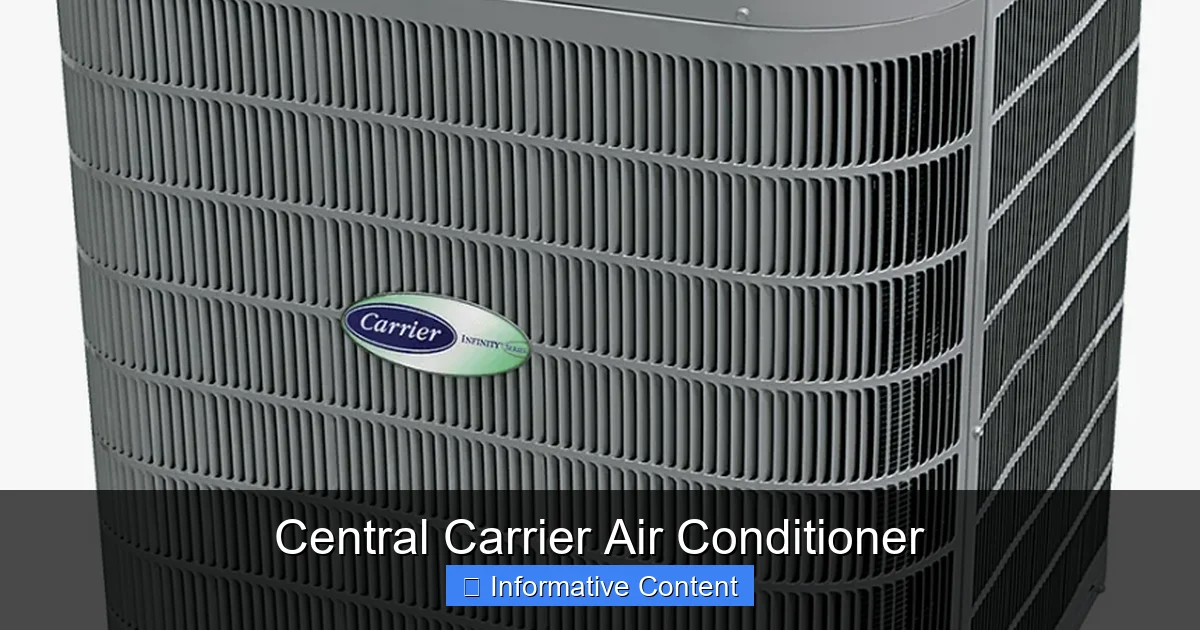
Visual guide about Central Carrier Air Conditioner
Image source: kindpng.com
Carrier offers a range of central air conditioning models to suit different homes, climates, and budgets. The main types differ in efficiency, performance, and features. Here’s a breakdown of the three primary categories:
Single-Stage Units
Single-stage Carrier air conditioners operate at full capacity whenever they’re on. They’re the most basic and affordable option, ideal for milder climates or smaller homes where cooling demands are consistent. While they’re reliable and easy to maintain, they can be less efficient because they constantly cycle on and off at 100% power.
For example, the Carrier Comfort™ Series includes single-stage models like the 24ACC6, which offers a SEER2 rating of up to 16. These units are a great entry-level choice for homeowners looking for dependable cooling without breaking the bank.
Two-Stage Units
Two-stage models, like those in the Carrier Performance™ Series, offer better efficiency and comfort. They can run at either high or low capacity, depending on the cooling need. On mild days, they operate at low stage—using less energy and running longer cycles, which improves dehumidification and reduces temperature swings.
For instance, the 24VNA6 model runs at about 70% capacity most of the time, only switching to full power during extreme heat. This results in quieter operation, lower energy bills, and more consistent indoor comfort.
Variable-Speed (Modulating) Units
At the top of the line are variable-speed or modulating units, found in the Carrier Infinity® Series. These systems can adjust their output in tiny increments—anywhere from 25% to 100%—matching cooling output precisely to demand. This means they rarely cycle on and off, maintaining a steady temperature and humidity level.
The Infinity 24VNA9, for example, features a variable-speed compressor and advanced diagnostics. It can communicate with your thermostat and HVAC system to optimize performance, detect issues early, and even send alerts to your phone. While these units cost more upfront, they offer the highest efficiency (up to 26 SEER2), the quietest operation, and the best long-term savings.
Choosing the Right Model for Your Home
When deciding which type to buy, consider your climate, home size, and budget. If you live in a region with long, hot summers, a two-stage or variable-speed unit may be worth the investment. For milder areas or smaller homes, a single-stage model could be sufficient.
Also, think about how long you plan to stay in your home. If you’re moving in a few years, a mid-tier model might make sense. But if you’re settling in for the long haul, the energy savings and comfort of a high-efficiency unit can pay off over time.
A certified Carrier dealer can perform a load calculation (Manual J) to determine the right size and type for your home. Oversized units cycle too frequently, wasting energy and reducing comfort. Undersized units struggle to cool your home, leading to higher bills and premature wear.
Energy Efficiency and Cost Savings
One of the biggest advantages of a central Carrier air conditioner is its energy efficiency. Modern Carrier units are designed to use less electricity while delivering more cooling power—helping you save money and reduce your carbon footprint.
Understanding SEER and SEER2 Ratings
Efficiency is measured by the Seasonal Energy Efficiency Ratio (SEER) or the newer SEER2 standard. SEER2 is a more rigorous test that better reflects real-world conditions. The higher the rating, the more efficient the unit.
For example:
– A 14 SEER2 unit is the federal minimum in most states.
– Carrier’s Comfort Series ranges from 14 to 16 SEER2.
– Performance Series models go up to 18 SEER2.
– Infinity Series units can reach 26 SEER2.
To put it in perspective, upgrading from a 10 SEER unit (common in older homes) to a 20 SEER2 Carrier system can cut your cooling costs by nearly 50%. Over 10–15 years, that could mean thousands in savings.
Real-World Energy Savings
Let’s say your current AC uses 3,000 watts and runs 1,200 hours per summer. At $0.15 per kWh, that’s about $540 per year. A 20 SEER2 Carrier unit might use only 1,500 watts for the same cooling, cutting your bill to $270—saving $270 annually. Over 15 years, that’s $4,050 in savings, not including rising energy costs.
Additionally, many utility companies offer rebates for installing high-efficiency HVAC systems. Check with your local provider—you could get $200–$800 back just for upgrading to a qualifying Carrier model.
Tax Credits and Incentives
The federal government also encourages energy-efficient upgrades. Under the Inflation Reduction Act, you may qualify for a tax credit of up to $600 for installing a central air conditioner with a SEER2 rating of 16 or higher. Some states and municipalities offer additional incentives, so it’s worth researching what’s available in your area.
Long-Term Value
While high-efficiency Carrier units cost more upfront, their long-term value is clear. Lower energy bills, fewer repairs, and longer lifespan (15–20 years with proper maintenance) make them a smart investment. Plus, energy-efficient homes are more attractive to buyers if you ever decide to sell.
Installation and Sizing Considerations
Even the best central Carrier air conditioner won’t perform well if it’s improperly installed or the wrong size. That’s why professional installation is critical.
Why Professional Installation Matters
HVAC systems are complex, and mistakes can lead to poor performance, higher bills, and even safety hazards. A certified Carrier dealer has the training, tools, and experience to install your system correctly. They’ll ensure proper refrigerant charge, secure connections, and correct airflow—all of which affect efficiency and longevity.
Improper installation can void your warranty, so always use a licensed technician. Carrier’s dealer locator tool on their website helps you find qualified professionals in your area.
Proper Sizing: The Key to Comfort and Efficiency
Sizing isn’t just about square footage. A professional will perform a Manual J load calculation, which considers:
– Home size and layout
– Insulation levels
– Window type and orientation
– Local climate
– Number of occupants
For example, a well-insulated home in Arizona needs a different size unit than a drafty house in Florida, even if they’re the same size. An oversized unit cools the air quickly but doesn’t run long enough to remove humidity, leaving your home feeling clammy. An undersized unit runs constantly, driving up bills and wearing out faster.
A properly sized Carrier system delivers balanced cooling, better dehumidification, and longer equipment life.
Ductwork Inspection and Sealing
Your ductwork plays a huge role in system performance. Leaky or poorly insulated ducts can lose 20–30% of cooled air before it reaches your rooms. During installation, your technician should inspect your ducts and seal any leaks. If your ducts are old or damaged, they may recommend duct sealing or replacement.
Upgrading to insulated, airtight ducts improves efficiency and ensures that every room gets the right amount of cool air.
Installation Timeline and What to Expect
A typical central AC installation takes 1–2 days, depending on complexity. The process includes:
1. Removing the old unit (if applicable)
2. Installing the new outdoor condenser
3. Connecting refrigerant lines and electrical wiring
4. Installing or connecting the indoor coil
5. Testing the system and checking for leaks
6. Setting up the thermostat and explaining operation
Your technician should walk you through the system, show you how to use the thermostat, and provide maintenance tips. They’ll also register your warranty, which is essential for coverage.
Maintenance and Longevity
A central Carrier air conditioner is built to last, but regular maintenance is key to keeping it running smoothly for 15–20 years.
Annual Professional Tune-Ups
Just like a car, your AC needs regular checkups. Schedule a professional maintenance visit once a year—ideally in spring, before the cooling season begins. A technician will:
– Clean coils and fans
– Check refrigerant levels
– Inspect electrical connections
– Lubricate moving parts
– Test system performance
This preventive care can catch small issues before they become costly repairs and ensure your system operates at peak efficiency.
DIY Maintenance Tips
You can also do your part to keep your system in top shape:
– **Change air filters every 1–3 months.** Dirty filters restrict airflow, forcing the system to work harder.
– **Keep the outdoor unit clear.** Remove leaves, grass, and debris from around the condenser. Maintain at least 2 feet of clearance on all sides.
– **Clean the condenser coils.** Use a garden hose to gently rinse off dirt and grime. Never use a pressure washer—it can damage the fins.
– **Check the condensate drain.** Make sure it’s not clogged, which can cause water leaks and indoor humidity issues.
Signs Your System Needs Attention
Watch for these red flags:
– Reduced cooling or uneven temperatures
– Unusual noises (grinding, squealing, banging)
– Higher-than-normal energy bills
– Ice buildup on coils or refrigerant lines
– Frequent cycling on and off
If you notice any of these, call a technician right away. Ignoring problems can lead to compressor failure or other major repairs.
Extending the Life of Your Unit
With proper care, a Carrier air conditioner can last 15–20 years. To maximize longevity:
– Use a programmable or smart thermostat to reduce runtime
– Install a surge protector to protect against power spikes
– Consider a whole-house dehumidifier to reduce strain on the AC
– Keep up with filter changes and seasonal maintenance
Investing a little time and money in maintenance pays off in lower bills, fewer repairs, and longer system life.
Smart Features and Integration
Modern central Carrier air conditioners aren’t just about cooling—they’re part of a connected home ecosystem. Many models come with smart features that enhance comfort, convenience, and control.
Wi-Fi Connectivity and Remote Access
Models like the Infinity 24VNA9 include built-in Wi-Fi, allowing you to control your system from anywhere using the Carrier app. You can adjust the temperature, set schedules, and receive alerts—all from your smartphone or tablet.
For example, if you’re coming home early on a hot day, you can turn on the AC remotely so your house is cool when you arrive. Or if you forget to change the filter, the app will remind you.
Compatibility with Smart Thermostats
Carrier’s Infinity Touch thermostat is a powerhouse of features. It includes:
– Touchscreen interface with weather forecasts
– Energy usage reports
– Humidity control
– Zoning support
– Voice control via Alexa or Google Assistant
It also uses geofencing to detect when you’re away and adjust the temperature automatically, saving energy without sacrificing comfort.
Zoning Systems for Customized Comfort
If your home has multiple levels or rooms that heat up differently, a zoning system can help. It uses motorized dampers in the ductwork to direct cool air only where it’s needed. Pair it with a smart thermostat, and you can set different temperatures for the master bedroom, living room, and basement.
For instance, you might keep the upstairs cooler at night and the main floor warmer during the day. This not only improves comfort but also reduces energy waste.
Integration with Home Automation
Carrier systems can integrate with platforms like Apple HomeKit, Samsung SmartThings, and Amazon Alexa. This allows you to control your AC alongside lights, locks, and security systems using voice commands or automation routines.
Imagine saying, “Goodnight,” and your thermostat sets to sleep mode, lights turn off, and the AC adjusts to a cooler temperature—all automatically.
Environmental Impact and Sustainability
As climate change becomes a growing concern, homeowners are looking for ways to reduce their environmental footprint. Central Carrier air conditioners are designed with sustainability in mind.
Eco-Friendly Refrigerants
As mentioned earlier, Carrier has phased out ozone-depleting R-22 and now uses Puron® (R-410A) and Puron Advance™ (R-32). These refrigerants are safer for the environment and improve system efficiency.
Puron Advance™, in particular, has a GWP 68% lower than R-410A, making it one of the most sustainable options available.
Energy Star Certification
Many Carrier models are ENERGY STAR certified, meaning they meet strict efficiency guidelines set by the EPA. These units use 8–10% less energy than standard models, reducing greenhouse gas emissions and saving money.
Look for the ENERGY STAR label when shopping—it’s a quick way to identify top-performing products.
Recycling and Responsible Disposal
When it’s time to replace your old unit, Carrier encourages responsible disposal. Certified dealers can safely recover refrigerant and recycle components like metal and copper. This prevents harmful chemicals from entering the environment.
Some programs even offer trade-in incentives, giving you a discount on a new Carrier system when you recycle your old one.
Supporting a Greener Future
By choosing an energy-efficient central Carrier air conditioner, you’re not just cooling your home—you’re contributing to a cleaner planet. Lower energy use means fewer fossil fuels burned at power plants, reducing carbon emissions and air pollution.
Carrier’s commitment to innovation and sustainability ensures that their products are built for today—and tomorrow.
Conclusion
A central Carrier air conditioner is more than just a cooling system—it’s a long-term investment in comfort, efficiency, and peace of mind. With a century of innovation behind them, Carrier continues to lead the HVAC industry with reliable, high-performance units that adapt to your lifestyle and protect the environment.
From single-stage models for budget-conscious homeowners to variable-speed Infinity systems with smart controls, there’s a Carrier air conditioner for every need. Proper sizing, professional installation, and regular maintenance ensure you get the most out of your system, with lower bills and fewer repairs.
Whether you’re upgrading from an old unit or building a new home, choosing Carrier means choosing quality, durability, and cutting-edge technology. With features like Wi-Fi connectivity, zoning support, and eco-friendly refrigerants, these systems offer more than just cool air—they offer smarter, greener living.
So when the next heatwave hits, you can relax knowing your home is cool, quiet, and efficient—thanks to a central Carrier air conditioner.
Frequently Asked Questions
How long does a central Carrier air conditioner last?
A well-maintained central Carrier air conditioner typically lasts 15 to 20 years. Regular tune-ups, clean filters, and proper installation are key to maximizing its lifespan.
What size central Carrier AC do I need for my home?
The right size depends on your home’s square footage, insulation, windows, and climate. A certified HVAC technician should perform a Manual J load calculation to determine the correct tonnage and model.
Are Carrier air conditioners energy efficient?
Yes, Carrier offers some of the most energy-efficient central air conditioners on the market, with SEER2 ratings up to 26. High-efficiency models can significantly reduce your electricity bills.
Can I install a central Carrier air conditioner myself?
No, professional installation is required. Improper installation can lead to poor performance, safety hazards, and voided warranties. Always use a licensed Carrier dealer.
Do Carrier air conditioners work with smart thermostats?
Yes, many Carrier models are compatible with smart thermostats like the Carrier Infinity Touch, allowing remote control, scheduling, and integration with home automation systems.
What refrigerant do Carrier air conditioners use?
Newer Carrier units use Puron® (R-410A) or Puron Advance™ (R-32), both of which are chlorine-free and environmentally safer than older refrigerants like R-22.