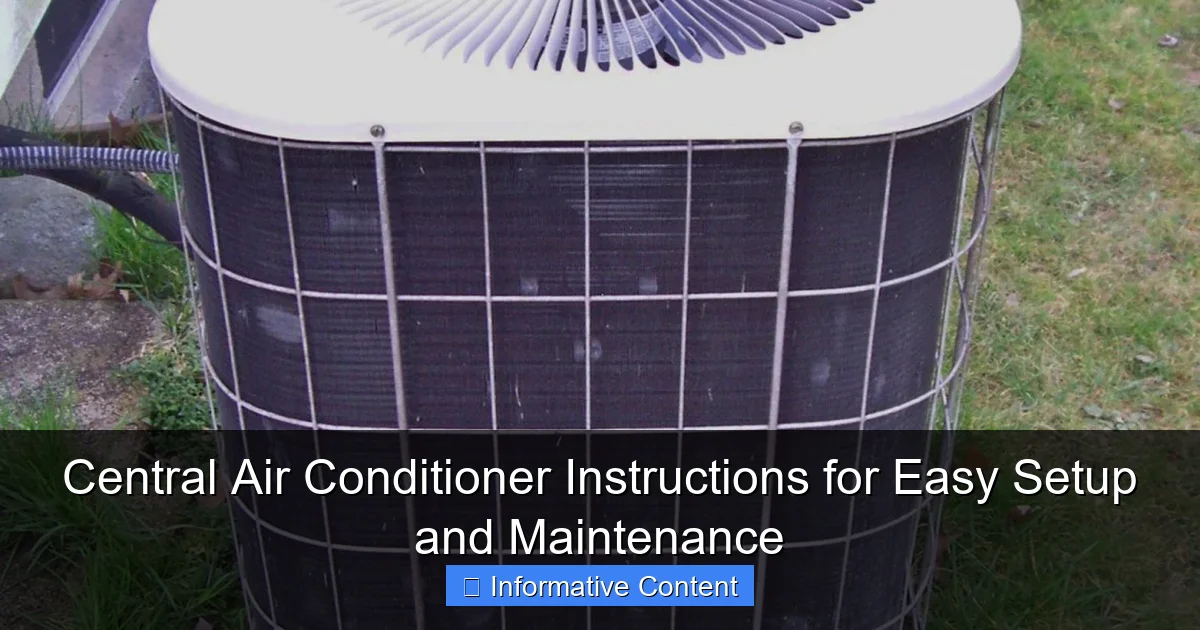
Featured image for central air conditioner instructions
Image source: images.saymedia-content.com
Proper setup and regular maintenance are essential for maximizing the efficiency and lifespan of your central air conditioner. This guide provides clear, step-by-step instructions to ensure a hassle-free installation and year-round performance, from thermostat calibration to filter changes. Follow these expert tips to keep your system running smoothly, reduce energy costs, and avoid costly repairs.
Key Takeaways
- Read the manual first: Always review manufacturer instructions before setup or maintenance.
- Clean filters monthly: Dirty filters reduce efficiency and strain the system.
- Schedule annual inspections: Professional checks prevent costly repairs and extend lifespan.
- Clear debris regularly: Keep outdoor units free of leaves and obstructions.
- Set optimal thermostat temps: Save energy while maintaining comfort year-round.
- Check refrigerant levels: Low levels signal leaks or system inefficiencies.
- Power off for maintenance: Always disconnect electricity before servicing components.
📑 Table of Contents
Understanding Your Central Air Conditioner
What Is a Central Air Conditioner?
Think of your central air conditioner as the lungs of your home. It quietly works behind the scenes to keep your indoor environment cool and comfortable, especially during those sweltering summer months. Unlike window units or portable ACs, a central air system uses a network of ducts to distribute cooled air throughout your entire house. It’s a bit like having a personal climate control system that doesn’t require you to lug heavy appliances from room to room.
At its core, a central air conditioner consists of two main components: the outdoor unit (condenser and compressor) and the indoor unit (evaporator coil and air handler). Refrigerant circulates between these units, absorbing heat from inside your home and releasing it outside. This process keeps your living spaces cool and dry. If you’ve ever walked past the outdoor unit and felt hot air blowing out, that’s the heat being expelled—your AC doing its job!
Why Proper Setup and Maintenance Matter
Let me share a quick story: A friend of mine once ignored her AC’s odd noises, thinking, “It’ll pass.” Spoiler alert: It didn’t. The unit broke down mid-summer, and the repair cost was triple what a simple maintenance check would’ve been. That’s why understanding central air conditioner instructions isn’t just about comfort—it’s about saving money, extending your system’s lifespan, and avoiding emergency repairs.
Proper setup ensures your AC runs efficiently from day one. A poorly installed unit can waste up to 30% more energy, according to the U.S. Department of Energy. Meanwhile, regular maintenance (like cleaning filters and checking refrigerant levels) prevents breakdowns and keeps energy bills in check. Think of it like changing your car’s oil: Skipping it might work short-term, but long-term? Not so much.
Step-by-Step Central Air Conditioner Setup
Choosing the Right Location
Before you even think about turning on your AC, placement matters. Here’s how to pick the perfect spot:
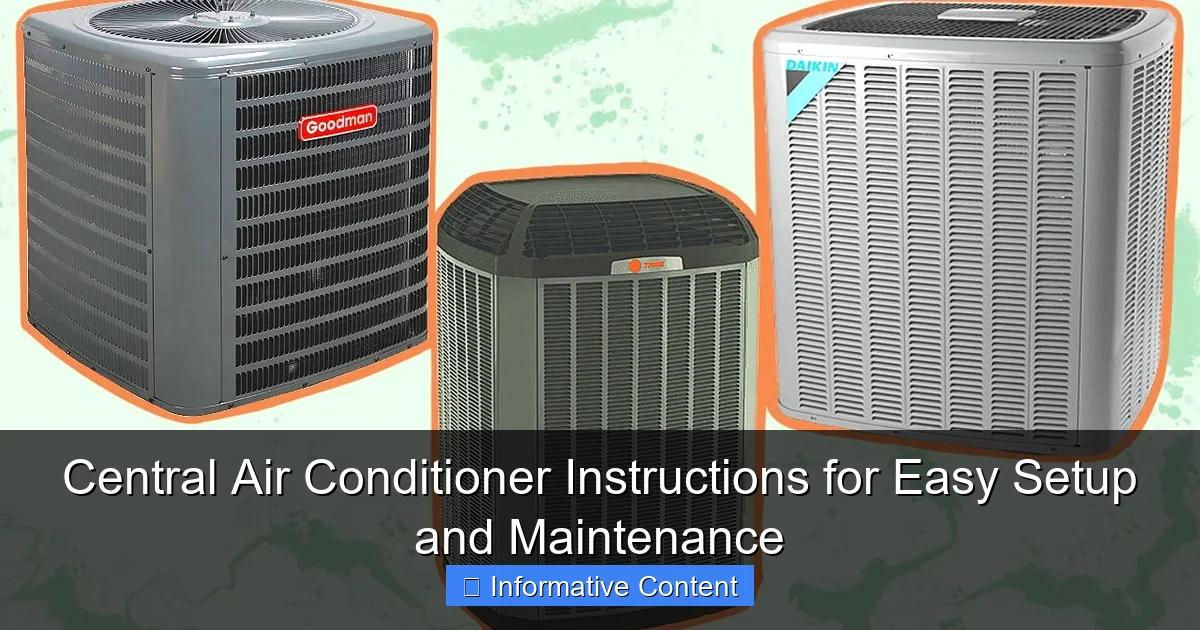
Visual guide about central air conditioner instructions
Image source: homesthetics.net
- Outdoor Unit: Place it on a level concrete pad, at least 2–3 feet away from walls, bushes, or fences. This ensures proper airflow. Avoid shaded areas—while it seems counterintuitive, direct sunlight helps the condenser work more efficiently.
- Indoor Unit: The air handler or furnace should be in a dry, well-ventilated area (like a basement or utility closet). Keep it away from water sources to prevent corrosion.
Pro tip: If you’re installing a new system, hire a licensed HVAC pro. DIY setups can void warranties and lead to safety hazards (like refrigerant leaks).
Connecting the Components
Once the units are in place, it’s time to connect the dots. This is where most people get nervous, but here’s the breakdown:
- Electrical Wiring: The outdoor unit needs a dedicated 240-volt circuit. Never splice wires yourself—this is a job for an electrician.
- Refrigerant Lines: These copper tubes carry refrigerant between units. They must be insulated to prevent condensation. A pro will vacuum and pressure-test the lines to ensure no leaks.
- Ductwork: Seal all duct joints with mastic tape (not duct tape—it’s not the same!). Leaky ducts can waste up to 20% of your AC’s output.
Example: My neighbor tried sealing ducts with duct tape. A year later, his energy bills skyrocketed. A pro found gaps in the joints—a $50 fix with mastic tape saved him $300/year.
Initial System Testing
Before you crank the AC to “Arctic Blast,” test it properly:
- Turn on the power and thermostat.
- Listen for unusual noises (banging, hissing).
- Check airflow from vents. If one room is colder than another, you might have duct issues.
- Verify the thermostat reads the correct temperature. If it’s off by more than 2 degrees, recalibrate it.
Warning: If the outdoor unit doesn’t start or you smell burning, shut it off immediately. Faulty wiring or compressor issues can be dangerous.
Daily Operation and User Controls
Using Your Thermostat Effectively
Your thermostat is the brain of the operation. Here’s how to use it wisely:
- Set a Schedule: Program it to raise the temperature when you’re asleep or away. Even a 7–10 degree shift can cut cooling costs by 10%, per Energy Star.
- Smart Thermostats: Models like Nest or Ecobee learn your habits and adjust automatically. My cousin saved $200/year with hers.
- Avoid Constant Adjustments: Cranking the AC to 60°F won’t cool your home faster. It just runs longer and wears out the system.
Pro tip: Use the “auto” fan setting. “On” mode runs the fan continuously, which wastes energy and dries out the air.
Adjusting Vents and Registers
Not all rooms need the same cooling. Here’s how to balance airflow:
- Partially close vents in rarely used rooms (like a guest bedroom).
- Keep vents unobstructed by furniture or curtains.
- For two-story homes, close lower-level vents slightly to push more air upstairs.
Example: A client had a hot second-floor bedroom. We adjusted the downstairs vents, and the temperature difference dropped from 10°F to 2°F.
Troubleshooting Common Issues
Even with perfect setup, hiccups happen. Here’s how to handle them:
- AC Won’t Turn On: Check the circuit breaker and thermostat batteries.
- Weak Airflow: Replace the air filter (more on this later).
- Frozen Coil: Turn off the AC, let it thaw, and check for dirty filters or refrigerant leaks.
Remember: If the problem persists, call a pro. DIY fixes can worsen the issue.
Essential Maintenance for Longevity
Monthly Tasks You Can DIY
Don’t wait for a breakdown—prevent it! These monthly checks take 10 minutes:
- Replace Air Filters: Clogged filters reduce airflow and strain the system. Use a 4-inch pleated filter for best results. My dad ignored his for a year—the motor burned out.
- Inspect Outdoor Unit: Clear leaves, grass, and debris from the condenser. Trim plants back 2 feet.
- Check Drain Line: Pour a cup of bleach down the drain pan to prevent algae growth.
Pro tip: Set a phone reminder on the 1st of every month. Consistency is key!
Annual Professional Maintenance
Twice a year (before summer and winter), schedule a pro tune-up. Here’s what they’ll do:
- Clean Coils: Dirty coils reduce efficiency by up to 30%.
- Check Refrigerant Levels: Too much or too little harms performance.
- Inspect Electrical Connections: Loose wires cause overheating.
- Lubricate Moving Parts: Reduces wear and tear.
Cost: Expect to pay $75–$200 per visit. Think of it as an insurance policy.
Seasonal Shutdown and Startup
For those in colder climates, here’s how to prep your AC for winter:
- Turn off the outdoor unit’s power switch.
- Cover the condenser with a breathable cover (plastic traps moisture).
- Reverse steps in spring—clean the unit before first use.
Example: My uncle skipped the cover. A squirrel nested inside, and the repair cost $1,200. Ouch.
Energy Efficiency and Cost-Saving Tips
Smart Usage Habits
Want to slash your energy bills? Try these:
- Use Ceiling Fans: They create a wind-chill effect, letting you raise the thermostat 4°F without losing comfort.
- Close Blinds/Shades: Blocking sunlight reduces cooling load.
- Seal Air Leaks: Weatherstrip doors and windows. A $20 tube of caulk can save $100/year.
Pro tip: Run the AC at 78°F when home and 85°F when away. It’s the sweet spot for comfort and efficiency.
Upgrading for Efficiency
If your AC is over 10 years old, consider these upgrades:
- High-SEER Units: Modern ACs have Seasonal Energy Efficiency Ratios (SEER) of 14–26 (vs. 10–13 for old models). A 20-SEER unit uses 50% less energy.
- Zoning Systems: Install dampers in ductwork to cool only occupied areas.
- Smart Vents: Brands like Keen Home adjust airflow room-by-room.
Data table: Energy Savings by SEER Rating
| SEER Rating | Annual Energy Cost (1,000 sq. ft.) | CO2 Emissions (lbs/year) |
|---|---|---|
| 13 (Old Unit) | $750 | 1,500 |
| 18 (Mid-Range) | $520 | 1,040 |
| 22 (High-Efficiency) | $430 | 860 |
Source: U.S. Department of Energy estimates
When to Call a Professional
Red Flags You Can’t Ignore
Some issues require expert help. Call a pro if you notice:
- Refrigerant Leaks: Bubbling sounds, hissing, or ice on lines.
- Electrical Problems: Burning smells or tripped breakers.
- Frequent Cycling: AC turns on/off every 5–10 minutes.
- High Humidity: Your home feels damp despite cooling.
Example: A friend ignored a refrigerant leak. The compressor failed, and the repair was $2,000. A $150 leak repair could’ve fixed it.
Finding a Reliable HVAC Technician
Not all pros are created equal. Here’s how to pick one:
- Check Licenses: Verify their license with your state’s HVAC board.
- Read Reviews: Look for consistent praise about punctuality and honesty.
- Get Multiple Quotes: Compare prices for repairs over $500.
Pro tip: Join a maintenance plan ($15–$30/month). It includes discounts and priority service.
Conclusion
Mastering your central air conditioner instructions isn’t about becoming an HVAC expert—it’s about understanding the basics to keep your home cool, efficient, and problem-free. From smart thermostat settings to seasonal maintenance, small steps add up to big savings and comfort. Remember, your AC is an investment. Treat it right, and it’ll serve you well for years.
So, the next time you feel that refreshing blast of cool air, take a moment to appreciate the system working hard for you. And if you spot a warning sign? Don’t wait. A quick check or call to a pro can save you from sweaty nights and wallet-wrenching repairs. Here’s to staying cool—literally!
Frequently Asked Questions
What are the basic central air conditioner instructions for first-time setup?
Begin by ensuring your thermostat is compatible and properly wired, then turn off the power at the breaker before connecting the outdoor unit. Follow the manufacturer’s manual to safely install refrigerant lines, secure the condenser, and restore power to test the system.
How often should I change the air filter in my central air conditioner?
You should check and replace your air filter every 1 to 3 months, especially during peak usage seasons. A clean filter improves efficiency and indoor air quality, and is a key part of central air conditioner maintenance.
Why is my central air conditioner not cooling properly?
This could be due to a dirty filter, low refrigerant levels, or a malfunctioning thermostat. Check these components first and consult your central air conditioner instructions or a technician if the issue persists.
Can I install a central air conditioner myself using the instructions?
While basic tasks like filter changes are DIY-friendly, full installation requires electrical and refrigerant handling expertise. It’s recommended to hire a licensed HVAC professional to ensure safety and compliance with local codes.
What maintenance steps are included in central air conditioner instructions?
Regular maintenance includes cleaning coils, checking refrigerant levels, inspecting ductwork, and lubricating moving parts. Following your central air conditioner instructions helps prevent breakdowns and extends system life.
How do I safely turn off my central air conditioner for the season?
Turn off the thermostat and shut off power at the breaker, then cover the outdoor unit to protect it from debris. Refer to your central air conditioner instructions for model-specific shutdown procedures.