
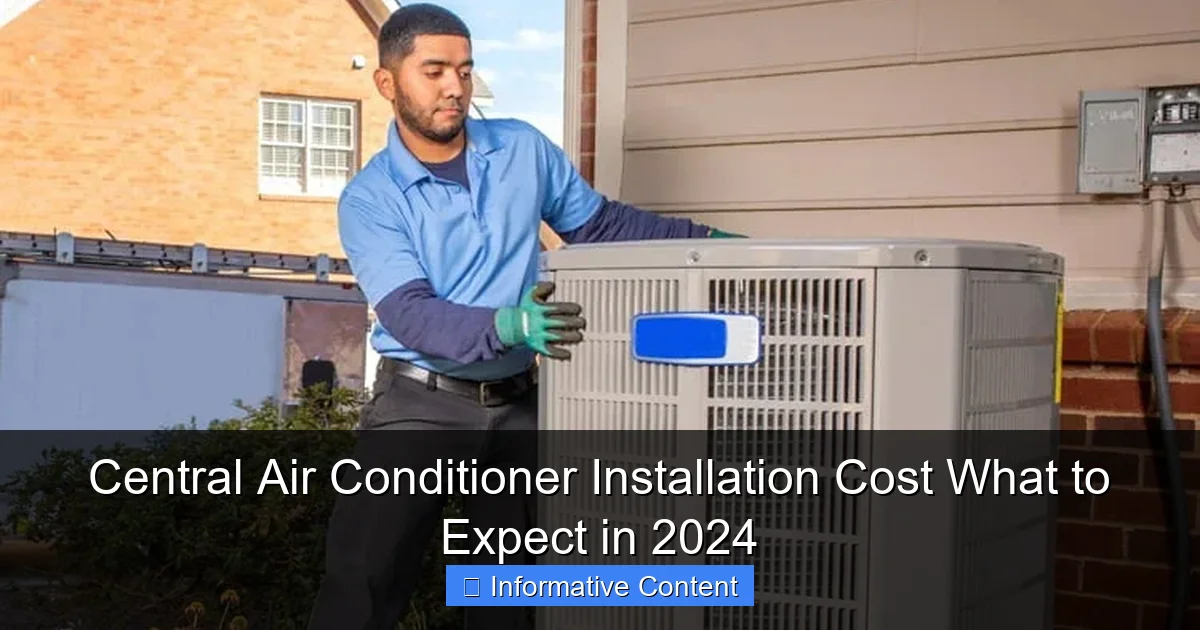
Featured image for central air conditioner installation cost
Image source: prowestheating.com
The average central air conditioner installation cost in 2024 ranges from $5,000 to $12,000, depending on unit size, efficiency, and regional labor rates. Higher-efficiency models and complex installations can push costs above $15,000, but rebates and tax credits may help offset the investment.
Key Takeaways
- Get multiple quotes: Compare at least 3 local HVAC estimates for fair pricing.
- Size matters: Proper unit sizing prevents wasted energy and higher long-term costs.
- SEER rating impacts: Higher efficiency units cost more upfront but save on bills.
- Install in off-season: Spring/fall installations often offer lower rates and faster service.
- Check rebates: Federal, state, or utility incentives can reduce total installation costs.
- Ductwork affects price: Existing ducts may need upgrades, adding to the final bill.
📑 Table of Contents
- What’s the Real Cost of a Central Air Conditioner Installation in 2024?
- What Influences the Central Air Conditioner Installation Cost?
- Average Central Air Conditioner Installation Cost in 2024
- Hidden Costs and Surprises to Watch For
- How to Save Money on Central AC Installation
- Choosing the Right Contractor: What to Ask
- Final Thoughts: Is It Worth the Investment?
What’s the Real Cost of a Central Air Conditioner Installation in 2024?
Let’s be real—no one likes sweating through a summer afternoon. I remember my first real heatwave in my old two-story house. The ceiling fans were running full blast, but the air felt like a warm soup. That’s when I realized: it was time to bite the bullet and install a central air conditioner. But as I started researching, I hit a wall of numbers, jargon, and conflicting estimates. How much should I really expect to pay? Was a $3,000 quote too good to be true? Was $8,000 overkill for a standard suburban home?
If you’re asking the same questions, you’re not alone. The central air conditioner installation cost in 2024 varies more than most people expect—and it’s not just about the unit price. From your home’s size and ductwork to local labor rates and energy efficiency, dozens of factors come into play. But don’t worry. In this guide, I’ll walk you through everything you need to know—based on real quotes, expert insights, and my own journey—so you can make a smart, confident decision without getting taken for a ride.
What Influences the Central Air Conditioner Installation Cost?
Think of installing central AC like building a custom kitchen. Sure, the fridge (the AC unit) matters, but the plumbing, cabinets, and layout (your home’s infrastructure) can make or break the project. The same goes for air conditioning. The central air conditioner installation cost isn’t just a flat fee—it’s a mix of equipment, labor, and site-specific needs.
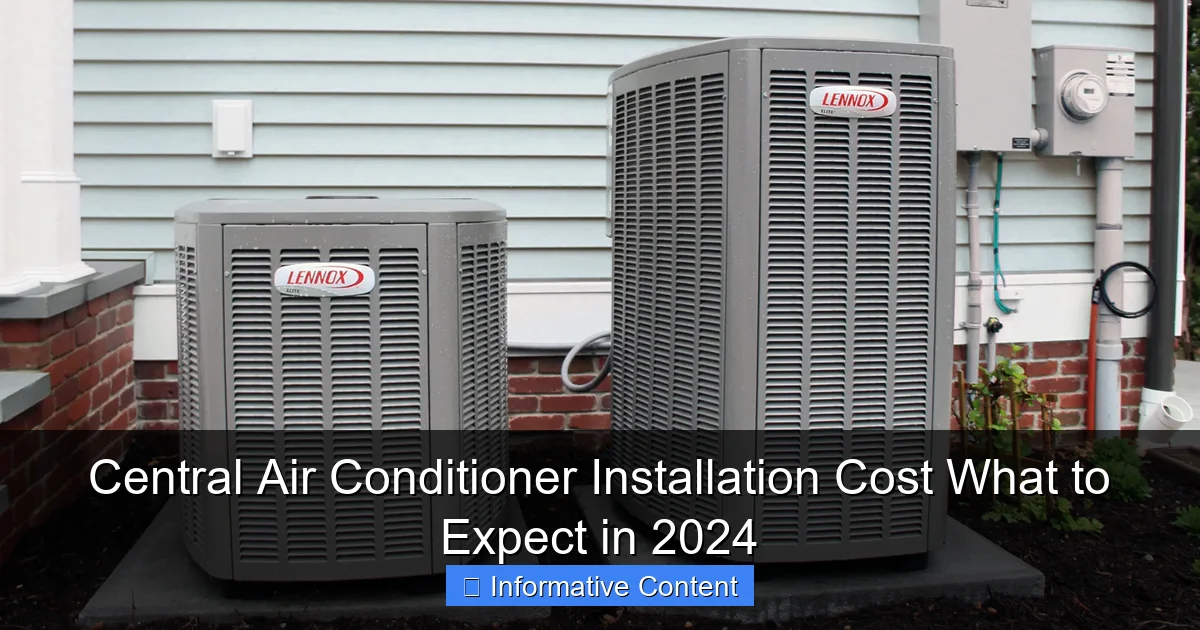
Visual guide about central air conditioner installation cost
Image source: lennox.com
1. Size of the AC Unit (Tonnage)
The first thing contractors look at is how much cooling power your home needs. This is measured in “tons,” where one ton equals 12,000 BTUs (British Thermal Units) of cooling. A typical 1,500 to 2,000 sq ft home usually needs a 2.5- to 3.5-ton unit. But bigger isn’t always better. Oversizing can lead to short-cycling (the AC turning on and off too often), which wears out the system and makes your house feel clammy. Undersizing? It’ll run constantly and still leave you sweating.
Tip: A professional load calculation (like the ACCA Manual J) is essential. Don’t trust a contractor who guesses your tonnage based on square footage alone.
2. Efficiency (SEER Rating)
SEER (Seasonal Energy Efficiency Ratio) measures how efficiently your AC uses electricity. In 2024, the federal minimum is 14 SEER in the South and 13 SEER in the North. But high-efficiency models can go up to 26 SEER. A 20 SEER unit might cost $1,500 more upfront than a 14 SEER unit, but it can save you 30–50% on cooling bills over time. For example, a 3-ton 14 SEER AC might cost $2,800, while a 20 SEER version could be $4,200.
Real-world example: A friend in Phoenix upgraded from 13 to 18 SEER and cut her summer electric bill from $320 to $190 per month. That’s a $1,560 annual savings—paying back the upgrade in under 3 years.
3. Ductwork Condition and Modifications
This is where many people get surprised. If your home already has ductwork (like from a furnace), the central air conditioner installation cost drops significantly. But if ducts are damaged, undersized, or poorly sealed, repairs can add $1,000–$3,000. In my case, my 1980s ducts had leaks and were too narrow for modern AC airflow. Fixing them added $2,200 to the bill.
Tip: Ask for a duct inspection with a thermal camera. It shows hidden leaks you can’t see otherwise.
4. Electrical Upgrades
Central AC units need a dedicated 240-volt circuit. If your electrical panel is old or already at capacity, you might need a panel upgrade or a new sub-panel. This can add $800–$2,500. One homeowner in Austin had to upgrade from a 100-amp to a 200-amp panel—adding $2,100 to the project.
5. Location and Labor Rates
Labor costs vary widely. In rural areas, you might pay $50–$75 per hour. In cities like San Francisco or New York, it’s $100–$150. Travel fees, permits, and local building codes also affect the final price. A contractor in rural Ohio quoted $3,800 for a standard install, while the same job in Denver cost $5,200 due to higher labor rates and permit fees.
Average Central Air Conditioner Installation Cost in 2024
Now, let’s talk numbers. The central air conditioner installation cost in 2024 typically ranges from $3,500 to $7,500 for a standard 3-ton unit in a 2,000 sq ft home with existing ductwork. But outliers exist—especially for complex installations. Here’s a breakdown based on recent contractor quotes from across the U.S.
Low-End Estimate: $3,000–$4,500
This is the “bare minimum” scenario. Think: a 14 SEER unit, no ductwork changes, a simple electrical hookup, and low labor rates. It’s common in smaller homes (under 1,500 sq ft) or regions with low labor costs. But be cautious: some contractors cut corners here. One homeowner got a $3,200 quote but ended up paying $4,800 after the installer found corroded refrigerant lines and had to replace them.
Mid-Range Estimate: $4,500–$6,500
This is where most homeowners land. It includes a 16–18 SEER unit, minor duct sealing, and a standard electrical connection. For example, a 3-ton 16 SEER unit installed in a 2,000 sq ft home in Dallas might cost $5,400. The unit itself is ~$3,000, labor is ~$1,800, and $600 for materials (refrigerant lines, mounting pad, thermostat).
High-End Estimate: $6,500–$9,000+
This covers complex jobs: high-efficiency units (20+ SEER), ductwork redesign, panel upgrades, or multi-zone systems. A 4-ton 20 SEER AC in a 3,000 sq ft home with new ductwork in Seattle could hit $8,500. Add a smart thermostat, zoning, and a 10-year warranty, and you’re at $10,000.
Cost Table: Central AC Installation by Home Size & SEER
| Home Size (sq ft) | AC Size (Tons) | SEER Range | Unit Cost | Labor & Installation | Total Estimated Cost |
|---|---|---|---|---|---|
| 1,000–1,500 | 1.5–2.5 | 14–16 | $2,000–$3,000 | $1,200–$2,000 | $3,200–$5,000 |
| 1,500–2,000 | 2.5–3 | 16–18 | $3,000–$4,000 | $1,500–$2,500 | $4,500–$6,500 |
| 2,000–2,500 | 3–3.5 | 18–20 | $4,000–$5,000 | $2,000–$3,000 | $6,000–$8,000 |
| 2,500–3,000+ | 3.5–4+ | 20–26 | $5,000–$7,000 | $2,500–$4,000 | $7,500–$11,000+ |
Note: These are national averages. Costs can be 20% lower in the Midwest or 30% higher in coastal cities. Always get local quotes.
Hidden Costs and Surprises to Watch For
Here’s the truth: the central air conditioner installation cost on a quote is rarely the final price. Hidden fees and unexpected issues can add hundreds (or thousands) to your bill. I learned this the hard way.
1. Permit and Inspection Fees
Most cities require permits for AC installations, especially if you’re adding new circuits or modifying ducts. Fees range from $50 to $300, but some contractors roll them into the quote—others don’t. One installer in Atlanta charged a $175 “administration fee” for permits, which wasn’t listed upfront.
Tip: Ask for a line-item breakdown. If permits aren’t listed, they’re either free (rare) or buried in labor.
2. Refrigerant Line Replacement
Old or corroded refrigerant lines can leak, reducing efficiency and causing system failure. Replacing them costs $300–$800. My installer found my lines were 30 years old and full of pinhole leaks. The fix added $550.
3. Condensate Drain Issues
AC units produce water (condensate) as they cool. If your drain line is clogged, cracked, or improperly sloped, you’ll need a new one ($150–$400). In humid areas, a condensate pump ($200–$500) might be required to pump water to a safe location.
4. Thermostat Upgrades
Most modern ACs require a programmable or smart thermostat. If you’re keeping an old analog thermostat, you might lose access to features like energy tracking or remote control. A basic programmable thermostat adds $100–$200; a smart thermostat (like Nest or Ecobee) costs $250–$400 installed.
5. Warranty and Service Plans
Manufacturer warranties usually cover 5–10 years on parts, but labor is often excluded. Some contractors offer 10-year labor warranties for $500–$1,000. Others push expensive maintenance plans ($200–$300/year). Ask: “What’s included in the warranty?” and “Can I get labor coverage separately?”
Real-world example: A homeowner in Florida skipped the labor warranty. Two years later, the compressor failed. The part was covered, but labor cost $800 out of pocket.
How to Save Money on Central AC Installation
You don’t have to break the bank. With smart planning, you can reduce the central air conditioner installation cost by 15–30% without sacrificing quality.
1. Get Multiple Quotes (At Least 3)
Prices vary wildly between contractors. One company quoted $6,200 for my install; another wanted $4,800 for the same unit and scope. Always compare line items—not just the total. Look for differences in labor hours, materials, and included services.
Tip: Use a quote comparison spreadsheet. Highlight red flags: vague descriptions, missing permits, or unusually low labor rates (could mean cutting corners).
2. Time It Right (Off-Season Installation)
Contractors are busiest in spring and early summer. Wait until late fall or winter, and you’ll likely get a discount. One homeowner in Chicago got a $500 discount for scheduling in November. Another got free smart thermostat installation as a “slow season” promo.
3. Consider a Mid-Efficiency Unit
A 16–18 SEER unit offers a great balance of efficiency and cost. It’s 20–30% more efficient than a 14 SEER unit but 25–35% cheaper than a 20+ SEER model. For most climates, the energy savings from a 20 SEER unit won’t pay back the extra cost in less than 10 years.
4. Bundle with Other HVAC Projects
If you need a new furnace or duct cleaning, do it all at once. Contractors often discount bundled services. Replacing a furnace and AC together can save $500–$1,500 vs. doing them separately.
5. Look for Rebates and Incentives
The Inflation Reduction Act (IRA) offers federal tax credits for high-efficiency HVAC systems. In 2024, you can get 30% of the cost (up to $2,000) for AC units with 16+ SEER. Many states and utilities also offer rebates. For example, Duke Energy gives $300 for 16 SEER+ ACs. Check energy.gov/savings for local programs.
Choosing the Right Contractor: What to Ask
Not all contractors are equal. A bad install can lead to poor efficiency, noise, or even system failure. Here’s how to find a pro who delivers quality—without overcharging.
1. Verify Licenses and Insurance
Ask for their HVAC license number and verify it with your state’s licensing board. They should also carry liability insurance (at least $1 million) and workers’ comp. If they don’t, walk away.
2. Check Reviews and References
Look for 10+ reviews on Google, BBB, and Angi. Call 2–3 references. Ask: “Did the project stay on budget?” and “How did they handle unexpected issues?”
3. Demand a Detailed Quote
A good quote includes: unit model and specs, labor hours, materials list, permit fees, warranty details, and a project timeline. Avoid vague terms like “miscellaneous” or “as needed.”
4. Ask About Load Calculations and Duct Design
They should use Manual J for sizing and Manual D for ductwork. If they skip this, it’s a red flag. Proper design prevents hot/cold spots and ensures efficiency.
5. Clarify Payment Terms
Never pay in full upfront. A 10–20% deposit is normal. The rest should be due upon completion, after you’ve inspected the work. Avoid cash-only contractors.
My experience: I chose a contractor who provided a 12-page quote with diagrams, load calculations, and a 10-year labor warranty. They were $600 more than the cheapest bid—but worth every penny. The install was clean, quiet, and efficient from day one.
Final Thoughts: Is It Worth the Investment?
So, is the central air conditioner installation cost in 2024 worth it? For most homeowners, absolutely. A properly installed central AC system can:
- Lower energy bills by 20–50% (especially with a high SEER unit)
- Increase home value—homes with central AC sell for 7–10% more
- Improve comfort and air quality (with proper filtration and humidity control)
- Reduce maintenance vs. window units or ductless mini-splits
But it’s not a one-size-fits-all decision. If you live in a mild climate or only need cooling for a few weeks a year, a ductless mini-split might be cheaper. If your ducts are beyond repair, consider a hybrid approach (central AC for downstairs, mini-splits upstairs).
The key is to treat this like any major home improvement: do your research, get multiple quotes, and don’t rush. A good AC system should last 15–20 years. Spend the time upfront to get it right, and you’ll stay cool—and save money—for decades.
And remember: the cheapest quote isn’t always the best value. My $4,800 install included a 20 SEER unit, new duct sealing, a smart thermostat, and a 10-year warranty. It’s paid for itself in energy savings and peace of mind. That first cool breeze? Priceless.
Frequently Asked Questions
What is the average central air conditioner installation cost in 2024?
The average central air conditioner installation cost in 2024 ranges from $3,800 to $7,500, depending on unit size, efficiency, and labor complexity. Factors like home layout and regional labor rates can also impact the final price.
How does the size of the AC unit affect the total installation cost?
Larger units (higher tonnage) cost more upfront, typically adding $500–$1,500 per ton to the central air conditioner installation cost. However, properly sizing your system ensures optimal efficiency and long-term savings on energy bills.
Are permits included in the central air conditioner installation cost?
Most contractors include permit fees ($100–$500) in their quotes, but it’s best to confirm before signing. Local regulations may also require inspections, which can slightly increase the total cost.
Can I save money by installing a central air conditioner myself?
DIY installation is not recommended—improper setup risks system damage, voided warranties, and safety hazards. Professional installation ensures compliance with codes and manufacturer requirements, protecting your investment.
What factors besides equipment influence the final cost?
Ductwork repairs, thermostat upgrades, and removing old units can add $500–$3,000 to the total. Homes without existing ducts may face higher costs due to new duct installation.
How can I reduce my central air conditioner installation cost?
Compare quotes from licensed contractors, schedule installation during off-peak seasons, and look for manufacturer or utility rebates. Opting for a mid-efficiency model (14–16 SEER) also balances cost and performance.