
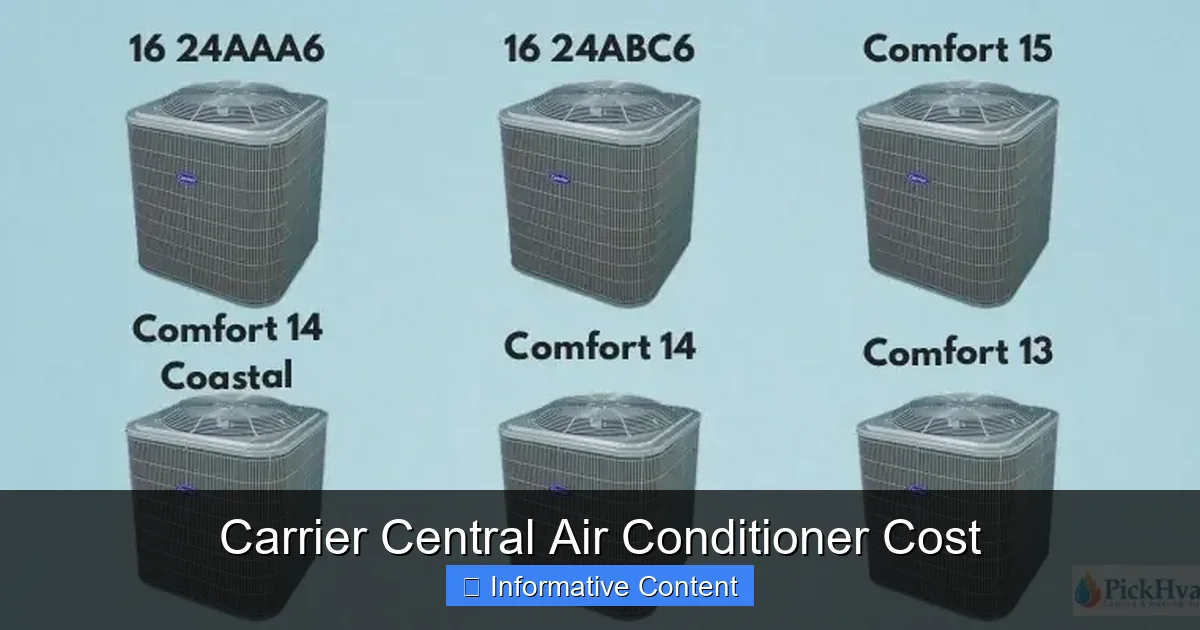
Carrier central air conditioner cost varies widely based on model, size, and installation complexity. Prices typically range from $4,500 to $12,000+, including equipment and professional installation. Understanding efficiency ratings, regional factors, and long-term savings helps homeowners make smarter cooling investments.
Key Takeaways
- Carrier central air conditioners cost between $4,500 and $12,000+ including installation, depending on model and home size.
- SEER2 ratings impact both price and energy savings—higher efficiency units cost more upfront but reduce monthly utility bills.
- Installation complexity affects total cost—older homes may need ductwork upgrades or electrical modifications.
- Regional climate and local labor rates influence pricing—hotter areas often have higher demand and installation costs.
- Rebates and tax credits can lower out-of-pocket expenses—check federal, state, and utility incentives for energy-efficient models.
- Maintenance and warranty options add long-term value—regular service extends system life and protects your investment.
- Carrier offers multiple product lines—from budget-friendly Performance series to premium Infinity models with smart features.
📑 Table of Contents
- Understanding Carrier Central Air Conditioner Cost: What You Need to Know
- Why Carrier? A Look at the Brand’s Reputation and Value
- Breaking Down the Cost: Equipment vs. Installation
- Factors That Influence Carrier Central Air Conditioner Cost
- Long-Term Savings: Is a Carrier AC Worth the Investment?
- Tips for Getting the Best Deal on a Carrier Central Air Conditioner
- Final Thoughts: Making the Right Choice for Your Home
Understanding Carrier Central Air Conditioner Cost: What You Need to Know
When it comes to staying cool during sweltering summer months, few brands command as much respect as Carrier. Known for reliability, innovation, and energy efficiency, Carrier has been a trusted name in home comfort since inventing modern air conditioning over a century ago. But with such a strong reputation comes a big question: How much does a Carrier central air conditioner actually cost?
The answer isn’t a simple number. Carrier central air conditioner cost depends on several factors—from the model you choose to the size of your home, your location, and even the complexity of installation. While you might see online estimates ranging from $3,000 to $15,000, the realistic range for most homeowners falls between $4,500 and $12,000, including professional installation. That’s a wide window, but understanding what drives the price helps you make a confident, informed decision.
Why Carrier? A Look at the Brand’s Reputation and Value
Before diving into costs, it’s worth asking: Why choose Carrier over other brands? Carrier isn’t the cheapest option on the market, but it’s often considered one of the best. The company is known for engineering durable systems with advanced features like variable-speed compressors, smart thermostats, and ultra-quiet operation. Their units consistently rank high in reliability surveys, and many models come with strong warranties—some even offering 10-year parts and compressor coverage.
Visual guide about Carrier Central Air Conditioner Cost
Image source: 5.imimg.com
Carrier’s Product Lines: From Budget to Premium
Carrier offers three main product lines, each targeting different budgets and performance needs:
- Performance Series: The most affordable line, ideal for homeowners seeking reliable cooling without breaking the bank. These units typically have SEER2 ratings between 14 and 16 and cost between $4,500 and $7,000 installed.
- Comfort Series: A mid-tier option with better efficiency and quieter operation. SEER2 ratings range from 16 to 18, and installed prices usually fall between $6,000 and $9,000.
- Infinity Series: Carrier’s top-of-the-line models, featuring advanced technology like Greenspeed Intelligence, which adjusts cooling output for maximum efficiency and comfort. These systems can cost $9,000 to $12,000+ installed, but they offer the highest SEER2 ratings (up to 26) and smart home integration.
Choosing the right series depends on your budget, climate, and how long you plan to stay in your home. If you live in a hot region and plan to stay put for 10+ years, investing in a higher-efficiency Infinity model could save you thousands in energy costs over time.
Breaking Down the Cost: Equipment vs. Installation
When evaluating Carrier central air conditioner cost, it’s important to separate the price of the unit itself from the cost of installation. The equipment typically accounts for 40% to 60% of the total expense, while labor, materials, and additional upgrades make up the rest.
Equipment Costs by Model
Here’s a general breakdown of Carrier unit prices (before installation):
- Performance Series (2–5 tons): $2,000–$3,500
- Comfort Series (2–5 tons): $3,000–$5,000
- Infinity Series (2–5 tons): $5,000–$8,000+
Note: “Tons” refers to cooling capacity—1 ton equals 12,000 BTUs. Most homes need between 2 and 5 tons, depending on square footage, insulation, and climate.
Installation Costs: What’s Included?
Professional installation is not optional—it’s essential for safety, efficiency, and warranty validity. A typical Carrier installation includes:
- Removing the old unit (if applicable)
- Installing the new condenser and evaporator coil
- Connecting refrigerant lines
- Electrical wiring and thermostat setup
- System testing and calibration
Basic installations in homes with existing ductwork and compatible electrical systems usually cost $2,500 to $4,000. However, if your home needs upgrades—like new ductwork, electrical panel work, or a new thermostat—the cost can rise to $5,000 or more.
Hidden Costs to Watch For
Some expenses aren’t always obvious upfront. Be sure to ask your HVAC contractor about:
- Ductwork inspection and sealing: Leaky ducts can reduce efficiency by 20% or more. Sealing and insulating ducts may add $500–$1,500.
- Permits and inspections: Most cities require HVAC permits, which cost $100–$300.
- Disposal fees: Removing an old unit may cost $100–$200.
- Smart thermostat upgrades: While optional, a Wi-Fi thermostat (like the Carrier Côr) enhances comfort and control, adding $200–$400.
Getting a detailed, written estimate from a licensed Carrier dealer helps avoid surprises. Always ask for a breakdown of labor, materials, and any additional services.
Factors That Influence Carrier Central Air Conditioner Cost
No two homes are exactly alike, and that means no two Carrier installations cost the same. Several key factors can push your total price higher or lower.
Home Size and Cooling Load
The bigger your home, the larger (and more expensive) the air conditioner you’ll need. HVAC professionals use a process called “Manual J load calculation” to determine the correct size based on square footage, insulation, windows, and local climate. Oversized or undersized units waste energy and wear out faster, so proper sizing is critical.
For example, a 1,500-square-foot home in a mild climate might need a 2.5-ton unit, while a 3,000-square-foot home in the desert could require a 5-ton system. Larger units cost more—both in equipment and installation.
SEER2 Rating and Energy Efficiency
SEER2 (Seasonal Energy Efficiency Ratio 2) measures how efficiently a unit uses electricity over a cooling season. Higher SEER2 ratings mean lower energy bills. As of 2023, the federal minimum is 14 SEER2 for northern states and 15 SEER2 for southern states.
Carrier offers models ranging from 14 SEER2 (Performance) to 26 SEER2 (Infinity). While a 26 SEER2 unit costs significantly more upfront, it can save $100–$300 per year on electricity compared to a 14 SEER2 model. Over 10 years, that’s $1,000–$3,000 in savings—helping offset the initial investment.
Regional Climate and Labor Costs
Where you live affects both equipment needs and installation prices. In hot, humid climates like Florida or Texas, higher-efficiency units are more common and often required by code. Demand for HVAC services is also higher, which can drive up labor costs.
For instance, installing a Carrier system in Phoenix might cost 15–20% more than the same job in Minneapolis due to higher labor rates and the need for more robust equipment. Always get local quotes from at least three Carrier-certified dealers.
Existing Infrastructure
If your home already has a compatible furnace or air handler, installation is simpler and cheaper. But if you’re replacing an older system with incompatible components, you may need to upgrade the indoor coil or air handler—adding $1,000–$2,500 to the total cost.
Homes with outdated electrical panels (e.g., 100-amp service) may also need an upgrade to support a modern AC unit, which can cost $1,500–$3,000.
Long-Term Savings: Is a Carrier AC Worth the Investment?
While Carrier central air conditioner cost may seem high compared to budget brands, the long-term value often justifies the price. High-efficiency models reduce monthly energy bills, require fewer repairs, and last longer—typically 15 to 20 years with proper maintenance.
Energy Savings Example
Let’s say you’re comparing two Carrier models:
- Performance 14 SEER2: $6,000 installed, $150/month summer electric bill
- Infinity 20 SEER2: $9,500 installed, $100/month summer electric bill
The Infinity model costs $3,500 more upfront but saves $50/month. That’s $600 per year. The higher-efficiency unit pays for itself in under six years—and continues saving money for the rest of its lifespan.
Rebates, Tax Credits, and Incentives
Many homeowners don’t realize they can reduce Carrier central air conditioner cost through rebates and tax credits. The federal government offers a tax credit of up to $600 for qualifying energy-efficient HVAC systems under the Inflation Reduction Act. Some states and utility companies also offer additional rebates—sometimes $300 to $1,000 per unit.
For example, California’s TECH Clean California program offers rebates of up to $1,000 for high-efficiency heat pumps and air conditioners. Check with your local utility provider or visit the Department of Energy website for current incentives.
Warranty and Maintenance Plans
Carrier backs its units with strong warranties—typically 10 years on parts and compressors. Some dealers also offer extended warranties or maintenance plans for $200–$500 per year. These plans cover annual tune-ups, priority service, and sometimes even repair costs.
Regular maintenance is key to maximizing efficiency and lifespan. A well-maintained Carrier system can last 5–10 years longer than a neglected one, adding significant long-term value.
Tips for Getting the Best Deal on a Carrier Central Air Conditioner
You don’t have to overpay for quality. With smart planning, you can reduce Carrier central air conditioner cost without sacrificing performance.
Get Multiple Quotes
Always get at least three detailed quotes from licensed Carrier dealers. Compare not just the total price, but also the equipment model, SEER2 rating, warranty terms, and included services. Avoid contractors who give vague estimates or pressure you to sign immediately.
Time Your Purchase
HVAC contractors are busiest in summer, which can lead to higher prices and longer wait times. Consider replacing your system in spring or fall when demand is lower. Some dealers offer off-season discounts or financing promotions.
Ask About Financing
Many Carrier dealers offer financing options with low or 0% APR for qualified buyers. This lets you spread the cost over 12 to 120 months, making a high-efficiency system more affordable. Just be sure to read the fine print—some plans have deferred interest if not paid in full.
Consider a Heat Pump
If you live in a moderate climate, a Carrier heat pump might be a better investment. These systems provide both heating and cooling, often with higher efficiency than traditional AC units. While the upfront cost is similar, you save by eliminating the need for a separate furnace.
Don’t Skip the Ductwork
Even the best air conditioner can’t perform well with leaky or poorly insulated ducts. Investing in duct sealing and insulation improves comfort, efficiency, and indoor air quality—making it a smart addition to any installation.
Final Thoughts: Making the Right Choice for Your Home
Choosing a Carrier central air conditioner is a significant investment, but one that pays off in comfort, reliability, and energy savings. While the cost may seem steep at first, understanding the factors that influence pricing—and taking advantage of rebates, financing, and smart installation practices—can make it more manageable.
Remember, the cheapest option isn’t always the best. A higher-efficiency Carrier system may cost more upfront, but it delivers better performance, lower bills, and longer life. Take the time to evaluate your needs, get professional advice, and choose a model that fits your budget and lifestyle. With the right Carrier system, you’ll enjoy cool, comfortable summers for years to come.
Frequently Asked Questions
How much does a Carrier central air conditioner cost installed?
A Carrier central air conditioner typically costs between $4,500 and $12,000+ installed, depending on the model, size, and installation complexity. Higher-efficiency Infinity models are at the top end of this range.
Is Carrier more expensive than other brands?
Carrier is generally priced in the mid-to-high range compared to brands like Trane, Lennox, and Rheem. However, it offers strong reliability, advanced features, and excellent warranties, making it a worthwhile investment for many homeowners.
Can I install a Carrier AC myself to save money?
No, professional installation is required for safety, efficiency, and warranty validity. DIY installation can lead to refrigerant leaks, electrical hazards, and voided warranties. Always hire a licensed HVAC contractor.
Do Carrier air conditioners qualify for tax credits?
Yes, many Carrier models with high SEER2 ratings qualify for federal tax credits under the Inflation Reduction Act. Check the specific model and your eligibility with a tax professional or the IRS website.
How long does a Carrier central air conditioner last?
With proper maintenance, a Carrier central air conditioner can last 15 to 20 years. Regular tune-ups, clean filters, and timely repairs help extend its lifespan.
Should I replace my furnace and AC at the same time?
It’s often more cost-effective to replace both systems together, especially if they’re over 10–15 years old. This ensures compatibility, improves efficiency, and may qualify you for bundled rebates.