
Your Carrier air conditioner serial number is a unique identifier that holds key details about your unit’s model, age, and manufacturing origin. Knowing where to find it and how to interpret it can save time, money, and hassle when scheduling service or filing warranty claims.
Key Takeaways
- Every Carrier AC unit has a unique serial number: This 10- to 15-character code identifies your specific model and production details.
- The serial number reveals the manufacturing date: Using Carrier’s coding system, you can decode the year and week your unit was made.
- It’s essential for warranty claims: Proof of purchase and serial number are required to validate most Carrier warranties.
- Helps technicians diagnose issues faster: Service pros use the serial number to access technical specs and part compatibility.
- Located in multiple places on the unit: Check the outdoor condenser, indoor air handler, or rating plate for the serial number.
- Use it to verify authenticity: Counterfeit or refurbished units may have altered or missing serial numbers.
- Keep it recorded for future reference: Store the serial number in a safe place like a home maintenance log or digital file.
📑 Table of Contents
What Is a Carrier Air Conditioner Serial Number?
When you think about your air conditioner, you probably picture the big outdoor unit humming in the summer heat or the indoor vent blowing cool air through your home. But hidden within that system is a small string of letters and numbers that plays a big role—your Carrier air conditioner serial number.
This unique identifier is like your AC unit’s fingerprint. No two serial numbers are exactly the same, and each one contains valuable information about when and where your system was built, what model it is, and even which factory produced it. Think of it as the unit’s birth certificate. Whether you’re scheduling a repair, checking warranty status, or selling your home, this code is your go-to reference.
Carrier, one of the most trusted names in HVAC systems, assigns these serial numbers during manufacturing. They follow a standardized format that allows homeowners, technicians, and customer service reps to quickly access critical details. While it might look like a random jumble at first glance, understanding how to read it can save you time, money, and frustration down the road.
Why the Serial Number Matters
Visual guide about Carrier Air Conditioner Serial Number
Image source: icptempstarparts.com
You might be wondering, “Do I really need to know my air conditioner’s serial number?” The short answer is yes—especially if you want to get the most out of your investment. This tiny code does a lot behind the scenes.
First and foremost, the serial number is your ticket to warranty protection. Most Carrier air conditioners come with a standard 5- to 10-year warranty on parts, and some premium models offer even longer coverage. But to claim that warranty, you’ll need to provide the serial number along with proof of purchase. Without it, Carrier may deny your claim, leaving you to pay for repairs out of pocket.
Beyond warranties, the serial number helps HVAC technicians diagnose problems more efficiently. When a service call comes in, the technician can enter the serial number into Carrier’s database and instantly pull up the unit’s specifications, including refrigerant type, electrical requirements, and compatible replacement parts. This means faster service and fewer guesswork delays.
It also helps during home inspections or real estate transactions. Buyers often ask for the age and model of major appliances, and the serial number gives you that info instantly. Plus, if you’re upgrading or replacing your system, knowing your current unit’s details helps ensure compatibility with new components.
Finally, in rare cases of product recalls or safety alerts, Carrier uses serial numbers to notify affected customers. If your unit is part of a recall, having the serial number on hand ensures you don’t miss important updates.
Where to Find the Carrier Air Conditioner Serial Number
Now that you know why the serial number is important, the next step is finding it. The good news is that Carrier places this code in several accessible locations. The bad news? It’s not always easy to spot, especially if your unit is tucked away or covered in dirt.
Outdoor Condenser Unit
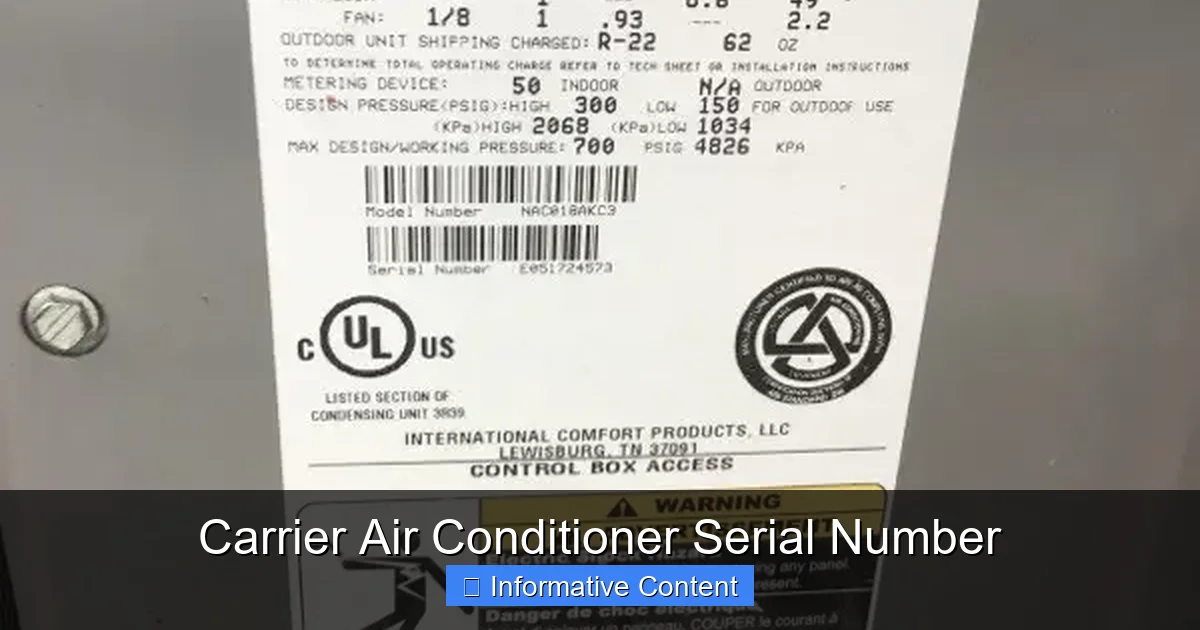
The most common place to find the serial number is on the outdoor condenser unit—the big box usually sitting beside or behind your house. Look for a metal rating plate or sticker, often attached to the side or top of the unit. This plate typically includes the model number, serial number, voltage, and other technical details.
The serial number is usually labeled clearly, sometimes with “S/N” or “Serial No.” next to it. It’s often located near the electrical connections or compressor. If you can’t see it right away, try shining a flashlight into tight spaces or wiping away dust and debris.
Indoor Air Handler or Furnace
If your system includes an indoor air handler or furnace (common in central HVAC setups), the serial number may also be printed there. Check the front panel or side of the unit. Some models have a removable cover that reveals the rating plate underneath.
In split systems, the indoor and outdoor units may have different serial numbers. Always confirm which one you’re reading—especially if you’re dealing with warranty claims. Carrier typically uses the outdoor unit’s serial number for system identification.
User Manual or Installation Paperwork
If you still can’t locate the serial number on the unit itself, check your installation paperwork or user manual. HVAC contractors often record the serial number during setup and include it in the documentation they leave behind. This is especially helpful if the unit has been painted over or the sticker has faded.
You can also log in to your Carrier account online if you registered your product after purchase. Many homeowners do this to activate their warranty, and the serial number is stored in your profile.
Inside the Electrical Panel
In some older models, the serial number may be printed inside the electrical access panel. This requires opening a small door on the side of the outdoor unit—just be sure to turn off the power at the breaker before doing so. Safety first!
How to Read and Decode the Serial Number
Once you’ve found the serial number, the next challenge is understanding what it means. Carrier uses a specific coding system that reveals the manufacturing date and sometimes the factory location. While the exact format has evolved over the years, the general structure remains consistent.
Understanding the Format
A typical Carrier serial number is 10 to 15 characters long and includes both letters and numbers. For example: 1234A56789 or R4567890123.
The first few digits usually represent the manufacturing date. In older models (pre-2000s), the first digit indicates the year, and the next two digits show the week of production. For example, “512” could mean the 12th week of 2005.
In newer models, Carrier uses a letter-based system. The first character is a letter that corresponds to the year, and the next two digits represent the week. Here’s a quick reference:
– A = 2010, B = 2011, C = 2012, D = 2013, E = 2014
– F = 2015, G = 2016, H = 2017, J = 2018, K = 2019
– L = 2020, M = 2021, N = 2022, P = 2023, R = 2024
Note: The letters I, O, Q, and U are skipped to avoid confusion with numbers or other characters.
So, a serial number starting with “M15” would mean the unit was made in the 15th week of 2021.
Practical Example
Let’s say your serial number is R081234567. Breaking it down:
– R = 2024
– 08 = 8th week of the year
– The rest (1234567) is a unique production code
This means your unit was manufactured in February 2024 (since the 8th week falls in late February). Knowing this helps you determine if your unit is still under warranty and whether it’s eligible for any service programs.
Using Online Tools
If decoding the serial number feels confusing, don’t worry—Carrier and third-party HVAC websites offer free tools to help. You can enter your serial number into Carrier’s official warranty lookup tool or use online decoders that automatically interpret the date and model.
These tools are especially helpful if your unit is older or if the sticker is partially worn. Just be cautious with third-party sites—always verify the information with Carrier directly if you’re unsure.
Common Issues and Troubleshooting
Even with all this information, things don’t always go smoothly. Here are some common problems homeowners face when dealing with Carrier air conditioner serial numbers—and how to fix them.
Faded or Damaged Stickers
Over time, exposure to sun, rain, and dirt can cause the rating plate to fade or peel off. If the serial number is illegible, try cleaning the area with a soft cloth and mild cleaner. Avoid harsh chemicals that could damage the metal.
If the sticker is completely gone, check the indoor unit or paperwork. You can also contact Carrier customer service with your model number and approximate installation date—they may be able to help locate the serial number in their records.
Multiple Serial Numbers
In split systems, both the indoor and outdoor units have their own serial numbers. This can be confusing, especially during service calls. Always confirm which unit the technician is referring to. For warranty and registration purposes, Carrier typically uses the outdoor unit’s serial number.
Incorrect or Altered Numbers
In rare cases, serial numbers may be tampered with—especially in refurbished or counterfeit units. If you’re buying a used system or moving into a new home, verify the serial number matches the model and age. You can cross-check it with Carrier’s database or ask a licensed HVAC technician to inspect it.
Serial Number Not Recognized Online
Sometimes, entering your serial number into Carrier’s website returns an error. This could mean the unit is very old, was manufactured for a specific region, or wasn’t registered properly. Try using the model number instead, or contact Carrier support with your details.
Tips for Keeping Your Serial Number Safe
Now that you know how valuable your serial number is, it’s important to protect it. Here are a few simple tips to keep it accessible and secure.
Take a Photo
Use your smartphone to take a clear photo of the rating plate. Store it in a cloud folder or home maintenance app. This way, even if the sticker wears off, you’ll always have a backup.
Create a Home Maintenance Log
Keep a physical or digital log of all your home appliances, including their model and serial numbers. Include purchase dates, warranty info, and service records. This makes it easy to reference during repairs or insurance claims.
Register Your Product
When you install a new Carrier air conditioner, register it online with Carrier. This activates your warranty and stores your serial number in their system. It also makes it easier to receive service updates and recall notices.
Share with Trusted Technicians
Give your HVAC technician a copy of the serial number during service calls. This helps them prepare the right parts and tools in advance, reducing downtime.
Conclusion
Your Carrier air conditioner serial number might seem like a small detail, but it’s one of the most important pieces of information about your HVAC system. From warranty claims to troubleshooting and maintenance, this unique code opens the door to better service, longer lifespan, and peace of mind.
By learning where to find it, how to read it, and why it matters, you’re taking a proactive step in managing your home’s comfort and efficiency. Whether you’re a new homeowner or have been living with your Carrier unit for years, taking a few minutes to locate and record your serial number is a smart move.
So the next time your AC kicks on, remember—there’s more to that quiet hum than meets the eye. Behind the scenes, your serial number is working hard to keep everything running smoothly.
Frequently Asked Questions
Where is the serial number on a Carrier air conditioner?
The serial number is usually found on a metal rating plate attached to the outdoor condenser unit. It may also be located on the indoor air handler or inside the electrical panel. Look for a sticker labeled “S/N” or “Serial No.”
How do I decode my Carrier serial number?
The first character (a letter) often represents the manufacturing year, and the next two digits indicate the week of production. For example, “R08” means the 8th week of 2024. Use Carrier’s online tools or a serial number decoder for accuracy.
Can I find my serial number online?
If you registered your Carrier product after purchase, you can log in to your account on Carrier’s website to view your serial number. Otherwise, you’ll need to locate it physically on the unit.
What if my serial number is faded or missing?
Try cleaning the area or checking the indoor unit and installation paperwork. If that doesn’t work, contact Carrier customer service with your model number and installation date for assistance.
Do I need the serial number for warranty claims?
Yes, Carrier requires the serial number and proof of purchase to validate warranty claims. Without it, your claim may be denied.
Can two Carrier units have the same serial number?
No, each Carrier air conditioner has a unique serial number. Duplicates are extremely rare and could indicate tampering or counterfeit units.