
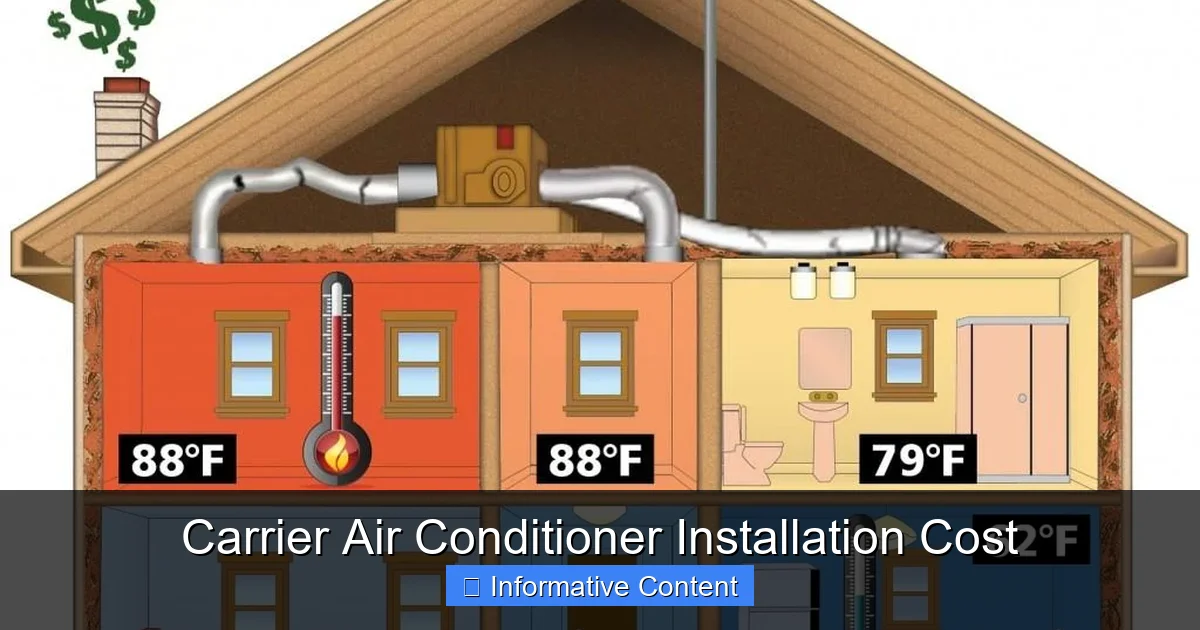
Installing a Carrier air conditioner involves more than just buying the unit—labor, permits, ductwork, and electrical upgrades can significantly impact your total cost. On average, homeowners spend between $5,000 and $12,000, depending on system size, home layout, and local labor rates. Planning ahead and getting multiple quotes can help you avoid surprises and get the best value.
Key Takeaways
- Total installation cost ranges from $5,000 to $12,000: This includes the Carrier unit, labor, permits, and necessary modifications like ductwork or electrical upgrades.
- Unit size and efficiency matter: Higher SEER ratings and larger tonnage systems cost more upfront but can save money on energy bills over time.
- Labor accounts for 30–50% of total cost: Experienced HVAC technicians charge $75–$150 per hour, and installation typically takes 8–12 hours.
- Older homes may need upgrades: Outdated wiring, insufficient ductwork, or lack of a disconnect box can add $500–$2,000 to your bill.
- Permits and inspections are required: Most areas require HVAC permits, which cost $100–$500 and ensure safety and code compliance.
- Seasonal timing affects pricing: Summer installations are more expensive due to high demand; spring or fall offers better rates and faster service.
- Warranty and maintenance plans add value: Carrier offers strong warranties, and adding a maintenance plan can extend system life and reduce repair costs.
📑 Table of Contents
Understanding Carrier Air Conditioner Installation Cost
When it comes to staying cool during those sweltering summer months, a reliable air conditioner isn’t just a luxury—it’s a necessity. And if you’re considering a Carrier air conditioner, you’re looking at one of the most trusted names in the HVAC industry. Known for their durability, energy efficiency, and advanced technology, Carrier units are a popular choice for homeowners who want long-term comfort and performance.
But here’s the thing: buying a Carrier air conditioner is only half the story. The real question most people have is, “How much will it cost to install?” And the answer isn’t as simple as checking a price tag. Installation costs can vary widely based on your home’s size, layout, existing infrastructure, and even your geographic location. From the unit itself to labor, permits, and potential upgrades, there are several factors that influence the final price.
In this guide, we’ll break down everything you need to know about Carrier air conditioner installation cost. Whether you’re replacing an old system or installing central air for the first time, understanding the full scope of expenses will help you budget wisely and avoid unexpected charges. We’ll cover unit pricing, labor fees, necessary home modifications, and even tips to save money without sacrificing quality. By the end, you’ll have a clear picture of what to expect—and how to get the best value for your investment.
Factors That Influence Installation Cost
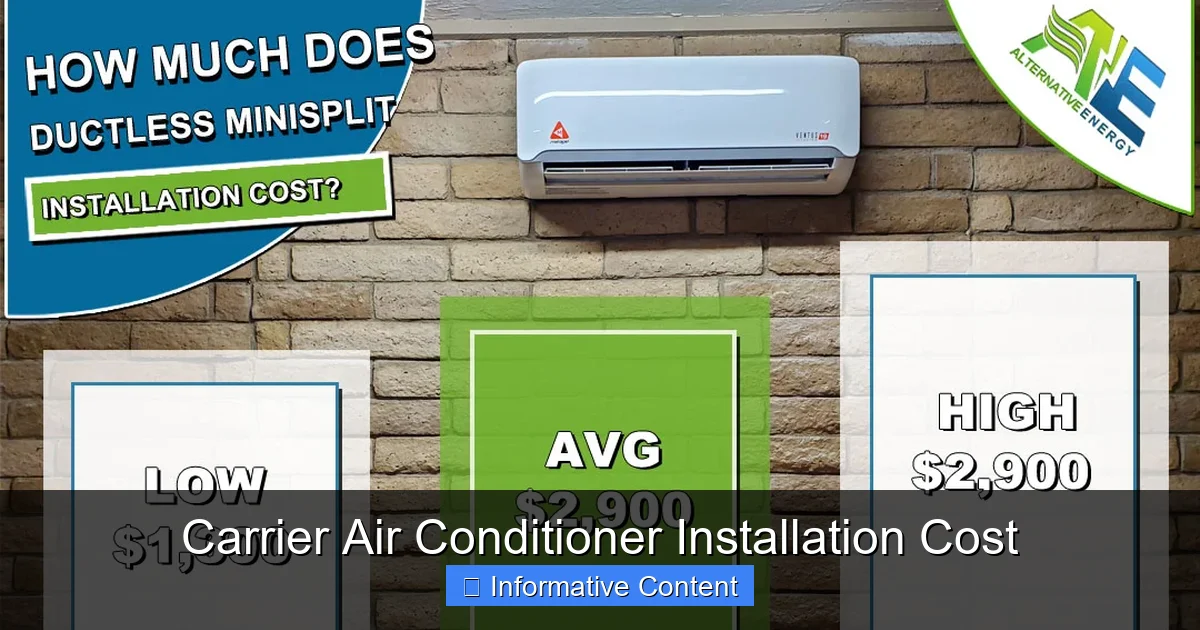
Visual guide about Carrier Air Conditioner Installation Cost
Image source: powersolarphoenix.com
No two homes are exactly alike, and that means no two Carrier air conditioner installations will cost the same. Several key factors determine how much you’ll pay, and understanding them can help you make smarter decisions. Let’s dive into the main elements that affect your total installation cost.
Unit Size and Type
One of the biggest cost drivers is the size and type of the Carrier unit you choose. Air conditioners are measured in “tons,” which refers to their cooling capacity—not their weight. A typical home needs between 1.5 and 5 tons, depending on square footage, insulation, and climate.
For example, a 2,000-square-foot home in a hot climate like Arizona might need a 4-ton unit, while a similar-sized home in milder Oregon might only need 3 tons. Carrier offers a range of models, from basic single-stage units to high-efficiency two-stage or variable-speed systems. Naturally, more advanced models cost more—both upfront and in installation complexity.
A standard 3-ton Carrier unit might cost $3,000 to $4,500, while a top-tier 4-ton variable-speed model could run $5,500 to $7,000. Keep in mind that bigger isn’t always better. An oversized unit will cycle on and off too frequently, wasting energy and reducing comfort. A professional load calculation (like a Manual J) ensures you get the right size for your home.
SEER Rating and Energy Efficiency
The Seasonal Energy Efficiency Ratio (SEER) measures how efficiently your air conditioner uses electricity. The higher the SEER rating, the more energy-efficient the unit. Carrier offers models ranging from SEER 14 (the federal minimum) up to SEER 26 for their most advanced systems.
While high-SEER units cost more upfront—sometimes $1,000 to $2,000 more—they can significantly reduce your monthly energy bills. In hot climates, the savings can add up quickly. For instance, upgrading from a SEER 13 to a SEER 20 unit could cut cooling costs by 35% or more.
However, the installation cost may also increase slightly with higher-efficiency models. These systems often require more precise refrigerant charging, advanced controls, and compatible thermostats, which can add to labor time and complexity.
Existing Ductwork Condition
If your home already has ductwork, that’s a big plus—but only if it’s in good shape. Leaky, undersized, or poorly insulated ducts can reduce efficiency by up to 30%. During installation, your HVAC technician will inspect your ducts and may recommend sealing, resizing, or even replacing sections.
Ductwork modifications can add $500 to $2,000 to your total cost. For example, if your current ducts are too small for a new 4-ton unit, they may need to be enlarged. Or if your ducts run through unconditioned spaces like attics, adding insulation could improve performance and justify the extra expense.
If your home doesn’t have ducts at all—common in older homes or those with radiant heating—you’ll need to install them. This can be a major project, costing $3,000 to $8,000 or more, depending on the complexity. In such cases, some homeowners opt for ductless mini-split systems, which Carrier also offers, to avoid the ductwork expense.
Electrical and Structural Requirements
Air conditioners require a dedicated electrical circuit and a disconnect box near the outdoor unit. If your home’s electrical panel is outdated or near capacity, you may need an upgrade. This could involve installing a new breaker, running new wiring, or even upgrading your entire electrical service—costs that can range from $300 to $2,000.
Similarly, the outdoor unit needs a sturdy, level pad to sit on. If you don’t already have one, your installer may pour a concrete pad or use a pre-made composite base, adding $100 to $300. In some cases, especially in tight urban spaces, structural modifications like reinforcing a wall or adding a platform may be needed.
Local Labor Rates and Permits
Labor is a major component of your installation cost. HVAC technicians typically charge $75 to $150 per hour, and a full Carrier air conditioner installation usually takes 8 to 12 hours. That means labor alone can cost $600 to $1,800.
But labor rates vary by region. In high-cost areas like California or New York, you might pay on the higher end, while rural areas may offer more competitive pricing. Additionally, some companies charge a flat rate for installation, which can be more predictable than hourly billing.
Don’t forget permits. Most cities and counties require a permit for HVAC installations, which ensures the work meets local building and safety codes. Permit fees typically range from $100 to $500, and your installer will usually handle the application—but it’s good to confirm this upfront.
Breakdown of Carrier Air Conditioner Installation Cost
Now that we’ve covered the factors that influence pricing, let’s look at a realistic breakdown of what you might pay for a Carrier air conditioner installation. Keep in mind that these are average estimates—your actual cost could be higher or lower depending on your specific situation.
Unit Cost
The Carrier unit itself is the largest single expense. Here’s a general price range for popular models:
– Carrier Comfort Series (14–16 SEER): $2,500–$4,000
Ideal for budget-conscious homeowners who still want reliable cooling. These units are single-stage, meaning they run at full capacity whenever they’re on.
– Carrier Performance Series (16–18 SEER): $3,500–$5,500
Offers two-stage cooling for better comfort and efficiency. The compressor adjusts between high and low settings, reducing temperature swings and humidity.
– Carrier Infinity Series (19–26 SEER): $5,000–$8,000+
Top-of-the-line models with variable-speed compressors, advanced humidity control, and smart thermostat compatibility. Best for hot climates and energy-conscious buyers.
These prices are for the outdoor unit only. If you’re also replacing the indoor air handler or furnace, add $1,000 to $3,000 depending on the model.
Labor and Installation Fees
Labor typically accounts for 30% to 50% of your total cost. For a standard installation, expect to pay:
– Basic installation (8–10 hours): $600–$1,200
Includes removing the old unit, installing the new one, connecting refrigerant lines, wiring, and testing.
– Complex installation (10–12+ hours): $1,200–$2,000+
Needed if ductwork modifications, electrical upgrades, or structural changes are required.
Some companies offer bundled pricing, where the unit and installation are quoted together. This can simplify budgeting, but make sure the quote includes all necessary components—like a new thermostat, disconnect box, or refrigerant lines.
Additional Costs and Upgrades
Beyond the unit and labor, several other expenses can pop up:
– Thermostat: $150–$500
A smart thermostat like the Carrier Côr or Infinity Touch can improve comfort and efficiency. Basic programmable models are cheaper, but smart thermostats offer remote control and energy-saving features.
– Refrigerant lines: $200–$600
If your existing lines are damaged or too short, new ones may be needed. Copper lines must be properly sized and insulated.
– Condensate drain: $100–$300
The indoor unit produces condensation, which must be drained away. If your current drain is clogged or improperly routed, it may need repair or replacement.
– Permits and inspections: $100–$500
Required in most areas. Your installer should handle this, but confirm it’s included in the quote.
– Disposal of old unit: $100–$200
Many companies charge to remove and recycle your old air conditioner, especially if it contains refrigerant.
Total Cost Range
Putting it all together, here’s what most homeowners can expect to pay for a Carrier air conditioner installation:
– Basic installation (3-ton, 16 SEER, minimal upgrades): $5,000–$7,000
Suitable for newer homes with good ductwork and electrical systems.
– Mid-range installation (4-ton, 18 SEER, some ductwork or electrical work): $7,000–$9,500
Common for older homes or those in hot climates needing more cooling power.
– High-end installation (5-ton, 20+ SEER, full system upgrade): $9,500–$12,000+
Includes top-tier Carrier models, ductwork modifications, electrical upgrades, and smart controls.
These ranges are national averages. In high-cost areas like San Francisco or Boston, prices could be 20–30% higher. In more affordable regions, you might save 10–15%.
How to Save on Installation Costs
No one likes paying more than necessary, and the good news is there are several ways to reduce your Carrier air conditioner installation cost without cutting corners on quality. Here are some practical tips to help you save money.
Get Multiple Quotes
This is the single most effective way to save. Don’t just call the first HVAC company you find. Reach out to at least three licensed, insured contractors and request detailed, written quotes. Make sure each quote includes:
– The exact Carrier model and SEER rating
– Labor hours and rate
– List of included components (thermostat, disconnect box, etc.)
– Any additional fees (permits, disposal, etc.)
Comparing quotes side by side helps you spot overcharges and ensures you’re getting fair pricing. Be wary of unusually low bids—they may cut corners or surprise you with hidden fees later.
Time Your Installation
HVAC demand peaks in summer, which means higher prices and longer wait times. If possible, schedule your installation in spring or fall. Not only will you likely get a better rate, but technicians are less rushed, which can lead to higher-quality work.
Some companies offer seasonal discounts or rebates during off-peak months. For example, Carrier often runs promotions in spring, offering $200–$500 off select models. Pair that with lower labor costs, and you could save significantly.
Consider a Full System Replacement
If your furnace or air handler is more than 10–15 years old, replacing it at the same time as your air conditioner can save money in the long run. Modern systems are designed to work together, and mismatched components can reduce efficiency and void warranties.
While a full replacement costs more upfront—adding $2,000 to $4,000—it can improve performance, lower energy bills, and reduce the risk of future repairs. Plus, many utility companies offer rebates for replacing both units at once.
Check for Rebates and Incentives
There are often financial incentives available for installing energy-efficient systems like Carrier air conditioners. These can come from:
– Utility companies: Many offer rebates of $100–$500 for high-SEER units.
– Federal tax credits: The Inflation Reduction Act provides tax credits for qualifying HVAC systems. As of 2024, you may be eligible for up to $600 for a new air conditioner.
– State and local programs: Some states offer additional rebates or low-interest financing for energy-efficient upgrades.
Your HVAC installer should know about available programs and help you apply. Don’t leave money on the table!
Maintain Your Current System (Temporarily)
If your current air conditioner is still working but struggling, consider a tune-up instead of a full replacement. A professional cleaning, refrigerant check, and minor repairs can extend its life by a year or two—giving you time to save up and plan your Carrier installation during a more affordable season.
Just be cautious: if your system is over 15 years old or requires frequent repairs, continuing to use it may cost more in the long run due to high energy bills and emergency service calls.
Choosing the Right Installer
Even the best Carrier air conditioner won’t perform well if it’s not installed correctly. That’s why choosing the right HVAC contractor is just as important as choosing the right unit. A poor installation can lead to higher energy bills, frequent breakdowns, and even safety hazards.
Look for Carrier Authorized Dealers
Carrier has a network of authorized dealers who are trained and certified to install their systems. These technicians receive ongoing training and have access to the latest tools and support. You can find a local dealer on Carrier’s official website.
Authorized dealers are more likely to offer strong warranties and stand behind their work. Plus, some Carrier promotions are only available through certified installers.
Check Licenses, Insurance, and Reviews
Always verify that your contractor is licensed and insured. This protects you in case of accidents or damage during installation. Ask for proof of both.
Then, check online reviews on sites like Google, Yelp, and the Better Business Bureau. Look for consistent praise about punctuality, communication, and quality of work. Be cautious of companies with many negative reviews or no online presence.
Ask About Warranties
A good installer will offer a labor warranty—typically 1–2 years—that covers workmanship. This is separate from Carrier’s manufacturer warranty, which covers parts.
Ask what’s included in the warranty and how to file a claim. A reputable company will make this process clear and straightforward.
Conclusion
Installing a Carrier air conditioner is a smart investment in your home’s comfort, efficiency, and value. While the upfront cost can seem daunting—ranging from $5,000 to $12,000 or more—the long-term benefits often outweigh the expense. With proper sizing, professional installation, and regular maintenance, a Carrier system can keep your home cool and your energy bills low for 15–20 years.
The key to a successful installation is planning. Understand the factors that influence cost, get multiple quotes, and take advantage of rebates and off-season discounts. Don’t rush the decision—choosing the right unit and installer will pay off in comfort, reliability, and peace of mind.
Remember, the cheapest option isn’t always the best. Investing in a high-efficiency Carrier model and a skilled HVAC technician ensures you get the most value from your purchase. And with the right approach, you can enjoy cool, comfortable summers without breaking the bank.
So, whether you’re replacing an aging system or upgrading to central air for the first time, now you have the knowledge to make an informed decision. Stay cool, save smart, and enjoy the reliability that only a Carrier air conditioner can deliver.
Frequently Asked Questions
How much does it cost to install a Carrier air conditioner?
The average cost to install a Carrier air conditioner ranges from $5,000 to $12,000, depending on the unit size, SEER rating, home layout, and necessary upgrades. This includes the unit, labor, permits, and any required modifications.
Is it worth paying more for a high-SEER Carrier unit?
Yes, especially in hot climates. Higher SEER units use less energy, which can significantly reduce your monthly cooling bills. Over time, the energy savings often offset the higher upfront cost.
Can I install a Carrier air conditioner myself?
No, air conditioner installation requires specialized tools, knowledge of refrigerant handling, and electrical work. It must be done by a licensed HVAC technician to ensure safety, efficiency, and warranty validity.
Do I need to replace my furnace when installing a new Carrier AC?
Not always, but it’s often recommended. Mismatched systems can reduce efficiency and void warranties. If your furnace is over 15 years old, replacing both units together can improve performance and qualify for rebates.
How long does it take to install a Carrier air conditioner?
Most installations take 8 to 12 hours, depending on complexity. Factors like ductwork modifications, electrical upgrades, or structural changes can extend the timeline.
Are there rebates available for Carrier air conditioner installations?
Yes, many utility companies, state programs, and federal incentives offer rebates or tax credits for installing energy-efficient Carrier systems. Your installer can help you identify and apply for available programs.