
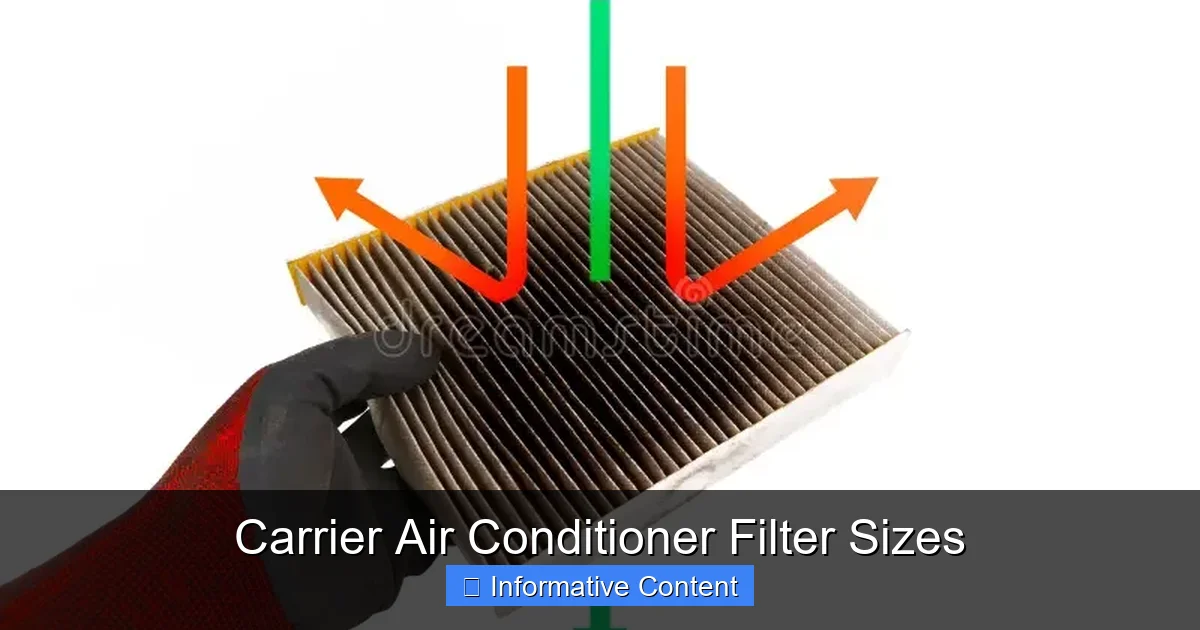
Choosing the correct carrier air conditioner filter size is essential for system performance, energy efficiency, and indoor air quality. This guide covers everything you need—from measuring your filter to understanding MERV ratings and replacement schedules—so your AC runs smoothly all season long.
Key Takeaways
- Accurate measurement is crucial: Always measure the length, width, and thickness of your existing filter to ensure a proper fit.
- Standard sizes are common but not universal: Many Carrier units use filters like 16x20x1 or 20x25x1, but always verify your model’s requirements.
- Filter thickness affects performance: Thicker filters (e.g., 4″ or 5″) often capture more particles but may require compatible return grilles or media cabinets.
- MERV ratings matter: Higher MERV ratings mean better filtration, but can restrict airflow if your system isn’t designed for them.
- Replace filters regularly: Most filters should be changed every 1–3 months, depending on usage, pets, and air quality.
- OEM vs. aftermarket filters: OEM filters guarantee compatibility, but high-quality aftermarket options can offer similar performance at lower cost.
- Check your owner’s manual: Your specific Carrier model may have unique filter requirements not listed in general size charts.
📑 Table of Contents
- Why Carrier Air Conditioner Filter Sizes Matter
- How to Find Your Carrier Air Conditioner Filter Size
- Understanding Filter Thickness and Its Impact
- OEM vs. Aftermarket Filters: What’s the Difference?
- How Often Should You Replace Your Carrier Air Conditioner Filter?
- Tips for Maintaining Your Carrier Air Conditioner Filter
- Conclusion
Why Carrier Air Conditioner Filter Sizes Matter
Your air conditioner does more than just cool your home—it also plays a vital role in maintaining indoor air quality. At the heart of this process is the air filter. While it might seem like a small, replaceable part, the filter is actually one of the most important components in your HVAC system. And when it comes to Carrier air conditioners, getting the right filter size isn’t just a suggestion—it’s essential.
A properly sized filter ensures that air flows efficiently through your system. If the filter is too small, air can bypass it entirely, allowing dust, pollen, and other contaminants to circulate through your home and damage internal components. On the other hand, a filter that’s too large won’t fit correctly, leading to gaps and the same bypass issues. Worse yet, forcing a filter that’s too thick into a tight space can restrict airflow, causing your AC to work harder, use more energy, and potentially overheat.
Carrier, one of the most trusted names in HVAC, designs its systems with specific airflow requirements in mind. That means using the correct filter size isn’t just about comfort—it’s about protecting your investment. A well-maintained filter helps extend the life of your unit, reduces energy bills, and keeps your indoor air clean. Whether you’re dealing with seasonal allergies or just want a more efficient home, choosing the right Carrier air conditioner filter size is the first step.
How to Find Your Carrier Air Conditioner Filter Size
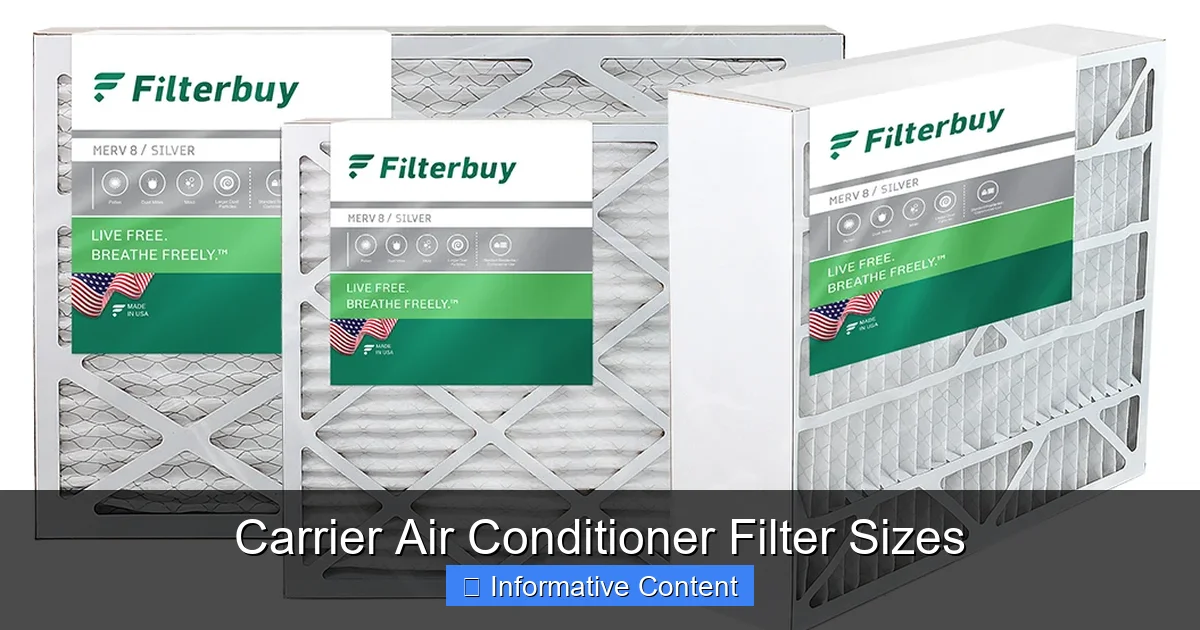
Visual guide about Carrier Air Conditioner Filter Sizes
Image source: s3.amazonaws.com
Finding the right filter size for your Carrier air conditioner might seem tricky at first, but it’s actually quite straightforward once you know where to look. The easiest and most reliable method is to check the existing filter. Most filters have the dimensions printed right on the frame—usually in the format of length x width x thickness (in inches). For example, you might see “16x20x1” or “20x25x4” stamped on the side.
If your filter doesn’t have the size printed, or if it’s damaged and you can’t read it, don’t worry. You can measure it yourself using a tape measure. Start by removing the filter from the return air grille or filter slot. Measure the length (longest side), width (shortest side), and thickness (depth of the filter). Be sure to measure to the nearest 1/8 of an inch for accuracy. For instance, if your filter measures 15.75″ x 20.25″ x 1″, you’ll want to round up to the nearest standard size, which would be 16x20x1.
Another reliable source is your Carrier air conditioner’s owner’s manual. The manual will list the recommended filter size for your specific model. If you don’t have the physical copy, you can usually find it online by searching for your model number on Carrier’s official website. Just type in your unit’s model number (often found on a label inside the access panel or on the side of the indoor unit), and you’ll get access to the full manual, including filter specifications.
You can also check the filter slot itself. Some Carrier systems have the recommended filter size stamped near the filter opening. Look for a label or engraving that says something like “Use 20x25x1 filter” or “Filter size: 16x20x4.” This is especially common in newer models with built-in filter access panels.
If you’re still unsure, consider reaching out to a Carrier dealer or HVAC technician. They can help identify your system and confirm the correct filter size based on your model number and installation details. It’s always better to double-check than to guess—using the wrong size can lead to poor performance and potential damage.
Common Carrier Air Conditioner Filter Sizes
While Carrier systems come in a wide range of sizes and configurations, there are several standard filter dimensions that appear frequently across their product lines. Knowing these common sizes can help you quickly identify what you need, especially if you’re shopping online or at a local hardware store.
One of the most common sizes is the 16x20x1 filter. This size fits many residential Carrier air handlers and furnaces, particularly in homes with standard ductwork. It’s a great all-around option for moderate filtration needs and is widely available from both OEM and third-party manufacturers.
Another frequently used size is 20x25x1. This larger filter is often found in higher-capacity systems or homes with larger square footage. It provides more surface area for airflow, which can help reduce strain on the blower motor and improve overall efficiency.
For systems that use thicker filters—such as media air cleaners or high-efficiency filtration systems—you might see sizes like 16x25x4 or 20x25x5. These 4-inch and 5-inch filters are designed to capture more particles and last longer between replacements. However, they require a compatible filter rack or media cabinet, so they’re not interchangeable with standard 1-inch filters.
Other common sizes include 14x20x1, 16x24x1, and 18x24x1. These are often used in compact or mid-sized systems, especially in townhomes or smaller residences. Again, always verify your specific model’s requirements before purchasing.
It’s also worth noting that some Carrier systems use custom or proprietary filter designs, particularly in commercial or high-end residential units. In these cases, you may need to order filters directly from Carrier or an authorized dealer.
Understanding Filter Thickness and Its Impact
When shopping for a Carrier air conditioner filter, you’ll notice that thickness is a key factor—and it’s not just about fit. The thickness of your filter directly affects how well it captures airborne particles and how much resistance it creates to airflow.
Standard filters are typically 1 inch thick. These are the most common and are designed to fit into standard return air grilles. They’re affordable, easy to replace, and work well for basic filtration needs. However, because they have less surface area, they may need to be changed more frequently, especially in homes with pets or high dust levels.
Thicker filters—such as 4-inch or 5-inch models—offer significant advantages. These filters have deeper pleats, which means more surface area for trapping dust, pollen, mold spores, and even bacteria. As a result, they can last up to 6–12 months before needing replacement, depending on usage. They’re ideal for people with allergies, asthma, or other respiratory conditions.
But here’s the catch: thicker filters require a compatible filter rack or media air cleaner. You can’t just slide a 4-inch filter into a 1-inch slot—it won’t fit, and even if you force it, it could block airflow and damage your system. Some Carrier systems come with built-in media cabinets that support thicker filters, while others may require an aftermarket upgrade.
Another consideration is MERV rating. MERV (Minimum Efficiency Reporting Value) measures a filter’s ability to capture particles of different sizes. Standard 1-inch filters typically range from MERV 6 to MERV 8, which is good for basic household dust and lint. Thicker filters can achieve higher MERV ratings—up to MERV 13 or even MERV 16—which means they can capture smaller particles like smoke, pet dander, and virus carriers.
However, higher MERV ratings can also increase airflow resistance. If your Carrier system wasn’t designed for a high-MERV filter, using one could strain the blower motor, reduce cooling efficiency, and increase energy bills. Always check your owner’s manual or consult an HVAC professional before upgrading to a high-MERV filter.
In short, thicker filters offer better filtration and longer life, but only if your system can handle them. For most homeowners, a 1-inch filter with a MERV 8 or MERV 11 rating strikes a good balance between performance and airflow.
OEM vs. Aftermarket Filters: What’s the Difference?
When it’s time to replace your Carrier air conditioner filter, you’ll face a choice: buy an original equipment manufacturer (OEM) filter from Carrier, or go with an aftermarket option from a third-party brand. Both have pros and cons, and the best choice depends on your priorities.
OEM filters are made by Carrier or an authorized manufacturer and are designed specifically for your model. They guarantee a perfect fit and are tested to meet the system’s airflow and performance standards. If you want peace of mind and don’t mind paying a premium, OEM is the way to go. These filters are often sold through Carrier dealers, HVAC supply stores, or the official Carrier website.
Aftermarket filters, on the other hand, are made by independent companies like Filtrete, Honeywell, Nordic Pure, or FilterBuy. They’re usually more affordable—sometimes 30–50% cheaper than OEM—and are widely available at big-box stores, online retailers, and local hardware shops. Many aftermarket filters offer similar or even better performance than OEM, especially in terms of MERV rating and particle capture.
But not all aftermarket filters are created equal. Some low-cost options use thin, low-quality media that can tear easily or allow air to bypass the filter. Others may be slightly oversized or undersized, leading to fit issues. To avoid problems, stick with reputable brands and read customer reviews. Look for filters that specify compatibility with your Carrier model or list the exact dimensions and MERV rating.
One advantage of aftermarket filters is customization. You can choose from a wide range of MERV ratings, materials (pleated, electrostatic, carbon), and even eco-friendly options. Some brands offer subscription services that deliver fresh filters on a regular schedule, so you never forget to replace them.
Ultimately, the choice between OEM and aftermarket comes down to budget, convenience, and performance needs. If you’re unsure, start with a high-quality aftermarket filter from a trusted brand. If you notice reduced airflow, unusual noises, or poor cooling, switch to OEM and see if the issue resolves.
How Often Should You Replace Your Carrier Air Conditioner Filter?
Replacing your air filter on time is one of the simplest yet most impactful maintenance tasks you can do for your Carrier air conditioner. A dirty filter restricts airflow, reduces efficiency, and can lead to costly repairs. But how often should you change it?
For most homes, the general rule is to replace standard 1-inch filters every 1 to 3 months. If you have pets, allergies, or live in a dusty area, you may need to change them monthly. Homes with high occupancy or smokers might also require more frequent replacements.
Thicker filters (4″ or 5″) can last longer—typically 6 to 12 months—because they have more surface area and capture more particles before becoming clogged. However, it’s still a good idea to check them every 3 months to ensure they’re not overloaded.
A simple way to remember is to mark your calendar or set a phone reminder. Some smart thermostats, like the Carrier Infinity system, can even alert you when it’s time to change the filter based on runtime and airflow data.
Signs that your filter needs replacing include reduced airflow from vents, higher energy bills, dust buildup around registers, or a musty smell when the AC turns on. If you notice ice forming on the evaporator coil, a dirty filter could be the culprit—restricted airflow causes the coil to freeze.
Regular filter changes not only keep your system running smoothly but also improve indoor air quality. Over time, a clean filter can reduce allergens, odors, and airborne contaminants, making your home healthier and more comfortable.
Tips for Maintaining Your Carrier Air Conditioner Filter
Beyond just replacing the filter, a few simple maintenance tips can help extend the life of your Carrier system and keep your air clean.
First, always turn off your HVAC system before removing or installing a filter. This prevents dust and debris from being pulled into the system and protects the blower motor.
When installing a new filter, make sure it’s facing the correct direction. Most filters have an arrow on the frame indicating airflow direction—this arrow should point toward the furnace or air handler. Installing it backward can reduce efficiency and cause premature clogging.
If you use a reusable or washable filter, clean it according to the manufacturer’s instructions. Typically, this involves rinsing it with water and letting it dry completely before reinstalling. Never reinstall a wet filter, as it can promote mold growth.
Consider upgrading to a high-efficiency filter if your system supports it. A MERV 11 or MERV 13 filter can significantly improve air quality, especially during allergy season.
Finally, schedule annual HVAC maintenance with a qualified technician. They can inspect your system, clean coils, check refrigerant levels, and ensure your filter is the right size and in good condition.
Conclusion
Choosing the right carrier air conditioner filter size is more than just a routine task—it’s a key part of keeping your home comfortable, healthy, and energy-efficient. From measuring your current filter to understanding MERV ratings and replacement schedules, every detail matters. Whether you go with OEM or a high-quality aftermarket option, the goal is the same: optimal airflow, clean air, and a system that runs smoothly for years to come.
By following the tips in this guide, you’ll be well-equipped to maintain your Carrier air conditioner and enjoy better performance season after season. Remember, a small investment in the right filter can lead to big savings in energy costs and repair bills down the road.
Frequently Asked Questions
How do I know what size filter my Carrier air conditioner needs?
Check the existing filter for printed dimensions, measure it yourself, or consult your owner’s manual. You can also look for a label near the filter slot or contact a Carrier dealer with your model number.
Can I use a different brand filter in my Carrier AC?
Yes, as long as the aftermarket filter matches the correct size and MERV rating. Stick with reputable brands to ensure quality and proper fit.
What happens if I use the wrong filter size?
An ill-fitting filter can allow air to bypass the media, reducing filtration and potentially damaging your system. A too-thick filter may restrict airflow and strain the blower motor.
How often should I change my Carrier air conditioner filter?
Standard 1-inch filters should be changed every 1–3 months. Thicker filters can last 6–12 months. Adjust based on pets, allergies, and air quality.
Can I use a higher MERV filter in my Carrier system?
Only if your system is designed for it. High-MERV filters can restrict airflow in systems not built to handle the added resistance, leading to inefficiency or damage.
Where can I buy replacement filters for my Carrier AC?
You can purchase filters from Carrier dealers, HVAC supply stores, home improvement retailers, or online through sites like Amazon, FilterBuy, or the official Carrier website.