
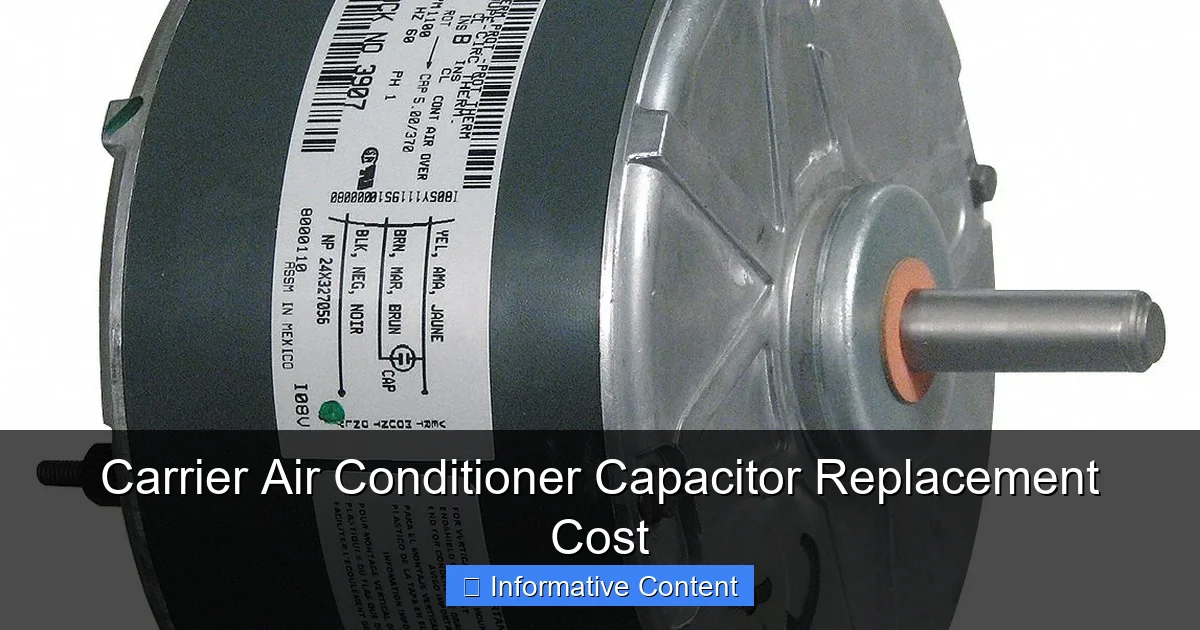
Replacing a capacitor in your Carrier air conditioner typically costs between $100 and $300, including parts and labor. While the part itself is affordable, hiring a licensed technician ensures safety and proper installation, helping you avoid further system damage.
This is a comprehensive guide about carrier air conditioner capacitor replacement cost.
Key Takeaways
- Capacitor replacement cost ranges from $100 to $300: This includes both the part and professional labor, with most homeowners paying around $150–$200.
- The capacitor is a small but critical component: It helps start the compressor and fan motors, and failure can cause your AC to stop cooling or not turn on at all.
- DIY replacement is risky and not recommended: Capacitors store electrical charge even when unplugged, posing a serious shock hazard without proper training.
- Signs of a bad capacitor include humming noises, warm air, or frequent cycling: If you notice these symptoms, contact a technician promptly to avoid compressor damage.
- Regular maintenance can extend capacitor life: Cleaning coils, checking electrical connections, and scheduling annual tune-ups help prevent premature failure.
- Warranty coverage may reduce costs: If your Carrier unit is under warranty, the capacitor replacement might be covered, especially if it fails within the first few years.
- Getting multiple quotes saves money: Always compare estimates from at least two licensed HVAC professionals to ensure fair pricing.
[FEATURED_IMAGE_PLACEHOLDER]
Understanding the Role of a Capacitor in Your Carrier Air Conditioner
Your Carrier air conditioner is a complex system made up of many components working together to keep your home cool and comfortable. Among these, the capacitor plays a surprisingly vital role—even though it’s small and often overlooked. Think of the capacitor as the “starter motor” for your AC’s compressor and fan. Without it, your system simply won’t start or run efficiently.
Capacitors store electrical energy and release it in short bursts to help motors overcome inertia and begin spinning. In your Carrier unit, there are typically two types of capacitors: the start capacitor and the run capacitor. The start capacitor gives an initial jolt to get the compressor going, while the run capacitor keeps the motor running smoothly once it’s started. Over time, these components can wear out due to heat, voltage fluctuations, or age—especially in regions with extreme summer temperatures.
When a capacitor fails, your air conditioner might make a humming noise but not turn on, blow warm air, or cycle on and off frequently. These symptoms are often mistaken for bigger issues like a faulty compressor, but in many cases, it’s just a bad capacitor. That’s why diagnosing the problem early is crucial. A professional technician can test the capacitor with a multimeter to confirm if it’s the culprit. Replacing it promptly not only restores cooling but also protects other expensive components from damage caused by repeated starting attempts.
Average Carrier Air Conditioner Capacitor Replacement Cost
So, how much does it actually cost to replace a capacitor in a Carrier air conditioner? The good news is that this is one of the more affordable HVAC repairs. On average, homeowners can expect to pay between $100 and $300 for a complete capacitor replacement, including both the part and labor. Most people end up paying around $150 to $200, depending on their location, the technician’s rates, and the type of capacitor needed.
The capacitor itself is relatively inexpensive, typically ranging from $10 to $50. However, the labor cost makes up the bulk of the expense. HVAC technicians usually charge between $75 and $150 per hour, and replacing a capacitor generally takes 30 to 60 minutes. Some companies also include a service call fee, which can add $50 to $100 to the total bill. That said, many reputable HVAC contractors will waive the service fee if you proceed with the repair.
It’s important to note that prices can vary based on several factors. For example, if your Carrier unit is located in a hard-to-reach area—like on a steep roof or behind tight walls—the technician may charge more for the extra time and effort. Similarly, if your system uses a dual-run capacitor (which serves both the compressor and fan motor), the part may cost slightly more than a single capacitor.
Another consideration is whether your unit is still under warranty. Carrier offers limited warranties on parts, and if your air conditioner is less than 5 to 10 years old (depending on the model), the capacitor replacement might be covered. In such cases, you may only pay a service fee or nothing at all. Always check your warranty documentation or contact Carrier customer service to confirm coverage before scheduling a repair.
Factors That Influence Replacement Costs
While the average cost gives you a ballpark figure, several factors can push the price higher or lower. Understanding these variables helps you make informed decisions and avoid unexpected charges.
Type of Capacitor Needed
Not all capacitors are created equal. Carrier systems may require a start capacitor, a run capacitor, or a dual-run capacitor that combines both functions. Dual-run capacitors are more common in modern units and tend to cost a bit more—usually between $20 and $50. If your system needs a specialized or hard-to-find capacitor, the price could increase, especially if it has to be ordered from the manufacturer.
Labor Rates and Service Fees
Labor costs vary widely by region and technician. In urban areas or regions with high living costs, HVAC professionals may charge $100 to $150 per hour. In rural areas, the rate might be closer to $75. Additionally, some companies charge a flat service call fee just to come out and diagnose the issue. While this fee is often applied toward the repair cost, it’s still something to factor into your total expense.
Accessibility of the Unit
If your Carrier air conditioner is installed in a difficult location—such as on a high roof, in a cramped attic, or behind landscaping—the technician may need extra time and equipment to access it safely. This can increase labor time and, consequently, the overall cost. For example, a unit on a two-story roof might require a ladder, safety harness, and additional setup time, adding $50 or more to the bill.
Time of Year and Demand
HVAC repair costs often rise during peak seasons, especially in the summer when air conditioners are working hardest. Technicians are busier, and some companies may charge premium rates for emergency or same-day service. If your capacitor fails in the middle of a heatwave, you might pay more than if you schedule the repair during the off-season.
Additional Repairs or Diagnostics
Sometimes, a failing capacitor is just one symptom of a larger issue. For instance, if the capacitor failed due to an electrical surge or overheating, the technician may recommend inspecting the compressor, wiring, or contactor. If other components need attention, the total repair cost will increase. However, catching these issues early can prevent more expensive damage down the line.
Signs You Need a Capacitor Replacement
Recognizing the symptoms of a failing capacitor can save you time, money, and discomfort. Since the capacitor is essential for starting and running your AC motors, its failure often leads to noticeable performance issues.
Humming or Clicking Sounds Without Cooling
One of the most common signs is a humming noise coming from your outdoor unit when you turn on the air conditioner. You might also hear a clicking sound as the system tries to start. If the compressor or fan motor isn’t spinning despite the noise, the capacitor likely isn’t delivering enough power to get them going. This is a red flag that shouldn’t be ignored.
Blowing Warm Air
If your AC is running but only blowing warm or room-temperature air, the compressor may not be engaging. Since the capacitor helps start the compressor, a weak or dead capacitor can prevent it from turning on. This results in no cooling, even though the fan might still be running.
Frequent On/Off Cycling
A failing capacitor can cause your system to short-cycle—turning on and off rapidly without completing a full cooling cycle. This not only reduces efficiency but also puts extra strain on the compressor and other components. Over time, short-cycling can lead to more serious damage and higher energy bills.
System Won’t Turn On at All
In severe cases, the capacitor may be completely dead, preventing the AC from starting. If you flip the thermostat to “cool” and nothing happens—no fan, no compressor, no noise—the capacitor is a likely suspect. However, it’s important to rule out other issues like a tripped breaker or faulty thermostat first.
Visible Damage or Bulging
If you’re comfortable inspecting your outdoor unit (and have turned off the power), you can look for physical signs of capacitor failure. A swollen, leaking, or burnt capacitor is a clear indicator it needs replacement. Never touch the capacitor directly, as it can still hold a dangerous charge even when the power is off.
DIY vs. Professional Replacement: What You Need to Know
When your Carrier air conditioner stops working, you might be tempted to replace the capacitor yourself to save money. After all, the part is cheap, and there are plenty of online tutorials. However, this is one repair where professional help is strongly recommended.
The Risks of DIY Capacitor Replacement
Capacitors store electrical energy, even after the power is disconnected. If you accidentally touch the terminals, you could receive a severe or even fatal electric shock. Additionally, handling the wrong tools or miswiring the new capacitor can damage your AC system or create a fire hazard. Without proper training, it’s easy to make a mistake that leads to bigger, more expensive problems.
Why Hire a Licensed Technician?
A certified HVAC technician has the tools, knowledge, and safety equipment to replace your capacitor correctly and safely. They can also diagnose whether the capacitor failure was caused by another issue—like a failing compressor or electrical problem—and recommend preventive measures. Plus, many technicians offer warranties on their work, giving you peace of mind.
When DIY Might Be an Option
In rare cases, experienced homeowners with electrical knowledge might consider a DIY replacement—but only if they follow strict safety procedures. This includes turning off the power at the breaker, using a multimeter to discharge the capacitor, and wearing insulated gloves. Even then, it’s risky, and most experts advise against it.
How to Save Money on Capacitor Replacement
While capacitor replacement is relatively affordable, there are still ways to reduce costs without compromising quality.
Schedule Regular Maintenance
One of the best ways to avoid unexpected repairs is to have your Carrier air conditioner serviced annually. During a tune-up, a technician will inspect the capacitor, clean coils, check electrical connections, and identify potential issues before they become major problems. Preventive maintenance can extend the life of your capacitor and other components, saving you money in the long run.
Get Multiple Quotes
Don’t settle for the first estimate you receive. Contact at least two or three licensed HVAC companies for quotes. Compare not just the price, but also the technician’s experience, customer reviews, and warranty offerings. This ensures you’re getting fair value for your money.
Check for Warranty Coverage
If your Carrier unit is still under warranty, the capacitor replacement might be covered. Even if the warranty has expired, some manufacturers offer extended service plans that could reduce repair costs. Always ask your technician if the part or labor is eligible for any discounts or rebates.
Avoid Emergency Repairs When Possible
If your capacitor fails during off-peak hours or in mild weather, try to schedule the repair during regular business hours. Emergency or after-hours service often comes with a premium charge. Planning ahead can save you $50 or more.
Conclusion
Replacing a capacitor in your Carrier air conditioner is a common and generally affordable repair, with most homeowners paying between $100 and $300. While the part itself is inexpensive, the labor and expertise required make professional installation the safest and most reliable option. Recognizing the signs of a failing capacitor—such as humming noises, warm air, or frequent cycling—can help you address the issue before it leads to more serious damage.
Factors like the type of capacitor, labor rates, unit accessibility, and time of year can influence the final cost, so it’s wise to get multiple quotes and check your warranty coverage. Regular maintenance is one of the best ways to prevent capacitor failure and extend the life of your AC system.
Ultimately, investing in a professional capacitor replacement not only restores your cooling comfort but also protects your investment in your Carrier air conditioner. With proper care and timely repairs, your system can continue to deliver reliable performance for years to come.
FAQs
How much does it cost to replace a capacitor in a Carrier air conditioner?
The average cost ranges from $100 to $300, including parts and labor. Most homeowners pay around $150 to $200 for a professional replacement.
Can I replace the capacitor myself?
While possible, DIY replacement is not recommended due to the risk of electric shock and potential damage to your system. It’s safer to hire a licensed HVAC technician.
How long does a capacitor last?
A typical capacitor lasts 10 to 15 years, but factors like heat, voltage surges, and poor maintenance can shorten its lifespan.
Will my warranty cover capacitor replacement?
If your Carrier unit is under warranty, the capacitor replacement may be covered. Check your warranty terms or contact Carrier customer service for details.
What happens if I don’t replace a bad capacitor?
A failing capacitor can cause your compressor to overheat or fail, leading to costly repairs or even the need for a full system replacement.
How can I tell if my capacitor is bad?
Common signs include humming noises, warm air, frequent cycling, or the system not turning on. A technician can test the capacitor with a multimeter to confirm.
Frequently Asked Questions
What is carrier air conditioner capacitor replacement cost?
carrier air conditioner capacitor replacement cost is an important topic with many practical applications.