
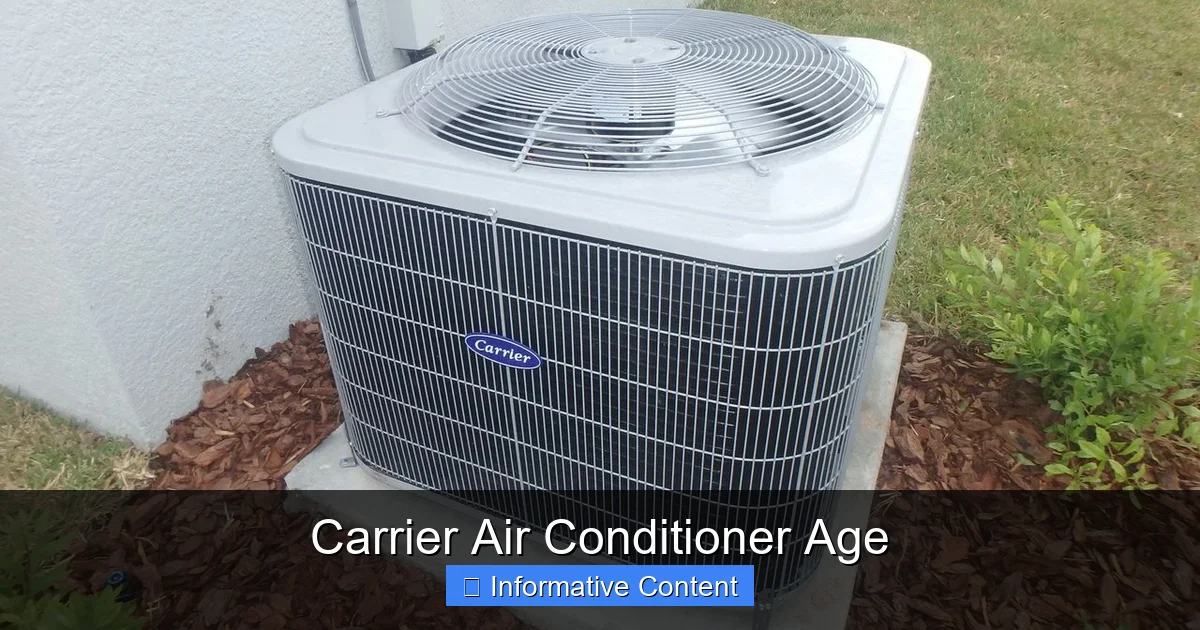
Knowing your Carrier air conditioner age helps you plan maintenance, avoid breakdowns, and decide when to upgrade. This guide covers how to find the manufacture date, average lifespan, signs of aging, and tips to extend your unit’s life.
Key Takeaways
- Check the serial number: The first two digits often reveal the year and week of manufacture—this is the easiest way to determine your Carrier air conditioner age.
- Typical lifespan is 15–20 years: With proper maintenance, most Carrier units last up to two decades, but performance declines after 10–12 years.
- Energy efficiency drops over time: Older units use more electricity and may not meet modern SEER standards, increasing your utility bills.
- Frequent repairs signal it’s time to replace: If repair costs exceed 50% of a new unit’s price, replacement is usually more cost-effective.
- Regular maintenance extends life: Changing filters, cleaning coils, and annual professional tune-ups can add years to your AC’s lifespan.
- Newer models offer smart features: Modern Carrier units include Wi-Fi controls, variable-speed compressors, and eco-friendly refrigerants.
- Warranty coverage depends on age: Most Carrier warranties last 5–10 years, so knowing your unit’s age helps you understand coverage limits.
📑 Table of Contents
- Why Knowing Your Carrier Air Conditioner Age Matters
- How to Find the Age of Your Carrier Air Conditioner
- Average Lifespan of a Carrier Air Conditioner
- Signs Your Carrier Air Conditioner Is Aging
- Extending the Life of Your Carrier Air Conditioner
- Benefits of Replacing an Older Carrier Unit
- Conclusion: Plan Ahead for Comfort and Savings
Why Knowing Your Carrier Air Conditioner Age Matters
Imagine this: It’s the middle of July, the temperature hits 95°F, and your air conditioner suddenly stops working. You call a technician, and after a quick inspection, they say, “This unit is over 18 years old—it’s time for a replacement.” You’re left sweating, frustrated, and facing a $5,000+ expense you didn’t plan for.
This scenario is more common than you think. Many homeowners don’t realize how old their air conditioner is until it fails. But knowing your Carrier air conditioner age isn’t just about avoiding emergency breakdowns—it’s about making smart decisions for your home, your wallet, and your comfort. Whether you’re planning a budget, considering an upgrade, or just curious, understanding your AC’s age gives you control.
Carrier is one of the most trusted names in HVAC, known for durability and innovation. But even the best systems don’t last forever. Over time, components wear out, efficiency drops, and repair costs rise. By tracking your unit’s age, you can stay ahead of problems, maximize energy savings, and enjoy consistent cooling for as long as possible.
How to Find the Age of Your Carrier Air Conditioner
The good news? Finding your Carrier air conditioner age is easier than you might think. Most units have a serial number that includes the manufacture date. Here’s how to decode it.
Visual guide about Carrier Air Conditioner Age
Image source: img2.cgtrader.com
Locating the Serial Number
The serial number is usually found on a metal nameplate attached to the outdoor condenser unit. Look for a sticker or plate on the side or top of the unit. It often includes the model number, serial number, and manufacturing details. If you can’t find it outside, check the indoor air handler or furnace—some systems have the info there too.
Decoding the Serial Number
Carrier uses a consistent format for serial numbers. The first two digits typically represent the year of manufacture, and the next two digits indicate the week. For example, a serial number starting with “15” means the unit was made in 2015. If it starts with “0823,” it was built in the 23rd week of 2008.
Here’s a quick example:
- Serial: 1523ABC → Manufactured in 2015, week 23 (around June)
- Serial: 0905XYZ → Manufactured in 2009, week 5 (early February)
Some older models (pre-2000) may use a letter-based code. In those cases, the first letter represents the year (A=1980, B=1981, etc.), and the next two digits are the week. Carrier’s website and customer service can help decode these if you’re unsure.
Using Online Tools and Manufacturer Support
If you’re stuck, Carrier offers online resources and customer support to help identify your unit’s age. Visit the official Carrier website and use their “Find My Model” tool, or call their support line with your serial and model numbers. Many HVAC contractors also have access to databases that can quickly verify manufacture dates.
Average Lifespan of a Carrier Air Conditioner
So, how long can you expect your Carrier air conditioner to last? On average, a well-maintained unit will run efficiently for 15 to 20 years. But this number isn’t set in stone—it depends on several factors.
Factors That Influence Lifespan
Not all air conditioners age the same. Here’s what affects how long your Carrier unit will last:
- Maintenance frequency: Units serviced annually last longer than those ignored.
- Climate and usage: Homes in hot, humid regions or with constant AC use may see shorter lifespans.
- Installation quality: Poorly installed systems strain components and fail sooner.
- Air quality and environment: Dust, salt air (near oceans), and pollution can corrode parts faster.
- Refrigerant type: Older R-22 systems are less efficient and harder to repair.
Performance Decline Over Time
Even if your AC still runs after 15 years, it may not cool as effectively. You might notice longer cooling cycles, uneven temperatures, or higher energy bills. This is normal—components like capacitors, motors, and coils degrade over time. By year 10–12, many homeowners start considering a replacement, especially if repair costs add up.
When to Replace vs. Repair
Use the “50% rule” as a guideline: If a repair costs more than 50% of a new unit’s price, replacement is usually smarter. For example, if your 14-year-old unit needs a $1,200 compressor repair and a new Carrier unit costs $2,500, replacing it makes financial sense. Newer models also offer better efficiency, quieter operation, and smart features.
Signs Your Carrier Air Conditioner Is Aging
Even if you don’t know the exact age, certain signs indicate your AC is getting old. Watch for these red flags:
Increased Energy Bills
If your electricity costs are rising but your usage hasn’t changed, your AC may be losing efficiency. Older units often have lower SEER (Seasonal Energy Efficiency Ratio) ratings. A unit with a SEER of 10–13 (common in pre-2010 models) uses significantly more energy than a modern 16–25 SEER system.
Frequent Repairs
Needing repairs every year or two is a strong sign your unit is nearing the end of its life. Common aging-related issues include failing capacitors, refrigerant leaks, and compressor problems. Keep a log of repairs—if you’re spending $300–$500 annually, it’s time to evaluate replacement.
Inconsistent Cooling
Hot spots, rooms that won’t cool, or short cycling (turning on and off rapidly) suggest your system is struggling. This could be due to worn-out components, low refrigerant, or ductwork issues—all more common in older units.
Unusual Noises or Odors
Rattling, grinding, or squealing sounds may indicate loose parts or motor wear. A musty smell could mean mold in the evaporator coil or ductwork—common in units that haven’t been cleaned regularly. Burning odors are serious and require immediate attention.
Visible Wear and Corrosion
Inspect your outdoor unit. Rust on the cabinet, bent fins, or leaking refrigerant lines are signs of aging. While minor rust can be cleaned, extensive corrosion weakens the structure and reduces efficiency.
Extending the Life of Your Carrier Air Conditioner
The good news? You can add years to your AC’s life with simple care. Here’s how to keep your Carrier unit running strong.
Regular Maintenance Checklist
Follow this routine to maximize lifespan:
- Change air filters every 1–3 months: Clogged filters restrict airflow and strain the system.
- Clean the outdoor unit: Remove leaves, dirt, and debris from the condenser coils. Use a garden hose (not a pressure washer) to gently rinse the fins.
- Clear the area around the unit: Keep at least 2 feet of clearance on all sides for proper airflow.
- Check refrigerant levels: Low refrigerant reduces cooling and can damage the compressor. Only a licensed technician should handle this.
- Inspect ductwork: Leaky ducts waste up to 30% of cooled air. Seal gaps with mastic tape or hire a professional.
Schedule Annual Professional Tune-Ups
Even with DIY care, your AC needs expert attention. A certified HVAC technician should inspect your system every spring before peak cooling season. They’ll check electrical connections, lubricate moving parts, test thermostat accuracy, and ensure everything runs safely and efficiently.
Upgrade Smart Components
Consider adding a programmable or smart thermostat. These devices optimize cooling schedules, reduce runtime, and can extend your AC’s life by preventing unnecessary wear. Many modern thermostats also send alerts for filter changes or maintenance needs.
Benefits of Replacing an Older Carrier Unit
If your Carrier air conditioner is over 15 years old, upgrading offers more than just reliability—it can save you money and improve comfort.
Energy Savings
Newer Carrier models are far more efficient. For example, a 10 SEER unit from 2005 uses about 30% more energy than a 16 SEER model from 2023. Over a summer, that could mean $100–$300 in savings, depending on usage and electricity rates.
Improved Comfort and Air Quality
Modern units feature variable-speed compressors that adjust cooling output for consistent temperatures. They also include advanced filtration systems that reduce allergens, dust, and pollutants—great for allergy sufferers.
Smart Technology and Remote Control
Many new Carrier systems work with Wi-Fi thermostats and mobile apps. You can adjust settings from your phone, receive maintenance alerts, and even integrate with smart home systems like Alexa or Google Home.
Environmental Benefits
Newer models use eco-friendly refrigerants like R-410A or R-32, which have lower global warming potential than older R-22 systems. Plus, higher efficiency means less carbon emissions from power plants.
Rebates and Incentives
Many utility companies and governments offer rebates for replacing old, inefficient units. Check with your local provider or visit the Department of Energy website for current programs. These can offset 10–30% of your installation cost.
Conclusion: Plan Ahead for Comfort and Savings
Your Carrier air conditioner age isn’t just a number—it’s a key to smarter home management. By knowing when your unit was made, you can plan maintenance, budget for repairs, and decide when to upgrade. With proper care, your AC can serve you well for 15–20 years. But when the time comes, replacing it with a modern, efficient model pays off in comfort, savings, and peace of mind.
Don’t wait for a mid-summer breakdown to take action. Check your serial number today, schedule a tune-up, and explore your options. Whether you’re keeping your current unit or upgrading to a new Carrier system, being informed is the first step toward a cooler, more efficient home.
Frequently Asked Questions
How can I tell how old my Carrier air conditioner is?
Check the serial number on the outdoor unit’s nameplate. The first two digits usually indicate the year of manufacture, and the next two show the week. For example, “1825” means it was made in 2018, week 25.
What is the average lifespan of a Carrier air conditioner?
Most Carrier units last 15 to 20 years with proper maintenance. However, performance and efficiency typically decline after 10–12 years, making replacement a smart choice.
Should I repair or replace my old Carrier AC?
If repair costs exceed 50% of a new unit’s price, replacement is usually better. Older units also cost more to operate and may lack modern features like smart controls.
Can I extend the life of my aging Carrier air conditioner?
Yes! Change filters regularly, clean the outdoor unit, and schedule annual professional maintenance. These steps can add several years to your AC’s lifespan.
Are newer Carrier models more energy efficient?
Absolutely. Modern Carrier units have higher SEER ratings (16–25+), use less electricity, and often qualify for energy rebates, saving you money on utility bills.
What should I do if my Carrier AC is over 20 years old?
It’s time to replace it. Units this old are likely inefficient, prone to breakdowns, and may use discontinued refrigerants. Upgrading improves comfort, saves energy, and reduces long-term costs.