
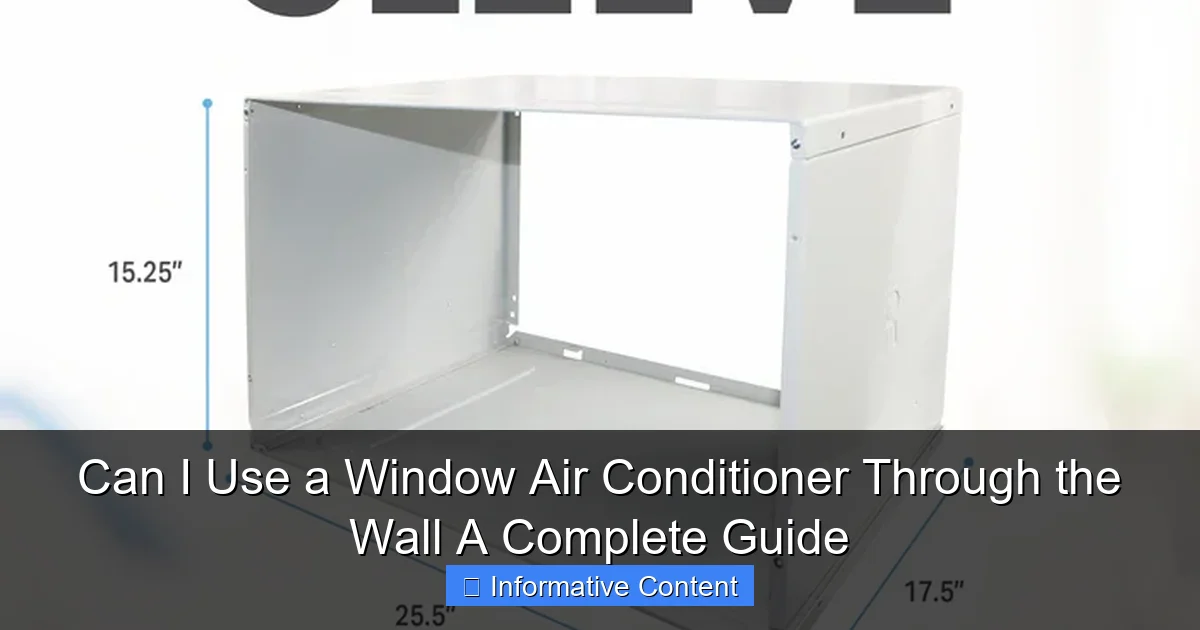
Featured image for can i use a window air conditioner through the wall
Image source: perfectaire.us
Yes, you can use a window air conditioner through the wall, but it requires proper installation and modifications to ensure safety, efficiency, and weatherproofing. Ensure the unit is rated for through-the-wall use and that the wall opening is correctly sized, sealed, and insulated to prevent air leaks and structural issues. Always follow manufacturer guidelines and local building codes to avoid hazards like electrical faults or water damage.
Key Takeaways
- Yes, you can install a window AC through the wall if it’s designed for dual use or with proper modifications.
- Check manufacturer guidelines first to ensure wall installation won’t void warranty or damage the unit.
- Use a wall sleeve or custom frame for secure, weatherproof mounting and long-term stability.
- Ensure proper drainage and slope to prevent leaks and water damage inside your home.
- Insulate around the unit to improve efficiency and reduce noise or drafts.
- Prioritize professional installation for complex setups or older homes to avoid structural issues.
- Measure carefully before cutting to ensure a perfect fit and avoid costly mistakes.
📑 Table of Contents
- Can I Use a Window Air Conditioner Through the Wall? A Complete Guide
- Understanding the Basics: Window ACs vs. Through-the-Wall Units
- The Pros and Cons of Using a Window AC Through the Wall
- How to Install a Window Air Conditioner Through the Wall (Step-by-Step)
- Common Mistakes and How to Avoid Them
- Alternatives: When a Through-the-Wall Unit Is the Better Choice
- Final Thoughts: Is It Worth It?
Can I Use a Window Air Conditioner Through the Wall? A Complete Guide
It’s a hot summer afternoon, and the sun is blazing through your windows. You’ve got your trusty window air conditioner humming away, but something’s bothering you: the unit is blocking your view, and you can’t open the window. You’ve heard whispers about “through-the-wall” ACs and wonder, can I use a window air conditioner through the wall? It’s a question I’ve asked myself more than once, and I’ve spent countless hours researching, testing, and even making a few mistakes along the way. If you’re in the same boat, you’re not alone. Many people want a permanent, clean-looking cooling solution without the hassle of seasonal setup. But before you grab a saw and start cutting into your wall, let’s talk about what’s really possible—and what’s not.
Using a window air conditioner through the wall isn’t as simple as just sliding the unit into a hole and calling it a day. It involves understanding structural integrity, safety concerns, proper installation, and long-term maintenance. While it’s technically possible to install a window AC in a wall opening, it’s not always the best idea. In this guide, I’ll walk you through everything you need to know—from the pros and cons to the step-by-step process, common mistakes to avoid, and when it’s better to just buy a proper through-the-wall unit. Whether you’re a DIY enthusiast or someone who just wants to know their options, this guide has you covered.
Understanding the Basics: Window ACs vs. Through-the-Wall Units
What’s the Difference?
At first glance, window air conditioners and through-the-wall units look almost identical. They’re both boxy, have similar control panels, and sit in openings between your home and the outside. But the differences are more than skin deep.

Visual guide about can i use a window air conditioner through the wall
Image source: i.ytimg.com
- Design and Structure: Window ACs are built to rest on a windowsill and be secured with brackets and side panels. They rely on the window frame for support and are designed to be removable. Through-the-wall units, on the other hand, are built with a heavier-duty chassis and are meant to be permanently mounted in a wall sleeve.
- Drainage and Venting: Through-the-wall units have built-in drainage systems and are sloped to allow condensation to exit properly. Window units are designed to let water drip down the back or side when installed in a window with a slight tilt. If you install a window AC in a wall, that natural slope is lost, and water can pool inside or leak into your home.
- Airflow and Efficiency: Through-the-wall units are engineered for horizontal airflow in a fixed position. Window units are designed to expel hot air upward and slightly outward when in a window. In a wall, the airflow can be disrupted, reducing efficiency and potentially overheating the unit.
Why People Consider This Hack
So why would anyone want to use a window AC through the wall? The main reasons are:
- Permanent installation: No need to remove the unit every winter. Great for year-round use or homes in warm climates.
- Cleaner look: No bulky side panels or window obstruction. The AC sits flush with the wall, giving a more built-in appearance.
- Cost savings: Buying a through-the-wall unit can be expensive. Using a window AC seems like a budget-friendly alternative.
- DIY appeal: For handy homeowners, cutting a hole in the wall and installing an AC feels like a satisfying project.
But here’s the catch: while it’s tempting, this “hack” comes with risks. I once tried it in my first apartment—big mistake. The unit overheated, water leaked into the wall, and I ended up with mold behind the drywall. Not fun.
The Pros and Cons of Using a Window AC Through the Wall
Advantages: When It Might Make Sense
Let’s be honest—there are situations where using a window AC through the wall can work, especially if you’re careful and prepared.
- Lower upfront cost: A 10,000 BTU window AC might cost $300, while a similar through-the-wall unit could be $500 or more. If you’re on a tight budget, reusing a window unit feels smart.
- Familiarity: If you already own a window AC, you know how it works, how to maintain it, and how much noise to expect. No learning curve.
- Flexibility: You can still remove the unit if needed (though it’s harder than with a window). This can be useful if you plan to sell or move.
- No need for a sleeve: Through-the-wall units require a metal sleeve (often sold separately). With a window AC, you can build a custom wooden frame instead, saving money.
Disadvantages: The Hidden Risks
Now, let’s talk about the downsides—because there are many.
- Structural damage: Cutting a hole in an exterior wall removes insulation and can compromise structural support. In load-bearing walls, this is a serious concern. Even non-load-bearing walls can be damaged if the opening isn’t properly framed.
- Water intrusion: Without the natural tilt of a window, condensation can pool inside the unit or leak into the wall. I’ve seen cases where this leads to rot, mold, and even electrical hazards.
- Overheating: Window ACs aren’t designed to be fully enclosed. The sides and top need airflow for cooling the compressor. In a wall, heat can build up, shortening the unit’s lifespan or causing it to shut down.
- Noise and vibration: Without the window frame to absorb vibrations, a window AC in a wall can rattle and hum more loudly. This is especially noticeable in thin walls or apartments.
- Voided warranty: Most manufacturers explicitly state that installing a window AC in a wall voids the warranty. If it breaks, you’re on your own.
- Resale value: A poorly installed AC can lower your home’s value. Future buyers may see it as a red flag for water damage or structural issues.
When It’s Worth the Risk (And When It’s Not)
So, when is it okay to try this? Here are a few scenarios:
- Short-term rental or temporary setup: If you’re in a place for a year or two and want a cleaner look, it might be worth the risk—if you’re meticulous.
- Non-load-bearing interior wall: Some homes have interior walls with exterior exposure (like a sunroom). If the wall isn’t structural, the risk is lower.
- DIY with proper sealing and drainage: If you’re handy and install a sloped frame, waterproofing, and a drip pan, you can mitigate many issues.
But avoid it if:
- You’re in a humid climate (more condensation).
- The wall is load-bearing or has plumbing/electrical behind it.
- You’re not confident in your DIY skills.
- You plan to sell the home soon.
How to Install a Window Air Conditioner Through the Wall (Step-by-Step)
Step 1: Choose the Right Wall and Unit
Not all walls or ACs are created equal. Here’s how to pick wisely:
- Wall type: Use a non-load-bearing exterior wall. Avoid walls with pipes, wires, or HVAC ducts. Check your home’s blueprint or consult a contractor.
- AC size: Measure the wall opening and the AC’s exterior dimensions. You need at least 1 inch of clearance on each side for airflow. For a 24-inch-wide AC, the hole should be 26 inches wide.
- BTU rating: Match the AC to the room size. A 10,000 BTU unit covers about 450 sq ft. Don’t oversize—it can lead to short cycling and inefficiency.
Step 2: Frame the Opening
This is critical for safety and support.
- Cut the hole with a reciprocating saw, leaving space for a wooden frame.
- Build a frame from pressure-treated lumber (2x4s or 2x6s). The frame should extend 1–2 inches past the AC on all sides.
- Install a sloped base: Tilt the bottom frame 5–10 degrees toward the outside to allow water drainage. This is non-negotiable—no slope = leaks.
- Secure the frame to wall studs with lag screws. Use a level to ensure it’s plumb and square.
Step 3: Waterproof and Insulate
Water is your biggest enemy.
- Line the bottom of the frame with a metal drip pan (like a gutter pan) or a custom-cut piece of EPDM rubber.
- Seal all edges with silicone caulk and flashing tape. Pay attention to the corners.
- Insulate the sides and top with foam board or spray foam to prevent condensation and improve efficiency.
- Install a vapor barrier (plastic sheeting) on the interior side to block moisture.
Step 4: Mount the AC
Now for the main event.
- Slide the AC into the frame from the outside. It should fit snugly but not be forced.
- Secure it to the frame with screws through the side brackets (if your AC has them). Use stainless steel to prevent rust.
- On the inside, install a trim kit or wooden cover to hide gaps. Leave at least 1 inch of space above the unit for airflow.
- Plug the AC into a dedicated 20-amp circuit. Don’t use an extension cord.
Step 5: Test and Monitor
Don’t assume it’s working until you’ve checked.
- Run the AC for 24 hours. Check for leaks, vibrations, or unusual noises.
- Inspect the exterior for condensation or water pooling.
- Use a thermometer to verify the room is cooling evenly.
- Check the drip pan—it should have some water, but not overflow.
Pro tip: Place a piece of cardboard or foil under the AC for the first few days to catch any leaks. If you see water, you’ve got a sealing issue to fix.
Common Mistakes and How to Avoid Them
Mistake 1: Ignoring the Tilt
One of the biggest errors is installing the AC flat. Without a 5–10 degree slope, water has nowhere to go. I learned this the hard way—my first installation had water dripping down the wall after a week. The fix? I had to cut out the frame and rebuild it with a slope. Save yourself the hassle: always tilt the base.
Mistake 2: Poor Sealing
Air and water leaks are common. I’ve seen people use duct tape (it degrades in heat) or skip caulk entirely. Use high-quality silicone caulk and flashing tape. Pay special attention to the top and sides—these are the most prone to leaks.
Mistake 3: No Airflow Space
Window ACs need airflow around the sides and top. If you enclose it completely, the compressor overheats. Leave at least 1 inch of clearance on the sides and 2–3 inches on top. Don’t cover it with shelves or curtains.
Mistake 4: Using the Wrong Tools
Cutting into a wall requires precision. I once tried using a circular saw for the opening—it was a nightmare. A reciprocating saw or oscillating tool gives you better control. For framing, use a level, square, and stud finder. Don’t eyeball it.
Mistake 5: Skipping the Drip Pan
A drip pan isn’t optional. It catches condensation and directs it outside. I recommend a metal pan (like a gutter section) because it won’t degrade. Plastic can warp or crack over time.
Mistake 6: Not Checking the Warranty
Before you start, check your AC’s manual. Many brands (like LG, Frigidaire, and Haier) explicitly prohibit wall installation. If you do it anyway, the warranty is void. If you’re unsure, call customer support.
Alternatives: When a Through-the-Wall Unit Is the Better Choice
Why Invest in a Proper Unit?
If you’re serious about a permanent installation, a dedicated through-the-wall AC is worth the extra cost. Here’s why:
- Built-in drainage: These units have a sloped chassis and drain holes designed for wall installation. No need for custom frames or drip pans.
- Better airflow: The condenser coils are positioned for horizontal airflow, reducing overheating.
- Weatherproofing: They come with a metal sleeve that seals against the wall. No risk of gaps or leaks.
- Warranty intact: You’re not voiding anything by installing it as intended.
- Longer lifespan: Built for permanent use, they last 10–15 years with proper care.
Top Through-the-Wall Models (2024)
| Model | BTU | Sleeve Included? | Price Range | Best For |
|---|---|---|---|---|
| LG LW1216HR | 12,000 | Yes | $550–$650 | Large rooms, quiet operation |
| Frigidaire FHWW103WB1 | 10,000 | Yes | $400–$500 | Mid-sized rooms, energy efficient |
| Koldfront WTC8001W | 8,000 | No (sold separately) | $350–$450 | Budget option, small rooms |
| Honeywell HL14CESWK | 14,000 | Yes | $600–$700 | Hot climates, powerful cooling |
Note: Always check if the sleeve is included. Some manufacturers sell it separately (add $50–$100).
DIY vs. Professional Installation
If you’re not confident in your skills, hire a pro. A licensed HVAC technician can:
- Assess the wall for structural safety.
- Install the sleeve and unit correctly.
- Seal and insulate to code.
- Provide a warranty on the work.
Cost: $200–$500, depending on complexity. But it’s cheaper than fixing water damage later.
Final Thoughts: Is It Worth It?
So, can you use a window air conditioner through the wall? The short answer is: yes, but with caveats. It’s a viable option if you’re careful, handy, and willing to accept some risks. But if you’re looking for a long-term, safe, and efficient solution, a proper through-the-wall unit is the better choice.
Here’s my advice: if you’re in a temporary living situation, on a tight budget, or enjoy DIY projects, go for it—but do it right. Follow the steps in this guide, prioritize waterproofing, and monitor for issues. But if you’re in a permanent home, have a humid climate, or aren’t confident in your skills, save yourself the headache and invest in the right tool for the job.
Remember, air conditioning isn’t just about cooling—it’s about safety, efficiency, and peace of mind. Don’t let a shortcut turn into a costly mistake. Whether you choose a window AC in a wall or a dedicated through-the-wall unit, the goal is the same: a cool, comfortable home without the stress. And that’s worth every penny.
Frequently Asked Questions
Can I use a window air conditioner through the wall instead of a window?
Yes, you can use a window air conditioner through the wall, but it requires proper installation and a framed, insulated opening. Ensure the wall can support the unit’s weight and that you follow safety guidelines to avoid hazards like leaks or poor insulation.
Is it safe to install a window AC unit through a wall?
It’s safe if installed correctly, with a sturdy frame, proper drainage, and weatherproofing. Avoid cutting corners, as improper installation can lead to structural damage, electrical issues, or reduced efficiency.
What’s the difference between a through-the-wall air conditioner and a window unit?
Through-the-wall units are designed for permanent installation with better insulation and drainage, while window ACs are made for temporary setups. You can adapt a window unit for a wall, but it may lack the efficiency and durability of a dedicated through-the-wall model.
Do I need professional help to install a window AC through the wall?
While DIY installation is possible, hiring a professional is recommended for structural modifications, electrical work, and ensuring weatherproofing. This avoids risks like water damage or improper ventilation.
Can I use a window air conditioner through the wall without a sleeve?
Technically yes, but a sleeve provides stability, insulation, and safety. Skipping it may lead to vibrations, gaps, or heat loss, reducing the unit’s efficiency and lifespan.
Will using a window AC through the wall affect my home’s insulation?
Improper installation can create gaps, causing drafts or energy loss. Seal all edges with weatherstripping and insulation to maintain indoor temperatures and efficiency.