
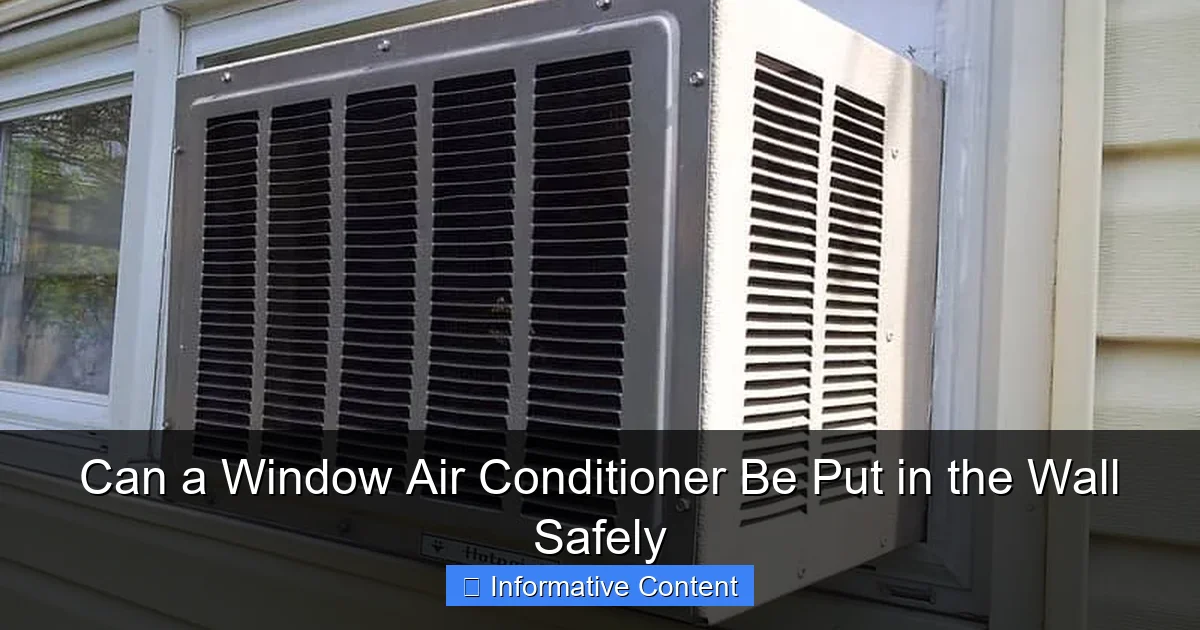
Featured image for can a window air conditioner be put in the wall
Image source: foreverarchitect.com
Installing a window air conditioner in a wall is possible but requires careful planning and modifications to ensure safety and efficiency. Unlike standard window mounting, wall installation demands a properly sized, reinforced opening and secure framing to support the unit’s weight and prevent air leaks. Always consult local building codes and consider hiring a professional to avoid fire hazards, structural damage, or voided warranties.
Key Takeaways
- Never install standard window ACs in walls: They lack proper support and ventilation, creating serious safety hazards.
- Use wall sleeve kits for built-in units: Only ACs designed for walls with UL-listed sleeves are safe.
- Check manufacturer guidelines first: Confirm if your model supports thru-the-wall installation before proceeding.
- Prioritize professional installation: Improper mounting risks water leaks, electrical fires, or unit collapse.
- Seal gaps with foam insulation: Prevents air leaks and improves energy efficiency in wall installations.
- Verify wall structural integrity: Ensure the wall can handle the AC’s weight and vibration long-term.
📑 Table of Contents
- The Big Question: Can a Window Air Conditioner Be Put in the Wall Safely?
- Understanding How Window Air Conditioners Work
- Why People Consider Installing Window ACs in Walls
- Key Safety and Structural Concerns
- Legal and Warranty Implications
- Safer Alternatives to Wall Installation
- Data: Window AC vs. Wall-Mounted AC Comparison
- Final Thoughts: Is It Worth the Risk?
The Big Question: Can a Window Air Conditioner Be Put in the Wall Safely?
Imagine this: You’re sitting in your living room, sweat trickling down your forehead, desperately wishing your window air conditioner could cool the whole house. But there’s just one problem—your window AC unit sticks out like a sore thumb, blocking the view, and making your room feel cramped. Sound familiar? If so, you’ve probably asked yourself: *Can a window air conditioner be put in the wall safely?*
This is a common dilemma, especially for renters, city dwellers, or anyone with limited window space. You want the cooling power of a window AC without the visual and spatial drawbacks. But before you grab your drill and start hacking into your wall, let’s take a step back. While the idea of installing a window AC unit directly into a wall seems like a clever space-saving hack, it’s not as simple as it sounds. Safety, structural integrity, ventilation, and even legal considerations all come into play. In this post, we’ll explore the ins and outs of this question, offering practical advice, real-world examples, and clear guidance to help you decide what’s best for your space.
Understanding How Window Air Conditioners Work
Before we dive into whether you can install a window AC in a wall, it’s important to understand how these units function. A window air conditioner isn’t just a box that blows cold air—it’s a carefully engineered system designed to move heat from inside your home to the outside. This process requires proper airflow, drainage, and structural support, all of which depend on the unit being installed in a window as intended.
Visual guide about can a window air conditioner be put in the wall
Image source: acguided.com
The Science Behind Cooling
Window ACs use a refrigerant cycle to absorb indoor heat and expel it outdoors. The back (or outdoor) side of the unit contains the condenser coil and fan, which release heat. The front (indoor) side has the evaporator coil and fan, which blow cold air into the room. For this to work efficiently, the outdoor side must be fully exposed to fresh air. If it’s blocked or enclosed, the unit can’t release heat, leading to overheating, reduced efficiency, or even permanent damage.
Think of it like a car engine: if you cover the radiator, the engine overheats. The same principle applies here. When a window AC is placed in a wall, the back portion is often partially or fully enclosed, disrupting this vital heat exchange. This isn’t just a performance issue—it’s a safety hazard.
Design Limitations of Window Units
Window air conditioners are built with specific dimensions, mounting hardware, and airflow patterns. Their frames are designed to sit on the sill of a window, with the back extending outside. Most units also have built-in side panels that expand to seal the window gap. These features are incompatible with standard wall cavities, which are typically 3.5 to 6 inches thick—much narrower than the average AC unit’s depth (usually 15–20 inches).
Additionally, window ACs rely on gravity and a slight tilt (usually 1/4 inch downward toward the outside) to drain condensation. If installed flat or tilted inward, water can pool, leading to leaks, mold, or electrical issues. A wall installation often disrupts this natural drainage, creating another layer of risk.
Real-world example: A friend of mine once tried to install her 8,000 BTU window AC in a wall by cutting a large rectangular hole and sliding the unit in. She thought she’d solved her space problem—until the unit started leaking water into the living room and the compressor failed within a month. The back was too close to the siding, airflow was restricted, and the tilt was wrong. Lesson learned: just because you *can* do it doesn’t mean you *should*.
Why People Consider Installing Window ACs in Walls
Despite the risks, the idea of putting a window AC in a wall keeps popping up. Why? Because the benefits seem too good to pass up—especially for certain lifestyles and living situations.
Space-Saving and Aesthetic Appeal
For studio apartments, small bedrooms, or homes with limited window access, a bulky window unit can be a dealbreaker. It blocks natural light, takes up valuable floor space, and often clashes with the room’s decor. Installing it in the wall can free up the window, improve airflow (if done right), and make the unit nearly invisible from the inside.
Imagine a sleek, flush-mounted AC that blends into the wall, leaving your windows unobstructed. That’s the dream. And for renters who can’t install a permanent split system, this seems like a low-cost workaround.
Better Airflow and Cooling Coverage
Some people believe that placing an AC higher on the wall (rather than at window level) can improve air circulation. Warm air rises, so a higher-mounted unit might pull in hot air more effectively and distribute cool air more evenly. While this sounds logical, it’s only effective if the unit is designed for vertical airflow and has the proper ducting—something most window ACs lack.
Noise Reduction
Window units can be noisy, especially older models. Installing one in a wall with insulation or sound-dampening materials might reduce noise. However, this only works if the unit is properly isolated and not vibrating against the wall structure. Poorly mounted units can actually amplify noise through wall resonance.
The DIY Temptation
Let’s be honest: the internet is full of DIY hacks. You’ve probably seen YouTube videos showing someone cutting a hole in their wall, sliding in a window AC, and calling it a day. These videos often skip the critical details—like ventilation, drainage, and structural safety. They make it look easy, but they rarely show what happens after a few weeks of use.
Practical tip: If you’re considering this route, ask yourself: *Am I willing to take on the long-term maintenance and potential repair costs if something goes wrong?* Because unlike a standard window install, a wall-mounted unit is harder to access, harder to clean, and harder to replace.
Key Safety and Structural Concerns
Now let’s get into the serious stuff: safety. Installing a window AC in a wall isn’t just about convenience—it’s about protecting your home, your health, and your wallet. Here are the top risks you need to consider.
Ventilation and Heat Dissipation
As mentioned earlier, the back of the AC must have unrestricted airflow to release heat. If it’s enclosed in a wall cavity with limited clearance, heat builds up. This can cause:
- The unit to overheat and shut down
- Reduced cooling efficiency (higher energy bills)
- Compressor failure (a costly repair)
- Fire hazard (in extreme cases, due to overheating components)
Even a small gap of 2–3 inches between the AC and the wall isn’t enough. Most manufacturers recommend at least 6–12 inches of clearance behind the unit for proper airflow.
Water Drainage and Leaks
Condensation is a natural byproduct of cooling. A window AC collects this moisture and drains it outside via a drip tray and gravity. In a wall installation, the unit may not have the correct tilt, or the drain path may be blocked. This leads to:
- Water pooling inside the unit
- Leaks into the wall cavity (hidden damage)
- Mold and mildew growth (a health hazard)
- Damage to insulation and drywall
Pro tip: If you *must* install in a wall, consider adding a secondary drain line (like a small PVC pipe) that runs from the unit’s drip tray to the outside. But even this isn’t foolproof—algae and debris can clog it over time.
Structural Integrity
Cutting a large hole in a wall—especially a load-bearing wall—can compromise its strength. You’re removing studs, drywall, and insulation, which can affect the wall’s ability to support weight and maintain temperature. In multi-story homes, improper modifications can even impact the building’s stability.
Additionally, the AC unit’s weight (typically 50–100 lbs) needs to be properly supported. Window units are designed to rest on a sill and be secured to the window frame. In a wall, you’d need a custom frame or brackets to prevent sagging or collapse.
Electrical and Fire Hazards
Window ACs draw a lot of power, especially at startup. If the wall cavity has old or undersized wiring, the unit could overload the circuit, leading to tripped breakers or, worse, electrical fires. You should always ensure:
- The circuit is dedicated and rated for the AC’s amperage
- Wires are properly insulated and not pinched
- No flammable materials (like insulation) are touching hot components
One homeowner in Florida learned this the hard way when his DIY wall AC sparked a fire after the wiring overheated. The fire started inside the wall, spreading before anyone noticed. It was a costly and dangerous mistake.
Legal and Warranty Implications
Beyond the physical risks, there are legal and warranty concerns you might not have considered.
Building Codes and Permits
Most cities and towns have building codes that regulate HVAC installations. Modifying a wall to fit an AC unit may require a permit, especially if you’re cutting into structural elements or changing the building’s exterior. Failing to get approval could:
- Result in fines
- Cause issues when selling your home
- Void your homeowner’s insurance
For example, in New York City, any permanent modification to a building’s envelope (including walls and windows) requires a licensed contractor and a permit. Even if you’re renting, your landlord may have rules against structural changes.
Voiding the Manufacturer’s Warranty
Almost all window AC manufacturers state that improper installation voids the warranty. If you install the unit in a wall and it breaks down, the company can deny coverage—even if the failure is unrelated to the installation. This means you’re on the hook for repairs or replacement, which can cost hundreds of dollars.
Some brands, like LG and Frigidaire, explicitly state in their manuals: *“This unit is designed for window installation only. Any other use may result in damage and is not covered under warranty.”* That’s a clear red flag.
Insurance and Liability
If a fire, flood, or structural damage occurs due to your wall-mounted AC, your insurance company might deny your claim. They could argue that the installation was “unauthorized” or “non-standard,” shifting the blame to you. This could leave you financially responsible for major repairs.
Real-life scenario: A couple in Chicago installed a window AC in a wall to save space. When the unit leaked and caused water damage to their downstairs neighbor’s apartment, the landlord sued them. Their insurance refused to cover it, citing “negligent modification.” They ended up paying over $10,000 in damages.
Safer Alternatives to Wall Installation
So, what’s a homeowner or renter supposed to do? If a wall-mounted window AC is risky, what are the *safe* alternatives? Here are some practical, code-compliant options.
1. Use a Through-the-Wall Air Conditioner
These units are specifically designed to be installed in a wall. They have:
- Built-in wall sleeves or frames
- Proper drainage systems
- Ventilation designed for wall cavities
- Manufacturer support and warranties
They’re more expensive than window units (typically $600–$1,200), but they’re safer, more efficient, and often quieter. Brands like Friedrich and Keystone offer reliable models with features like remote control, programmable timers, and energy-saving modes.
2. Install a Mini-Split Ductless System
If you’re willing to spend a bit more, a mini-split is the gold standard for wall-mounted cooling. It consists of an outdoor compressor and an indoor air handler that mounts on the wall. Benefits include:
- No window or wall cavity needed
- High efficiency (up to 30 SEER)
- Quiet operation
- Zoned cooling (cool only the rooms you use)
Installation requires a small hole (about 3 inches) for the refrigerant line and electrical wiring. While it’s more complex than a window AC, it’s a permanent, code-compliant solution that adds value to your home.
3. Use a Portable Air Conditioner
Portable ACs are self-contained units that vent through a window or sliding door. They’re easy to move, require no permanent installation, and are ideal for renters. Downsides include lower efficiency and the need for a vent hose, but modern models have improved significantly.
Look for units with dual hoses (for better airflow) and built-in dehumidifiers. Some even come with smart features like app control and voice integration.
4. Optimize Your Window AC Installation
If you’re stuck with a window unit, make the most of it:
- Use a window AC cover or decorative screen to hide the unit
- Install it in a less visible window (like a bedroom)
- Add weatherstripping to reduce drafts and improve efficiency
- Use a fan to circulate cool air to other rooms
Bonus tip: Some companies sell “window to wall” conversion kits, but these are rare and often not recommended by HVAC professionals. They usually don’t solve the core ventilation and drainage issues.
Data: Window AC vs. Wall-Mounted AC Comparison
| Feature | Window AC (Standard Install) | Window AC (Wall Hack) | Through-the-Wall AC | Mini-Split System |
|---|---|---|---|---|
| Installation Safety | High (designed for windows) | Low (risks of overheating, leaks) | High (designed for walls) | High (professional install) |
| Cooling Efficiency | Moderate (8–12 SEER) | Reduced (due to poor airflow) | High (10–14 SEER) | Very High (20–30 SEER) |
| Warranty Coverage | Yes (if installed properly) | No (voided by improper install) | Yes | Yes |
| Cost (Unit + Install) | $200–$500 (DIY) | $200–$500 (DIY, but risky) | $600–$1,200 (professional) | $2,000–$5,000 (professional) |
| Long-Term Maintenance | Easy (accessible) | Difficult (hard to clean/repair) | Moderate | Low (minimal upkeep) |
Final Thoughts: Is It Worth the Risk?
So, can a window air conditioner be put in the wall safely? The short answer is: **not really**. While it’s *possible* to do, the risks—overheating, leaks, fire hazards, voided warranties, and legal issues—far outweigh the benefits. You might save a few inches of space or block less of your view, but you’re trading that for potential damage, higher bills, and safety concerns.
Instead, consider the safer alternatives we’ve discussed. A through-the-wall unit or mini-split system gives you the sleek, wall-mounted look you want without the dangers. And if you’re on a budget, optimizing your current window AC setup can make a big difference in comfort and aesthetics.
At the end of the day, your home’s safety and efficiency should come first. Cooling your space shouldn’t come at the cost of your peace of mind. So before you grab that saw, take a breath, weigh the options, and choose the solution that’s not just clever—but *smart*.
Frequently Asked Questions
Can a window air conditioner be put in the wall as a permanent solution?
While technically possible, installing a window air conditioner in the wall is not recommended as a permanent solution. Window units lack proper insulation and support for wall cavities, leading to energy inefficiency and potential structural damage.
Is it safe to install a window AC unit in the wall?
Safety risks like electrical hazards, improper ventilation, and fire risks make it unsafe to install a window air conditioner in the wall. These units are designed for window mounting, and altering their placement can void warranties and violate building codes.
What are the risks of putting a window air conditioner in the wall?
Key risks include water leakage, poor airflow, and compromised structural integrity. Without proper drainage and support, the unit may also overheat or damage surrounding walls due to vibrations and condensation buildup.
Can a window air conditioner be put in the wall if I modify it?
Modifying a window AC for wall installation is strongly discouraged. Even with adjustments, the unit’s design isn’t suited for wall cavities, and modifications may violate safety standards or local regulations.
Are there alternatives to a window air conditioner for wall installation?
Yes, consider a through-the-wall air conditioner or a ductless mini-split system. These are designed for wall installation, offering better efficiency, safety, and aesthetics compared to retrofitting a window unit.
Do building codes allow window air conditioners in walls?
Most building codes prohibit installing window air conditioners in walls due to safety and ventilation concerns. Always check local regulations and consult an HVAC professional before attempting such a project.