
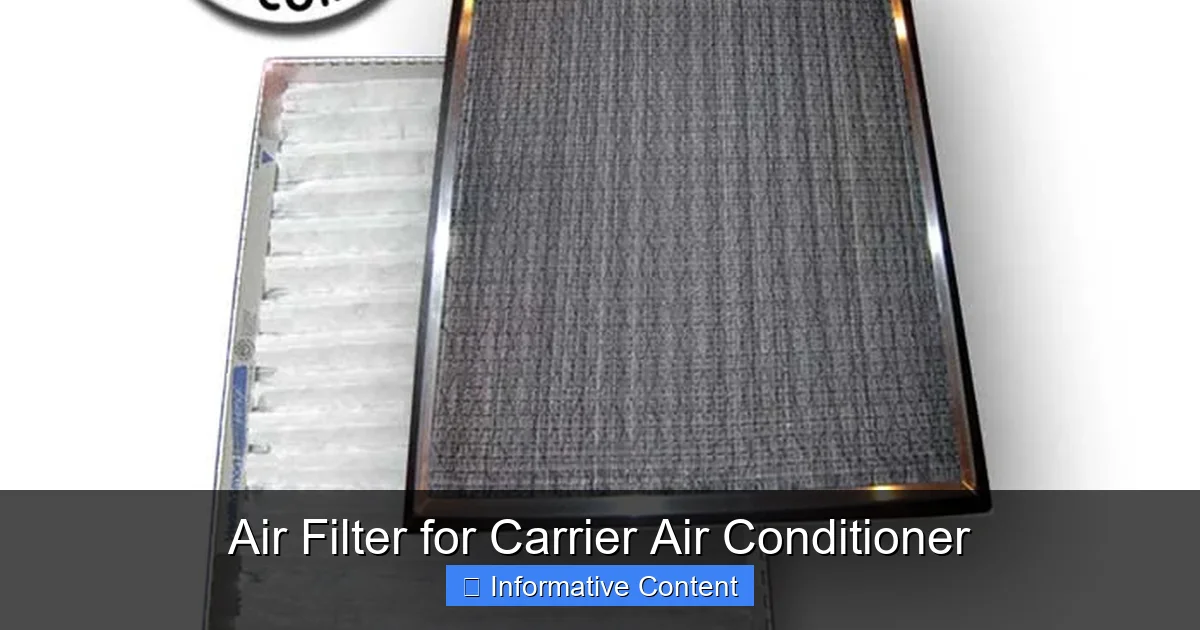
Choosing the right air filter for your Carrier air conditioner is essential for optimal performance, energy efficiency, and indoor air quality. This guide covers everything from filter types and MERV ratings to installation tips and maintenance schedules, helping you keep your system running smoothly year-round.
Key Takeaways
- Correct Filter Size Matters: Using the wrong size can reduce efficiency and damage your Carrier AC unit. Always check your model number or measure the existing filter.
- MERV Ratings Explained: Higher MERV ratings mean better filtration, but may restrict airflow if your system isn’t designed for it. Aim for MERV 8–13 for most homes.
- Filter Types Vary by Need: Fiberglass, pleated, electrostatic, and HEPA filters each offer different levels of protection and maintenance requirements.
- Replace Filters Regularly: Most filters should be changed every 1–3 months, especially during peak usage seasons or if you have pets or allergies.
- DIY Installation is Simple: Replacing your Carrier air filter is a quick, no-tool task that takes less than 5 minutes.
- Improved Air Quality & Efficiency: A clean filter reduces allergens, dust, and pollutants while helping your AC run more efficiently and last longer.
- Use Genuine or Compatible Filters: While OEM filters are ideal, high-quality compatible brands can offer similar performance at a lower cost.
📑 Table of Contents
- Why the Right Air Filter for Your Carrier Air Conditioner Matters
- Understanding Air Filters: Types and How They Work
- Decoding MERV Ratings: What You Need to Know
- How to Choose the Right Air Filter for Your Carrier AC
- Step-by-Step Guide to Replacing Your Carrier Air Filter
- Maintaining Your Carrier Air Conditioner for Peak Performance
- Common Mistakes to Avoid with Your Carrier Air Filter
- Conclusion: Breathe Easier with the Right Air Filter
Why the Right Air Filter for Your Carrier Air Conditioner Matters
Your Carrier air conditioner does more than just cool your home—it plays a crucial role in maintaining indoor air quality, energy efficiency, and system longevity. At the heart of this process is a small but mighty component: the air filter. Often overlooked, the air filter for Carrier air conditioner units is your first line of defense against dust, pollen, pet dander, mold spores, and other airborne contaminants.
Think of your air filter like the lungs of your HVAC system. Just as clean air is vital for your health, clean airflow is essential for your AC’s performance. A clogged or low-quality filter forces your system to work harder, increasing energy bills and potentially leading to costly repairs. On the flip side, a high-quality, properly maintained filter ensures your Carrier unit operates smoothly, delivers cleaner air, and lasts longer. Whether you’re dealing with summer heatwaves or seasonal allergies, the right filter makes a noticeable difference in comfort and cost.
Understanding Air Filters: Types and How They Work
Not all air filters are created equal. Different materials and designs offer varying levels of filtration, durability, and airflow resistance. Understanding the types available will help you choose the best air filter for your Carrier air conditioner based on your home’s needs.
Visual guide about Air Filter for Carrier Air Conditioner
Image source: grizzlytools.shop
Fiberglass Filters
Fiberglass filters are the most basic and affordable option. Made from layered fiberglass fibers, they’re designed to capture large particles like dust and lint. While they’re inexpensive and easy to replace, they offer minimal protection against smaller allergens and pollutants. These filters typically have a MERV rating of 2–4, making them suitable for homes with minimal air quality concerns but not ideal for allergy sufferers or pets.
Pleated Filters
Pleated filters are a significant step up in performance. Constructed from polyester or cotton paper folded into pleats, they have a larger surface area that traps more particles without restricting airflow excessively. With MERV ratings ranging from 8 to 13, pleated filters effectively capture dust, pollen, mold spores, and even some bacteria. They’re a popular choice for most homeowners using Carrier systems because they balance efficiency, cost, and air quality.
Electrostatic Filters
Electrostatic filters use self-charging fibers to attract and trap airborne particles. Some are washable and reusable, making them eco-friendly and cost-effective over time. While they offer good filtration (MERV 8–10), reusable models require regular cleaning to maintain performance. If you prefer a low-maintenance option, disposable electrostatic filters are also available.
HEPA Filters
High-Efficiency Particulate Air (HEPA) filters are the gold standard in air filtration, capturing 99.97% of particles as small as 0.3 microns. However, most standard Carrier air conditioners aren’t designed to handle the high resistance of HEPA filters, which can strain the blower motor and reduce efficiency. HEPA filters are typically used in specialized air purifiers or whole-home systems with upgraded HVAC compatibility.
Carbon Filters
Carbon filters are excellent at absorbing odors, smoke, and volatile organic compounds (VOCs). While they don’t capture particulates as effectively as pleated or HEPA filters, they’re often used in combination with other filter types. If you live near busy roads, have pets, or use strong cleaning products, a carbon-enhanced filter can significantly improve indoor air freshness.
Decoding MERV Ratings: What You Need to Know
The Minimum Efficiency Reporting Value (MERV) rating is a standardized scale that measures how well an air filter captures particles of different sizes. Developed by the American Society of Heating, Refrigerating and Air-Conditioning Engineers (ASHRAE), MERV ratings range from 1 to 20, with higher numbers indicating better filtration.
For most residential Carrier air conditioners, a MERV rating between 8 and 13 is ideal. Filters in this range effectively remove common household contaminants like dust mites, pet dander, mold spores, and pollen, without overly restricting airflow. Going beyond MERV 13 can cause problems—especially in older or smaller systems—because the denser material makes it harder for air to pass through, potentially leading to reduced efficiency, frozen coils, or motor strain.
Here’s a quick breakdown of what different MERV ratings capture:
- MERV 1–4: Captures large particles like dust and carpet fibers. Best for basic dust control.
- MERV 5–8: Traps mold spores, dust mite debris, and hair spray. Good for general home use.
- MERV 9–12: Removes Legionella, humidifier dust, and vehicle emissions. Ideal for homes with allergies or pets.
- MERV 13–16: Captures bacteria, smoke, and sneeze particles. Used in hospitals and high-efficiency homes.
- MERV 17–20: HEPA-level filtration. Requires specialized HVAC systems.
Always check your Carrier air conditioner’s manual or consult a technician before upgrading to a higher MERV filter. While better filtration sounds great, compatibility with your system is key to avoiding performance issues.
How to Choose the Right Air Filter for Your Carrier AC
Selecting the best air filter for your Carrier air conditioner involves more than just picking the highest MERV rating. You need to consider filter size, material, household needs, and system compatibility. Here’s a step-by-step guide to help you make the right choice.
Step 1: Check Your Filter Size
The most common mistake homeowners make is buying the wrong size filter. Carrier systems typically use standard sizes like 16x20x1, 20x25x1, or 14x24x1, but your unit may vary. To find the correct size:
- Look at the existing filter—the dimensions are usually printed on the frame (length x width x thickness).
- Check your Carrier air conditioner’s user manual or model number (often found on a label inside the access panel).
- Measure the filter slot if the old filter is missing or damaged.
Using a filter that’s too small leaves gaps for unfiltered air to bypass, while one that’s too large won’t fit properly and may restrict airflow.
Step 2: Assess Your Air Quality Needs
Your household’s specific needs should guide your filter choice. Ask yourself:
- Do you have pets? → Choose a pleated or electrostatic filter with a MERV 10–13 rating to capture pet dander.
- Do family members suffer from allergies or asthma? → Opt for a high-efficiency pleated filter (MERV 11–13) to reduce allergens.
- Do you live in a dusty area or near construction? → A pleated filter with a MERV 8–11 rating will help keep dust out.
- Do you notice strong odors or smoke? → Consider a carbon-enhanced filter or pair your AC filter with a standalone air purifier.
Step 3: Consider Maintenance and Budget
Filters vary in cost and maintenance requirements. Fiberglass filters are cheap but need replacing monthly. Pleated filters last 2–3 months and offer better value. Washable electrostatic filters save money over time but require weekly cleaning. Balance your budget with how much effort you’re willing to put into maintenance.
Step 4: Choose Between OEM and Compatible Filters
Carrier offers genuine OEM (Original Equipment Manufacturer) filters designed specifically for their systems. These are reliable and guaranteed to fit, but they can be more expensive. High-quality compatible filters from brands like FilterBuy, Honeywell, or Nordic Pure often match OEM performance at a lower price. Just ensure they meet the same MERV rating and size specifications.
Step-by-Step Guide to Replacing Your Carrier Air Filter
Replacing the air filter in your Carrier air conditioner is one of the easiest and most impactful maintenance tasks you can do. It takes less than 5 minutes, requires no tools, and can significantly improve your system’s performance. Here’s how to do it safely and correctly.
Step 1: Turn Off the System
For safety and to prevent dust from being pulled into the system, turn off your air conditioner at the thermostat. This ensures the blower isn’t running while you remove the filter.
Step 2: Locate the Filter Slot
Most Carrier air conditioners have the filter located in one of three places:
- Return Air Grille: A large vent on the wall or ceiling, often near the thermostat. Look for a latch or removable panel.
- Indoor Unit Access Panel: On the air handler or furnace, usually behind a metal door with screws or clips.
- Filter Rack: Inside the ductwork near the blower motor, accessible through a service panel.
If you’re unsure, consult your owner’s manual or look for a label indicating the filter location.
Step 3: Remove the Old Filter
Carefully slide out the old filter. Note the direction of the airflow arrow printed on the frame—this shows which way the filter should face when reinstalled. Take a photo or make a mental note to ensure proper orientation.
Step 4: Inspect and Clean the Area
Before inserting the new filter, use a vacuum or damp cloth to remove any dust or debris from the filter slot and surrounding area. This prevents contaminants from entering the system.
Step 5: Install the New Filter
Slide the new filter into place, making sure the airflow arrow points toward the blower motor (usually inward, toward the unit). Ensure it fits snugly without forcing it. A properly sized filter should slide in smoothly and sit flush.
Step 6: Turn the System Back On
Once the new filter is securely in place, close any panels or grilles and turn your air conditioner back on at the thermostat. Listen for normal operation—there should be no unusual noises or reduced airflow.
Pro Tips for Filter Replacement
- Set a calendar reminder to check your filter every month, especially during summer and winter when the system runs frequently.
- Keep a spare filter on hand so you’re never caught off guard.
- If you have pets or live in a dusty area, check the filter every 2–3 weeks.
- Never run your AC without a filter—this allows dust to accumulate on the coils and blower, reducing efficiency and potentially causing damage.
Maintaining Your Carrier Air Conditioner for Peak Performance
While replacing the air filter is the most frequent maintenance task, it’s just one part of keeping your Carrier air conditioner in top shape. Regular upkeep ensures long-term efficiency, lower energy bills, and fewer repairs.
Schedule Professional Tune-Ups
Even with regular filter changes, your Carrier system benefits from annual professional maintenance. A certified technician will inspect the coils, refrigerant levels, electrical connections, and airflow. They can also clean components that are hard to reach, like the evaporator and condenser coils, which can become clogged with dust and reduce cooling capacity.
Keep the Outdoor Unit Clean
The outdoor condenser unit needs adequate airflow to function properly. Clear away leaves, grass, and debris from around the unit. Trim back shrubs or plants at least 2 feet on all sides. Once a year, gently hose down the fins to remove dirt buildup—avoid using a pressure washer, which can bend the delicate fins.
Check and Clean Vents and Ducts
Over time, dust and mold can accumulate in your home’s air ducts and vents. Vacuum return and supply vents regularly to prevent recirculation of contaminants. If you notice musty odors or reduced airflow, consider a professional duct cleaning—especially if you’ve recently renovated or have pets.
Monitor Thermostat Settings
Using a programmable or smart thermostat can help maintain consistent temperatures and reduce strain on your system. Set your thermostat to 78°F (26°C) when you’re home and higher when away. Avoid frequent temperature swings, which force the AC to work harder.
Watch for Warning Signs
Be alert to signs that your system may need attention, such as:
- Weak airflow from vents
- Unusual noises (grinding, squealing, or banging)
- Ice buildup on coils or refrigerant lines
- Higher-than-normal energy bills
- Frequent cycling on and off
If you notice any of these issues, turn off the system and contact a Carrier-certified technician.
Common Mistakes to Avoid with Your Carrier Air Filter
Even small mistakes can reduce your air conditioner’s efficiency and shorten its lifespan. Here are some common pitfalls to watch out for when handling your air filter.
Using the Wrong Size or Type
As mentioned earlier, using an ill-fitting filter is a frequent error. A filter that’s too small allows dirty air to bypass filtration, while one that’s too large can restrict airflow. Always double-check dimensions and MERV compatibility.
Ignoring Replacement Schedules
Many homeowners forget to change their filters regularly. A clogged filter not only reduces airflow but can also cause the evaporator coil to freeze, leading to system shutdowns and expensive repairs. Mark your calendar or use a filter reminder app to stay on track.
Overlooking Filter Orientation
Installing the filter backward is a simple but costly mistake. The airflow arrow must point toward the blower. Reversing it reduces filtration efficiency and can damage the system over time.
Choosing the Highest MERV Rating Without Checking Compatibility
While a MERV 16 filter sounds impressive, it may not be suitable for your Carrier unit. High-MERV filters increase resistance, which can overwhelm older or smaller systems. Stick to MERV 8–13 unless a technician confirms your system can handle higher ratings.
Buying the Cheapest Option Without Considering Quality
Ultra-cheap filters may save money upfront but often lack durability and consistent performance. Invest in reputable brands that meet industry standards for filtration and airflow.
Running the System Without a Filter
Never operate your AC without a filter, even temporarily. Unfiltered air carries dust and debris directly into the system, coating coils and motors and reducing efficiency.
Conclusion: Breathe Easier with the Right Air Filter
Your Carrier air conditioner is a powerful tool for comfort and air quality, but its performance depends heavily on one small component: the air filter. Choosing the right air filter for your Carrier air conditioner isn’t just about picking a piece of cardboard with fibers—it’s about understanding your system’s needs, your household’s air quality concerns, and the balance between filtration and airflow.
By selecting the correct size, MERV rating, and filter type, and by replacing it regularly, you’ll enjoy cleaner air, lower energy bills, and a longer-lasting HVAC system. Whether you’re a first-time homeowner or a seasoned DIYer, this simple maintenance task delivers big rewards. So next time you hear your Carrier unit kick on, take a moment to appreciate the quiet work of your air filter—and give it the attention it deserves.
Frequently Asked Questions
How often should I replace the air filter in my Carrier air conditioner?
Most experts recommend replacing your air filter every 1–3 months. If you have pets, allergies, or live in a dusty area, check it monthly and replace it as needed. During peak cooling seasons, more frequent changes may be necessary.
Can I use a higher MERV filter in my Carrier AC for better air quality?
You can, but only if your system is compatible. Filters with MERV 14 and above may restrict airflow in standard Carrier units, leading to reduced efficiency or damage. Stick to MERV 8–13 unless a technician confirms your system can handle higher ratings.
Are Carrier brand filters better than third-party options?
Carrier OEM filters are designed specifically for their systems and offer reliable performance. However, high-quality third-party filters from reputable brands can provide similar filtration at a lower cost. Just ensure they match the correct size and MERV rating.
What happens if I don’t change my air filter regularly?
A dirty filter restricts airflow, forcing your AC to work harder. This increases energy bills, reduces cooling efficiency, and can lead to frozen coils, system breakdowns, or even motor damage over time.
Can I clean and reuse my Carrier air filter?
Only if it’s labeled as washable or reusable (typically electrostatic filters). Most standard pleated and fiberglass filters are disposable and should be replaced, not cleaned. Reusing a disposable filter reduces its effectiveness and can damage your system.
How do I find the correct filter size for my Carrier air conditioner?
Check the existing filter’s frame for printed dimensions (e.g., 16x20x1), consult your owner’s manual, or measure the filter slot. You can also find your model number on the unit and search online for compatible filters.