Life on the road is all about freedom, adventure, and soaking in the peace of nature. But let’s be real, sometimes that peace gets interrupted – especially by a loud RV air conditioner struggling to keep you cool, or a roaring generator trying to power it. If you’re tired of shouting over your AC unit or constantly worrying about disturbing your neighbors while boondocking, you’re likely searching for the best quiet generator for RV air conditioner needs.
While we won’t be reviewing generators directly in this article, we’re diving deep into the solutions that make your RV AC experience whisper-quiet and incredibly generator-friendly. We’ll explore high-performance, low-noise RV air conditioners and a clever device that lets smaller, quieter generators do the heavy lifting. Get ready to enjoy cool comfort without the clamor!
Why Quiet Matters for Your RV AC Setup
Imagine this: you’ve found the perfect, secluded spot, the stars are out, and a gentle breeze is rustling the leaves. The last thing you want is a noisy RV air conditioner kicking on, shattering the tranquility. A quiet AC unit not only improves your personal comfort, allowing for better sleep and conversation, but it also makes you a much more considerate camper. Plus, when paired with a reliable, quiet generator (like a modern inverter generator), you unlock the ultimate in off-grid comfort. The goal is to minimize overall noise, from the AC unit itself to the power source.
Let’s dive into some of the top products designed to help you achieve that peaceful, cool RV environment.
Product Reviews
1. RecPro RV Air Conditioner 15K | Quiet AC | 110-120V

The RecPro RV Air Conditioner is designed for RVers who demand both powerful cooling and serene quiet. This 15,000 BTU unit isn’t just about keeping your space frosty; it’s engineered with an ultra-quiet operation in mind, registering a mere 55.4 dB – comparable to a gentle rain. Its low amp draw also makes it incredibly friendly for off-grid setups, meaning it’s easier on your generator or solar system, helping you achieve a truly quiet power solution for your RV air conditioner.
-
Key Features:
- Energy-Efficient Low Amp Draw: Ideal for generators, solar, or off-grid use.
- Rugged, Durable Design: UV-resistant plastic, aerodynamic profile for travel.
- Ultra-Quiet Operation: Just 55.4 dB for minimal disruption.
- Multi-Function Remote + LED Touch Display: Easy control with cool, dry, fan, sleep, and timer modes.
- Built-In Heat Pump: Provides 4-season comfort, cooling and supplemental warmth.
- Ducted and Non-Ducted Compatibility: Flexible installation for various RV setups.
-
Pros:
- Exceptionally quiet operation for an RV AC unit.
- Low power draw is excellent for smaller generators or solar.
- Versatile with heating and cooling functions.
- Easy-to-use controls and remote.
-
Cons:
- May require professional installation for some users.
- 15,000 BTU might be overkill for very small RVs, leading to shorter cycles.
-
User Impressions: Customers frequently rave about how quiet this unit is compared to traditional RV ACs, often noting they can hold conversations or sleep undisturbed. The low amp draw is a common highlight, making it a favorite for boondockers looking for a dependable, quiet generator for RV air conditioner power.
2. RV Air Conditioner, 12V 10000 BTU Rooftop Air Conditioner

For those with smaller RVs or looking for a more direct 12V solution, this 10,000 BTU rooftop AC unit offers impressive cooling speed and quiet operation. It boasts a brushless copper motor and spring-supported mounts to significantly cut down on noise, ensuring your RV stays cool without the usual racket. The added smart controls and durable construction make it a robust choice for various weather conditions and personalized comfort.
-
Key Features:
- Efficient 10,000 BTU Cooling: Rapidly cools your RV in about 15 minutes.
- 4,500 BTU PTC Heater: Provides supplementary warmth for mild temperatures.
- Durable & Weather-Resistant: Built with UV-stabilized ABS, EPDM foam, and zinc-coated condenser.
- Quiet Operation: Brushless copper motor fans and spring-supported mounts reduce noise.
- Smart Control & Easy Operation: Remote control, temperature monitoring, and multiple modes (eco, sleep, turbo).
-
Pros:
- Quick cooling capability.
- Very quiet thanks to advanced motor and mounting design.
- Durable construction for tough road conditions.
- Smart features enhance user experience.
-
Cons:
- 10,000 BTU might not be sufficient for larger RVs in extreme heat.
- Heater is supplementary, not a primary heat source in very cold weather.
-
User Impressions: Users appreciate the quick cooling effect and the noticeable reduction in noise compared to older units. The smart control options are a big plus, allowing for fine-tuning of the RV’s climate, which is essential when pairing with a quiet generator for RV air conditioner use.
3. MICRO-AIR EasyStart FLEX 398 – Bluetooth Soft Start Kit
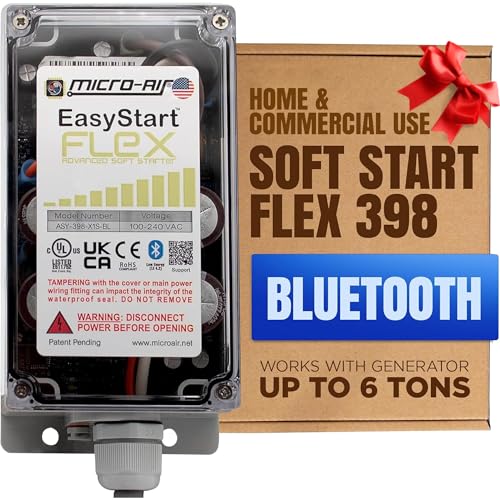
Alright, this isn’t an AC unit, but it’s an absolute game-changer for achieving quiet RV air conditioning, especially when using a generator! The Micro-Air EasyStart FLEX 398 is a soft start kit that dramatically reduces the initial power surge (startup current) of your RV’s AC compressor by up to 75%. Why does this matter? It means you can often run your RV’s AC on a much smaller, quieter generator or even off limited shore power. It’s the secret weapon for making virtually any generator the best quiet generator for RV air conditioner setups.
-
Key Features:
- Advanced MicroAir Technology: Reduces AC startup current by up to 75%.
- Ideal for Generators & Inverters: Enables AC operation with smaller power sources.
- Compatibility: Works with AC units up to 6 tons, including 2-stage compressors and heat pumps.
- Quiet & Smart Protection: Reduces startup noise, prevents light flickering, and protects compressor.
- Compact Design: 50% smaller enclosure for easy installation in tight spaces.
-
Pros:
- Allows use of smaller, quieter generators (e.g., 2000W instead of 3500W for a 15k BTU AC).
- Extends the life of your AC compressor by reducing mechanical stress.
- Reduces strain on electrical systems, preventing tripped breakers.
- Easy Bluetooth monitoring and diagnostics.
-
Cons:
- An additional cost on top of your AC unit.
- Requires basic electrical installation (can be DIY but some prefer professional).
-
User Impressions: RVers universally praise the EasyStart for its ability to unlock new possibilities for power management. Many report successfully running their 13.5k or 15k BTU AC units on 2,000-watt inverter generators after installation, transforming their power setup into a truly quiet generator for RV air conditioner system. It’s often described as a “must-have” for boondockers.
4. RecPro RV Air Conditioner 15K Ducted or Non-Ducted | Heat Pump

This is another excellent offering from RecPro, sharing many of the fantastic features of its counterpart reviewed earlier, emphasizing both performance and quiet operation. This 15,000 BTU unit, with its incredibly low 55.4 dB noise level, ensures your RV remains a tranquil oasis even when the AC is running full blast. Its compatibility with both ducted and non-ducted systems makes it a versatile choice for a wide range of RVs, ensuring you can enjoy a genuinely quiet generator for RV air conditioner setup.
-
Key Features:
- Energy-Efficient Low Amp Draw: Supports multi-appliance use and off-grid power.
- Rugged, Durable Design Built for Travel: UV-resistant, sleek, aerodynamic.
- Ultra-Quiet Operation: Just 55.4 dB, providing a peaceful environment.
- Multi-Function Remote + LED Touch Display: Comprehensive climate control options.
- Built-In Heat Pump for 4-Season Comfort: Cooling and supplemental heating capabilities.
- Ducted and Non-Ducted Compatibility: Flexible installation options.
-
Pros:
- Remarkably quiet during operation.
- Low power draw makes it very generator-friendly.
- Comprehensive control features for user convenience.
- Durable construction built for the road.
-
Cons:
- Noise level, while low, isn’t completely silent (no AC unit is).
- The heat pump is supplemental and not a primary heating source in very cold climates.
-
User Impressions: Similar to its sibling, users consistently highlight the quietness and efficient cooling power of this RecPro unit. Many appreciate the dual ducted/non-ducted compatibility, making it adaptable to different RV designs and enhancing the overall experience when seeking the ultimate quiet generator for RV air conditioner power.
5. Furrion Chill Cube 18k BTU Variable Speed RV Rooftop Air

The Furrion Chill Cube steps up the cooling game with an impressive 18,000 BTU capacity and variable speed compressors. What makes variable speed so critical for quiet operation? It allows the unit to run continuously at lower speeds when full power isn’t needed, eliminating the noisy, abrupt starts and stops of traditional ACs. This not only results in significantly quieter operation but also boasts higher energy efficiency, giving you more battery runtime and making your generator work smarter, not harder, for a truly quiet experience.
-
Key Features:
- Easy to Install: Simple bolt-on installation with a step-by-step guide (ADB sold separately).
- Superior Performance: Variable speed compressors move cool air faster and more efficiently.
- High Capacity & Efficiency: 18,000 BTU cooling, more energy-efficient for extended battery runtime.
- Quiet Operation: Variable speed eliminates abrupt starts/stops and excessive amp draw.
- Compact Design: Lighter than many units (72.4 lbs) with an aerodynamic profile to reduce drag.
-
Pros:
- Very high cooling capacity, ideal for larger RVs or extreme heat.
- Variable speed compressor ensures quieter, more consistent operation.
- Excellent energy efficiency, great for off-grid power.
- Lighter and more aerodynamic design improves RV performance.
-
Cons:
- ADB (Air Distribution Box) is sold separately.
- 18,000 BTU might be overpowered for smaller RVs, leading to shorter, less efficient cycles.
-
User Impressions: Owners are particularly impressed with the consistent cooling and the significantly reduced noise levels compared to fixed-speed units. The energy efficiency is a huge plus for those utilizing battery banks or smaller inverter generators, making it a strong contender for those seeking the best quiet generator for RV air conditioner pairing.
Conclusion: Finding Your RV Serenity
Finding the best quiet generator for RV air conditioner use isn’t just about the generator; it’s about the entire cooling system working in harmony. By investing in a genuinely quiet RV air conditioner, or equipping your existing one with a smart soft start kit like the Micro-Air EasyStart, you dramatically reduce the demands on your power source. This allows you to opt for smaller, more efficient, and inherently quieter inverter generators, transforming your RV experience from noisy to serene. So go ahead, choose the right combination, and enjoy the peace and quiet of your home on wheels, wherever the road takes you.
FAQ Section
Q1: What size generator do I need to run my RV air conditioner quietly?
A1: This depends on your AC unit’s BTU rating and whether you have a soft start kit. For a 13,500 BTU AC, you typically need a 3,000-3,500-watt generator. However, with a soft start kit (like the Micro-Air EasyStart), you can often power a 13,500 BTU AC with a 2,000-2,200-watt inverter generator, which are usually much quieter. Always check your AC’s starting and running wattage.
Q2: What makes an RV air conditioner “quiet”?
A2: Quiet RV AC units often feature advanced compressor designs, brushless motors for fans, improved insulation, and optimized airflow systems to reduce vibration and fan noise. Variable speed compressors, like those in the Furrion Chill Cube, are also excellent for quiet operation as they eliminate loud on/off cycles.
Q3: How does a soft start kit help make my RV AC and generator quieter?
A3: A soft start kit significantly reduces the initial surge of power (starting current) required by your AC compressor. This means your generator doesn’t have to suddenly ramp up to full power and struggle, preventing it from revving loudly or tripping breakers. By lowering the peak power demand, it allows you to use a smaller, less powerful, and thus inherently quieter generator.
Q4: Can I run my RV AC on battery power alone?
A4: Running a standard RV AC (110-120V) on battery power alone requires a substantial battery bank and a powerful inverter, as AC units draw a lot of power. While technically possible, it’s typically only practical for short periods or with very advanced and expensive off-grid power systems. 12V specific RV AC units (like one reviewed above) are designed to run directly from batteries, but still require significant battery capacity.
Q5: Are quiet RV air conditioners more expensive?
A5: Generally, RV air conditioners designed for quiet operation, especially those with advanced features like variable speed compressors or low amp draw, tend to be slightly more expensive than basic models. However, the investment often pays off in increased comfort, better energy efficiency, and the ability to use smaller, quieter generators.
Q6: Besides buying a quiet unit, how else can I reduce my RV AC noise?
A6: You can take several steps:
* Install a soft start kit: This helps with generator noise and AC startup.
* Check mounting: Ensure the AC unit is securely mounted to minimize vibration.
* Clean filters: Clogged filters make the unit work harder and louder.
* Insulate ducts: If you have a ducted system, proper insulation can reduce noise transfer.
* Close windows/vents: This helps the AC run more efficiently, reducing run time and noise.
* Use a quiet inverter generator: If your AC is quiet, but your generator isn’t, switch to a modern inverter generator.
Q7: What are BTUs and how many do I need for my RV?
A7: BTU stands for British Thermal Unit and it measures cooling capacity. The amount you need depends on your RV’s size and insulation, as well as the climate you’re typically in.
* Small RVs (under 20 ft): 8,000-10,000 BTU
* Medium RVs (20-30 ft): 13,500 BTU
* Large RVs (over 30 ft) or in very hot climates: 15,000 BTU or even 18,000 BTU (or two smaller units).
It’s generally better to have slightly more BTUs than too few, as an underpowered AC will run constantly and struggle to cool.