
Bracing for those chilly winter months or just looking for a more efficient way to keep your home comfortable year-round? You’re in the right place! Inverter air conditioners aren’t just for cooling anymore; many of the latest models double as powerful, energy-efficient heaters, making them a fantastic investment for multi-season comfort. Choosing the best inverter air conditioner for heating means getting smart climate control that saves you money on utility bills while providing consistent warmth.
Gone are the days of clunky, inefficient heaters that blast hot air then shut off, creating uncomfortable temperature swings. Inverter technology works by continuously adjusting the compressor speed, rather than cycling on and off. This means more precise temperature control, quieter operation, and significantly lower energy consumption, especially when it comes to heating. Whether you’re eyeing a portable unit, a window AC, or a full-blown mini-split system, there’s a fantastic option out there for you.
We’ve scoured the market to bring you our top picks for the best inverter air conditioner for heating, focusing on performance, efficiency, features, and user satisfaction. Let’s dive in and find the perfect warmth (and coolness!) for your home.
Our Top Picks for the Best Inverter Air Conditioners for Heating
Here are our detailed reviews of the top 7 inverter air conditioners that excel at keeping you warm:
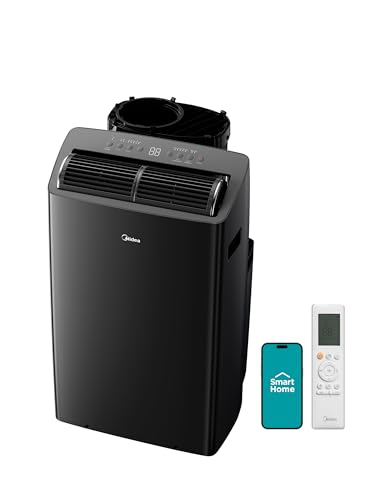
1. Midea Duo 14,000 BTU (12,000 BTU SACC) High Efficiency Portable AC with Heat

The Midea Duo truly stands out in the portable AC market, offering an innovative dual-hose design that drastically improves efficiency and speed. If you’ve been skeptical about portable units, this one might just change your mind. It’s engineered not just for powerful, fast cooling but also delivers superior and efficient heating, making it a stellar all-season solution for spaces where a window unit isn’t feasible or desired. Its smart features mean you can control your comfort from anywhere, which is incredibly convenient.
Key Features:
– Innovative Duo hose-in-hose design for balanced indoor air circulation and preventing hot air infiltration.
– Variable-speed inverter technology saves over 40% energy compared to traditional portable units.
– Provides 2X faster and stronger whole-room cooling.
– Multi-season comfort with powerful heating, operating efficiently down to 41℉.
– Smart control via the SmartHome App, Alexa, and Google Assistant.
Pros:
– Exceptional energy efficiency for a portable unit.
– Rapid cooling and heating performance.
– Smart home integration for effortless control.
– Versatile for year-round use in various settings.
– Unique dual-hose design enhances performance.
Cons:
– Requires 2 AAA batteries for the remote (not included).
– Portable units can still take up floor space.
– Heating function limited to temperatures above 41°F.
User Impressions: Customers are consistently impressed with the Midea Duo’s power and efficiency, especially for a portable unit. Many highlight how quickly it cools and heats rooms, and the smart features are a big hit for convenience. The quieter operation compared to older portable ACs is frequently praised, making it a comfortable choice for bedrooms and living areas.
2. Midea 8,000 BTU Smart Inverter Air Conditioner Window Unit with Heat

Looking for a compact powerhouse for a smaller to medium-sized room? The Midea 8,000 BTU Smart Inverter Window Unit is an excellent choice. It perfectly blends powerful cooling, effective dehumidification, and supplemental heating into one sleek, quiet package. This Energy Star certified unit is designed to save you money while keeping you comfortable, offering whisper-quiet operation that won’t disrupt your daily life or sleep. It’s about as close as you can get to a mini-split experience without the complex installation.
Key Features:
– Multi-season comfort with 8,000 BTU cooling and supplemental heat (effective above 41°F).
– Ideal for rooms up to 350 sq. ft.
– User-friendly LED display, 5 modes (Heat, Auto, Cool, Dry, Fan), 3 speed settings, and 24-hr timer.
– Smart control enabled with the SmartHome App, Alexa, and Google Assistant.
– Energy Star certified, saving up to 35% on energy costs with variable-speed inverter technology.
– Ultra-low noise performance, as low as 45 dBA.
Pros:
– Excellent energy savings with inverter technology.
– Extremely quiet operation, perfect for bedrooms.
– Convenient smart home and remote control options.
– Multi-functional for year-round climate control.
– Easy-to-clean washable filter.
Cons:
– Heating function has a low-temperature cutoff (41°F).
– Requires a double-hung window for installation.
– Limited to room sizes up to 350 sq. ft.
User Impressions: Users frequently commend this Midea unit for its incredibly quiet operation, often comparing it favorably to traditional window ACs. The energy savings are a major plus, with many noticing a difference in their electricity bills. The smart features and ability to cool and heat effectively make it a highly recommended choice for consistent comfort.
3. TOSOT 15,000 BTU PTAC Heating and Cooling, Inverter Technology

For those needing a robust, all-in-one solution for larger spaces like hotel rooms, apartments, or commercial areas, the TOSOT 15,000 BTU PTAC unit is a standout. This unit offers both a highly efficient heat pump system and a powerful electric auxiliary heat option, providing reliable warmth even in colder climates. Its inverter technology ensures precise temperature control and significant energy savings, making it a smart choice for both comfort and cost-effectiveness. The durability features mean it’s built to last in various conditions.
Key Features:
– 15,000 BTU cooling and 13,500 BTU heating capacity, suitable for up to 850 sq. ft.
– Two heating options: high-efficiency heat pump and 3.5kW electric auxiliary heat for temperatures below 20℉.
– Inverter technology saves up to 30% energy with EER of 10.7 and COP of 11.6.
– Standard size (42” x 16” x 13 ¾”) for easy replacement in existing wall sleeves.
– Operates efficiently from 20℉ to 115℉ with corrosion-resistant coils and freeze protection.
– Quiet operation at 53dB on high fan speed.
– Ventilation function for indoor-outdoor air exchange.
Pros:
– Powerful heating and cooling for large areas.
– Reliable heating in very cold temperatures with electric auxiliary heat.
– Significant energy savings with inverter technology.
– Durable design for harsh conditions.
– Quiet operation for a PTAC unit.
– Long 5-year warranty.
Cons:
– Wall sleeve and grille are not included for new installations.
– Requires 208/230V power supply and specific wiring.
– Ventilation may affect efficiency.
User Impressions: Property managers and homeowners with larger spaces praise the TOSOT PTAC for its dual heating capabilities, ensuring warmth even when temperatures plummet. The energy efficiency for its size is a common highlight, alongside its robust build quality. Users appreciate the relatively quiet operation, especially for a unit of this capacity, contributing to a comfortable indoor environment.
4. Midea 12,000 BTU Smart Inverter Air Conditioner Window Unit with Heat

If you need more power than an 8,000 BTU unit but still prefer the convenience of a window installation, the Midea 12,000 BTU Smart Inverter Window Unit is a fantastic upgrade. It brings all the beloved features of its smaller sibling—energy efficiency, smart control, and ultra-quiet operation—to rooms up to 550 sq. ft. This unit truly offers multi-season comfort, efficiently cooling your space in summer and providing cozy warmth through the colder months, all while keeping energy consumption impressively low.
Key Features:
– 12,000 BTU cooling and supplemental heating (effective above 41°F) for rooms up to 550 sq. ft.
– Energy Star certified with variable-speed inverter technology, saving up to 35% on energy costs.
– Ultra-low noise performance, operating as low as 45 dBA.
– Smart control via the SmartHome App, Alexa, and Google Assistant.
– 5 modes (Heat, Auto, Cool, Dry, Fan), 3 speed settings, 24-hr timer, and ECO energy saver.
– Washable filter for easy maintenance.
Pros:
– Powerful enough for larger rooms while maintaining high efficiency.
– Remarkably quiet operation for a window AC.
– Seamless smart home integration for convenience.
– Significant energy savings compared to traditional units.
– Provides both heating and cooling for year-round use.
Cons:
– Heat pump function limited to temperatures above 41°F.
– Installation requires a specific window opening size.
– Still a visible unit in the window.
User Impressions: Many users describe this 12,000 BTU Midea unit as a “game changer,” praising its ability to cool and heat larger spaces efficiently and quietly. The smart control is a particular favorite, allowing effortless temperature management. Customers frequently highlight the noticeable reduction in energy bills, making it a highly cost-effective choice for consistent comfort.
5. YITAHOME 12000 BTU Mini Split Air Conditioner Heat Pump
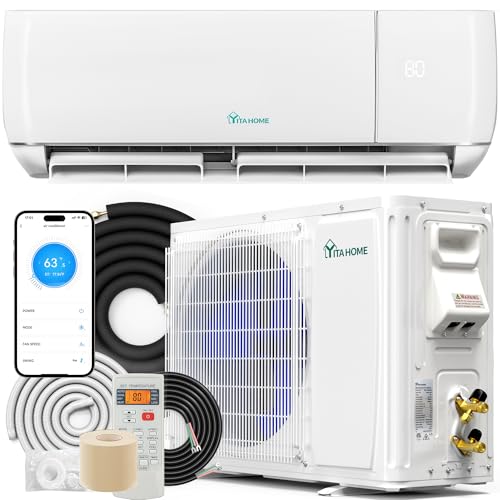
For ultimate efficiency and discreet comfort, a mini-split system like the YITAHOME 12000 BTU unit is often the best inverter air conditioner for heating. This ductless system is designed to cover larger areas up to 750 sq. ft. with both powerful cooling and robust heating, even in extreme temperatures. With its innovative inverter technology, it not only ensures optimal performance but also delivers significant energy savings. Plus, advanced features like WiFi connectivity, self-cleaning, and air quality enhancements make it a top-tier choice for modern homes.
Key Features:
– 12,000 BTU cooling and heating capacity, covering up to 750 sq. ft.
– Innovative inverter technology for optimal performance and 25% energy savings.
– ETL and AHRI certified for reliability and energy efficiency.
– Five modes (auto/cool/dry/heat/fan), WiFi-enabled, and Alexa-compatible.
– Operates efficiently in temperatures from 5°F to 118°F.
– Silent performance with noise levels below 41 decibels.
– Advanced features: auto defrosting, self-diagnosis/cleaning, iFEEL, sleep mode, “HEALTH” mode (negative ions, PM2.5 removal).
Pros:
– Exceptional energy efficiency with a wide operating temperature range.
– Powerful heating even in very cold climates (down to 5°F).
– Ultra-quiet operation, ideal for bedrooms and quiet spaces.
– Comprehensive smart features and air quality enhancements.
– Suitable for a wide range of applications, including garages and RVs.
Cons:
– Requires professional HVAC installation, which adds to the overall cost.
– Ships in two packages, which may arrive separately.
– Shut-off valve housing and side protection grille not included.
User Impressions: Users absolutely love the YITAHOME mini-split for its ability to deliver consistent, powerful heating and cooling across a broad temperature range. The quiet operation is a frequent highlight, allowing for peaceful environments. Many homeowners praise the energy savings and the convenience of smart controls, noting a significant improvement in overall home comfort and air quality.
6. GarveeHome 12000 BTU Mini Split AC/Heating System, 19 SEER2
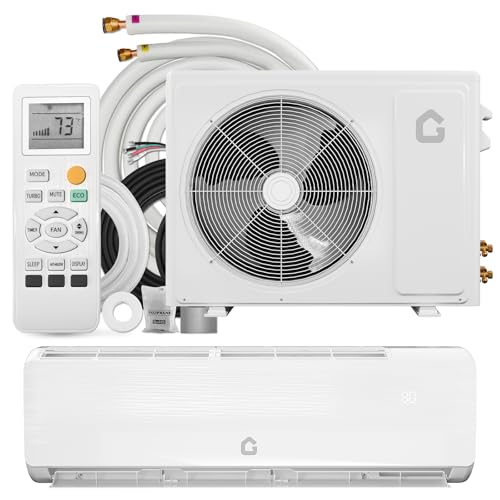
The GarveeHome 12000 BTU Mini Split system is another excellent contender for the best inverter air conditioner for heating, especially if you’re prioritizing cutting-edge efficiency and advanced features. With an impressive 19 SEER2 rating, this unit doesn’t just promise energy savings; it delivers. It’s designed to provide precise, customizable comfort across 750 sq. ft., offering a suite of modes and fan speeds that adapt to your exact needs. Its thoughtful design, including ultra-quiet operation and an auto-cleaning evaporator, makes it a superior choice for year-round comfort.
Key Features:
– 12,000 BTU cooling and 12,300 BTU heating for spaces up to 750 sq. ft.
– Advanced inverter technology for stable temperature and up to 30% energy savings.
– High efficiency ratings: 19 SEER2 and 9.1 HSPF2.
– 6-in-1 modes: Cool, Heat, Dry, Fan, Sleep, ECO, with iFEEL mode for precise comfort.
– 5 fan speeds for customizable airflow and wide coverage.
– Self-cleaning evaporator (57°C high-temp clean) and washable filter for fresh air.
– Operates quietly at just 30 dB, with Sleep Mode and Silent Mode.
Pros:
– Outstanding energy efficiency with high SEER2 and HSPF2 ratings.
– Extremely quiet operation, perfect for sensitive environments.
– Multiple comfort modes and customizable airflow.
– Enhanced air quality with self-cleaning and washable filters.
– Reliable performance in various conditions.
Cons:
– Requires professional HVAC installation.
– Temperature range limited to 62°F–89°F (for heating setting, not outdoor operation).
– Line length up to 50 ft, but specific installation requirements apply.
User Impressions: Reviewers are consistently impressed by the GarveeHome mini-split’s quietness, often stating they barely notice it’s running. The energy efficiency is a major draw, with many reporting lower utility bills. Users appreciate the smart features like iFEEL and the self-cleaning function, which simplify maintenance and enhance comfort, making it a top choice for quiet, efficient climate control.
7. COSTWAY 12000BTU Mini Split Air Conditioner & Heater, 20 SEER

Rounding out our list is the COSTWAY 12000BTU Mini Split, an exceptional choice for those seeking premium efficiency and reliability. With an impressive 20 SEER rating, this unit is engineered to deliver powerful cooling in summer and robust heating in winter while drastically cutting down on energy consumption. Its innovative inverter technology ensures stable temperatures and prolongs equipment life, making it a smart long-term investment. Beyond its core performance, features like self-cleaning, auto-defrost, and a comprehensive warranty demonstrate a commitment to both user convenience and product longevity.
Key Features:
– 12,000 BTU cooling and 1-ton heat pump for energy-efficient multi-season comfort.
– AHRI Certified and pre-charged with eco-conscious R32 refrigerant.
– Innovative inverter technology reduces power consumption and extends equipment lifespan.
– 5 working modes (auto, cool, dry, heat, fan) and 4 fan speeds (low/medium/high/auto).
– Sleep mode, ECO mode, iFEEL, and turbo function for tailored comfort.
– Easy control with a handy remote control and smart 0.5-24 hour timer.
– Self-cleaning function at 134.6℉ and auto-defrost for enhanced air quality and efficiency.
– Industry-leading 5-year parts and 8-year compressor warranty.
Pros:
– Outstanding 20 SEER energy efficiency.
– Eco-friendly R32 refrigerant.
– Comprehensive warranty coverage for peace of mind.
– Advanced features like self-cleaning and auto-defrost.
– Versatile modes and functions for customized comfort.
– Quiet operation and smart timer for undisturbed sleep.
Cons:
– Professional HVAC installation by a licensed installer is required.
– Availability of R32 refrigerant for supplements might vary.
– Upfront cost is higher than portable or window units.
User Impressions: Customers frequently praise the COSTWAY mini-split for its remarkable energy efficiency, noting significant savings on their utility bills. The quiet operation is often highlighted, making it ideal for residential use. The strong warranty and advanced self-cleaning features give users confidence in their purchase, while the powerful heating and cooling capabilities ensure year-round comfort.
FAQ: Your Questions About Inverter Air Conditioners for Heating Answered
Q1: What exactly is an “inverter air conditioner” and how does it differ from a traditional one?
A1: An inverter air conditioner uses a variable-speed compressor, meaning it can adjust its speed to match the required heating or cooling load. Traditional (non-inverter) ACs have a single-speed compressor that only runs at full power, cycling on and off to maintain temperature. The inverter’s ability to run at varying speeds makes it significantly more energy-efficient, quieter, and provides more consistent temperature control without drastic fluctuations.
Q2: How do inverter air conditioners provide heating?
A2: Most inverter air conditioners that provide heating utilize a “heat pump” technology. Instead of generating heat, a heat pump works by reversing the refrigeration cycle used for cooling. In heating mode, it extracts heat from the outside air (even cold air contains thermal energy) and transfers it indoors. This process is far more energy-efficient than traditional electric resistance heaters because it moves heat rather than creates it. Some units also include supplemental electric resistance heating for very cold climates.
Q3: Are inverter air conditioners truly more energy-efficient for heating?
A3: Absolutely! Because inverter technology allows the compressor to operate at variable speeds, it uses only the necessary amount of power to maintain the desired temperature. This avoids the energy spikes associated with traditional units constantly turning on and off. For heating, heat pump inverter ACs are incredibly efficient, often delivering 2-4 times more heat energy than the electrical energy they consume, resulting in significant savings on your utility bills compared to electric furnaces or baseboard heaters.
Q4: Can these units effectively heat a room in very cold temperatures?
A4: It depends on the unit. Many inverter heat pumps can effectively heat down to surprisingly low temperatures, some even as low as 5°F. However, their efficiency can decrease as temperatures drop further. Some models, especially PTACs, offer auxiliary electric resistance heating that kicks in below a certain threshold (e.g., 20°F or 41°F) to ensure consistent warmth even in extreme cold. Always check the specific operating temperature range for the heating function of the model you’re considering.
Q5: What do BTU, SEER, and HSPF mean, and why are they important for heating?
A5:
* BTU (British Thermal Unit): A measure of heating or cooling capacity. Higher BTU means more powerful heating/cooling, suitable for larger spaces.
* SEER (Seasonal Energy Efficiency Ratio): Measures the cooling efficiency of an air conditioner over a typical cooling season. Higher SEER ratings indicate better energy efficiency for cooling.
* HSPF (Heating Seasonal Performance Factor): Measures the heating efficiency of a heat pump over a typical heating season. Higher HSPF ratings indicate better energy efficiency for heating.
These ratings help you compare units and understand their potential energy savings.
Q6: Is installation of an inverter AC for heating complicated or expensive?
A6: Installation complexity varies greatly by type:
* Portable Units: Generally the easiest, just needing a window exhaust and a power outlet.
* Window Units: Require proper fitting into a double-hung window frame, but typically DIY-friendly with included kits.
* Mini-Split Systems: These are ductless systems with an indoor and outdoor unit connected by refrigerant lines. They always require professional HVAC installation by a licensed technician due to the refrigerant handling, electrical work, and proper line set vacuuming. This adds to the overall cost but ensures safe and efficient operation.
* PTAC Units: Designed for through-the-wall installation, often replacing existing units. New installations may require a wall sleeve and grille, and professional wiring.
Q7: How much noise do inverter air conditioners make, especially when heating?
A7: One of the biggest advantages of inverter technology is its quiet operation. Because the compressor runs continuously at varying speeds rather than cycling on and off at full blast, it produces significantly less noise than traditional units. Many inverter ACs operate as quietly as 30-50 dBA, which is often comparable to a quiet refrigerator or library. This makes them ideal for bedrooms and living spaces where quiet comfort is paramount.
Choosing the best inverter air conditioner for heating is a smart move for anyone looking for efficient, consistent, and year-round comfort. With options ranging from versatile portable units to powerful mini-splits, there’s a perfect solution to keep your home cozy and your energy bills in check. Don’t let the cold catch you off guard – invest in an inverter AC that heats as brilliantly as it cools!