
Picture this: You’re out on the open road, exploring breathtaking landscapes, but the sun is blazing, and your RV feels like a sauna. Your built-in RV air conditioner is your best friend, but what happens when you’re off-grid, far from shore power? That’s where a reliable portable generator for RV air conditioner comes into play – or perhaps a clever soft start kit!
Keeping cool while boondocking or enjoying a remote camping trip doesn’t have to be a dream. With the right equipment, you can power up your AC and enjoy all the comforts of home. We’ve put together a list of 5 fantastic products that offer different solutions to help you beat the heat, from dedicated generators to smart soft start kits and even compact portable AC units. Let’s dive in and find the perfect fit for your adventurous lifestyle!
What to Look For When Powering Your RV AC
Before we jump into the reviews, let’s quickly chat about what’s important. Your RV’s air conditioner typically draws a lot of power, especially during startup (known as “inrush current”). This is why a regular small generator might struggle. You’ll want to consider:
- Wattage: How many running watts and surge watts does your AC need? (Usually 1500-2500 running watts for a 13,500 BTU AC, with higher surge needs).
- Generator Type: Inverter generators are usually quieter, more fuel-efficient, and produce cleaner power, making them ideal for sensitive electronics and RVs.
- Soft Start Kits: These devices drastically reduce the initial power surge when your AC kicks on, allowing smaller generators to power larger AC units.
- Portability: You’re on the move, so size and weight matter!
- Noise Level: Nobody wants a roaring generator disturbing their peaceful campsite.
Our Top 5 Picks for Staying Cool On The Road
Here are our handpicked solutions to help you power your RV air conditioner, whether it’s through a generator, a soft start, or a portable AC unit.
1. MICRO-AIR EasyStart FLEX 398 – Bluetooth Soft Start Kit
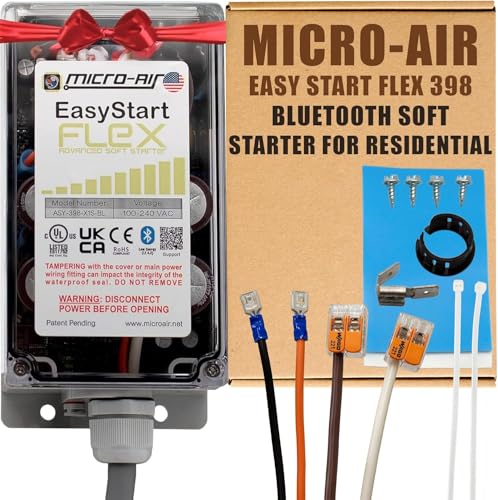
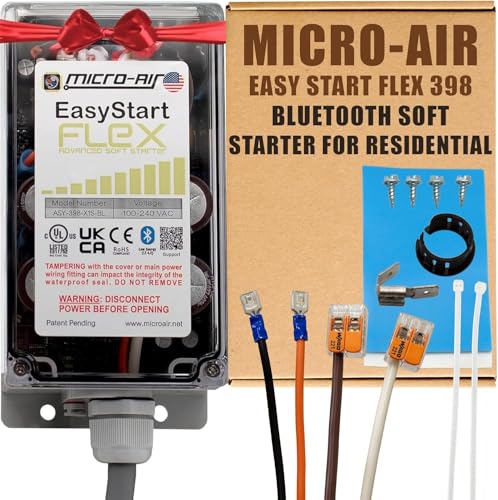
This isn’t a portable generator for RV air conditioner, but it’s a game-changer that makes your existing generator (or even limited shore power) feel more powerful. The Micro-Air EasyStart Flex is a cutting-edge soft start kit designed to dramatically reduce your AC’s startup current – we’re talking up to a 75% reduction! This means you can power larger RV air conditioners with smaller, more efficient generators, or avoid tripping breakers at campgrounds with less robust electrical hookups. Its advanced Bluetooth technology lets you monitor and manage it right from your phone, making it super user-friendly.
-
Key Features:
- Advanced Micro-Air Technology for controlled, gentle AC startup.
- Reduces startup current by up to 75%.
- Compatible with generators, inverters, and limited utility power.
- Suitable for residential ACs up to 6 tons (72,000 BTUs) and RVs.
- Quiet operation reduces startup noise and prevents light flickering.
- Intelligent fault detection and short-cycle delay for compressor protection.
- Compact design for easy installation in tight spaces.
-
Pros:
- Significantly reduces AC power draw during startup.
- Allows smaller, quieter generators to run larger RV AC units.
- Extends the lifespan of your AC compressor and generator.
- Bluetooth connectivity for easy monitoring and diagnostics.
- Versatile for home, RV, and commercial use.
- Easy installation kit included.
-
Cons:
- It’s an additional cost on top of your generator.
- Requires some wiring knowledge for installation (though an installation kit is provided).
- Doesn’t generate power itself.
-
User Impressions: RVers absolutely love how this soft start kit transforms their boondocking experience. Many report being able to run their 15,000 BTU AC units with generators as small as 2200 watts, something that was impossible before. The Bluetooth feature gets high praise for convenience, and users appreciate the added protection for their AC units. It’s often described as a “must-have” for serious RVers.
2. Soft Start Kit for RV Air Conditioner, GlymXia RV Soft…

Here’s another fantastic soft start kit, this time from GlymXia, specifically tailored for RVers who want simplicity. If you’ve been hesitant about complex wiring, this plug-and-play solution might be exactly what you need. It boasts a 65-70% reduction in AC startup current, letting you power a 15,000 BTU AC with compact generators as small as 1500W-2200W. What’s more, it’s designed with smart protection for both your AC compressor and generator, and helps you run other appliances simultaneously without tripping breakers – a true boon for any RVer.
-
Key Features:
- Plug-and-Play installation – zero technical skills needed (30-minute install).
- Reduces AC startup current by 65-70% (e.g., 30A to 10A).
- Enables powering 15,000BTU AC with 1500W-2200W generators.
- Smart protection against over-voltage, over-current, and short-circuits.
- Extends AC compressor life by 30%.
- Allows simultaneous operation of AC and other appliances.
- Dustproof casing and anti-corrosion wiring for durability.
-
Pros:
- Incredibly easy, tool-free installation.
- Significantly improves generator compatibility with RV ACs.
- Built-in smart protections safeguard your equipment.
- Helps utilize your generator’s full potential for multiple devices.
- Durable design for tough road conditions.
- Comes with a 12-month hassle-free warranty.
-
Cons:
- Still an additional purchase to your power setup.
- Requires a few AC startup cycles to “learn” for maximum effect.
- Doesn’t generate power on its own.
-
User Impressions: Customers rave about the GlymXia kit’s straightforward installation process, often noting it lived up to its “plug-and-play” promise. They appreciate the immediate difference in AC startup, allowing them to power their units with much smaller, lighter portable generator for RV air conditioner needs. The ability to run the microwave or coffee maker alongside the AC is a huge plus for convenience.
3. Ivation 6,500 BTU Camper Air Conditioner | Portable…
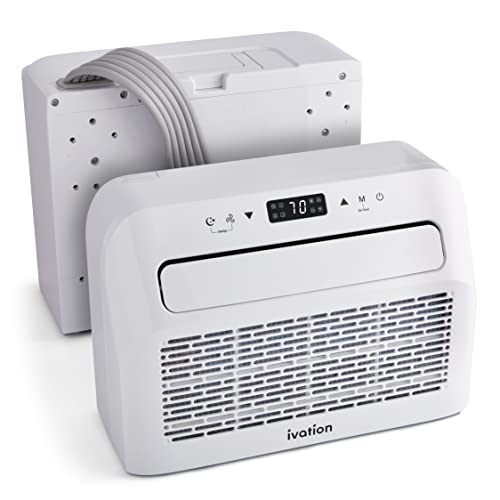
Sometimes, instead of powering your built-in AC, a completely separate portable unit is the answer. The Ivation 6,500 BTU Camper Air Conditioner offers a unique split design that’s perfect for RVs, vans, and even tiny homes. It’s designed to saddle over your windowsill, keeping the noisy compressor outside while the main unit quietly cools your interior. This clever setup not only provides powerful cooling, dehumidifying, and ventilation but also saves your window view and offers greater stability than traditional portable ACs. It’s a fantastic solution if your RV doesn’t have a robust built-in AC or if you just need supplemental cooling.
-
Key Features:
- Powerful 6,500 BTU cooling, fan, and dehumidifier functions.
- Innovative “saddle mounting” split design keeps compressor outside.
- Shockproof dampers absorb vibration for quiet operation.
- Digital display with easy controls (temperature, fan speed, swing, timer, sleep mode).
- Portable styling installs in minutes, fitting most RV and home windows.
- Includes integrated hose, brackets, hardware kit, and washable filter.
- Versatile for RVs, campers, vans, travel trailers, or even home use.
-
Pros:
- Much quieter inside due to the split design.
- Easy to install and move between locations.
- Provides strong cooling for its size.
- Full window functionality is maintained.
- Multi-functional (cool, dehumidify, ventilate).
- Less expensive than upgrading an entire RV AC system.
-
Cons:
- Requires a window opening for installation.
- 6,500 BTUs might not be enough for very large RVs in extreme heat.
- Still needs a power source (generator or shore power).
-
User Impressions: Owners are consistently impressed by the Ivation AC’s cooling power and surprisingly quiet operation, thanks to the external compressor. The “over the sill” design is a hit, making it practical for various vehicle types without permanent modifications. Many users find it a perfect solution for smaller RVs, converted vans, or as an auxiliary cooler, especially when powered by their portable generator for RV air conditioner needs.
4. 4400-Watt Portable Inverter Generator, PowerSmart Gas…

Now, for a true power horse that can directly fuel your comfort! The PowerSmart 4400-Watt Portable Inverter Generator is a fantastic option for powering your RV AC and pretty much everything else. With 4400 starting watts and 3600 running watts, it can handle most 13,500 BTU or even some 15,000 BTU RV air conditioners (especially when paired with a soft start kit). What makes this generator stand out is its balance of high output, decent runtime, and relatively quiet operation, making it suitable for campsites without being overly intrusive. Its compact size and safety features are also big wins for RV life.
-
Key Features:
- 4400W starting wattage / 3600W rated wattage.
- 1.6-gallon fuel tank provides 11 hours of runtime at 25% load.
- Super quiet operation at 76 dB from 23 feet (at 25% load).
- Compact and portable design (61.29 lbs, 19.3 x 16.9 x 16.5 inches).
- EPA Compliant 223cc 4-stroke gas engine.
- Multiple safety features: carbon monoxide detection, low oil level shutdown, overload protection.
-
Pros:
- Ample power for most RV AC units and other appliances.
- Good fuel efficiency and extended runtime.
- Quieter than conventional generators, suitable for camping.
- Highly portable and easy to store.
- Excellent safety features for peace of mind.
- Produces clean inverter power, safe for sensitive electronics.
-
Cons:
- Still heavier than smaller inverter generators.
- 76 dB might still be noticeable in very quiet campsites (though good for its power class).
- Requires gasoline, which means carrying fuel.
-
User Impressions: RVers needing significant power are generally very happy with the PowerSmart generator. They report it starts reliably and easily handles their AC, often without a soft start for 13,500 BTU units, or perfectly with one for larger ACs. The runtime is appreciated during longer dry camping stints, and the safety features offer reassurance. It’s often chosen as a reliable, mid-range portable generator for RV air conditioner and general RV power needs.
5. VEVOR Portable Air Conditioner, 4250 BTU 3-Speed Air…

Last but not least, we have another fantastic dedicated portable AC option from VEVOR. This 4250 BTU unit is specifically designed for mobile living, offering powerful cooling for spaces up to 8㎡ (about 86 sq ft), which is perfect for tents, smaller RVs, or supplementing a larger RV’s cooling. What really makes it shine for RVers is its compatibility with DC 24V power supplies – meaning you can run it directly from your car battery (with the right inverter/converter) or a compatible power station, giving you incredible flexibility. Plus, its “no-drain” design means you don’t have to worry about emptying a water tank, making it truly hassle-free.
-
Key Features:
- Powerful 4250 BTU cooling with 530W output and R290 refrigerant.
- Compatible with DC 24V power supplies (car, RV batteries).
- Multiple modes: cooling, sleep, dehumidifying, fan (3 speeds).
- 24-hour timer for energy saving.
- No-drain design eliminates concerns about condensation and water leakage.
- Equipped with exhaust hose and outlet adapter for bidirectional cooling.
- Lightweight, portable, and includes remote control.
-
Pros:
- Highly portable and great for small spaces.
- Versatile DC 24V power compatibility for off-grid use.
- Hassle-free “no-drain” operation.
- Multiple functions for all-season climate control.
- Energy-saving timer and sleep mode.
- Can be used both indoors (with exhaust) and outdoors.
-
Cons:
- 4250 BTUs is limited to smaller spaces.
- Still requires a robust 24V power source to run effectively.
- Exhaust hose setup is still needed for optimal cooling.
-
User Impressions: Campers and small RV owners absolutely love the VEVOR portable AC for its true portability and DC power option. They find it highly effective for cooling tents, pop-ups, or small sections of their RVs. The no-drain feature is a huge convenience, making it low-maintenance, and the remote control adds to the ease of use. It’s considered an excellent choice for targeted cooling or supplementing an RV’s main AC, especially when powered by a compatible portable generator for RV air conditioner accessories or a large power bank.
Conclusion
Staying cool on your RV adventures shouldn’t be a luxury reserved only for shore power hookups. Whether you opt for a powerful inverter generator like the PowerSmart, invest in a smart soft start kit from Micro-Air or GlymXia to make your existing setup more efficient, or choose a dedicated portable AC like the Ivation or VEVOR for flexible cooling, there’s a solution out there for you. Consider your RV’s AC unit size, your typical camping style, and your budget to pick the best way to keep your cool wherever the road takes you. Happy trails and comfortable camping!
FAQ: Portable Generators and RV Air Conditioners
Q1: What size portable generator do I need for my RV air conditioner?
A1: The size depends on your AC’s BTU rating. A 13,500 BTU RV AC typically needs around 1500-2500 running watts and 3000-3500 surge watts. A 15,000 BTU AC will need closer to 2000-2800 running watts and 3500-4000+ surge watts. Always check your AC unit’s specific wattage requirements (often found on a sticker on the unit itself or in its manual) and choose a generator with sufficient running and surge wattage.
Q2: What is “inrush current” and why is it important for RV ACs and generators?
A2: Inrush current is the brief, high surge of electrical power an appliance draws when it first starts up, especially motors like those in air conditioners. This surge is much higher than the unit’s normal running wattage. If your generator or electrical system can’t handle this initial spike, it can overload, trip breakers, or even damage your equipment.
Q3: Can I run my RV AC on a portable generator without a soft start kit?
A3: Yes, you can, but your generator will need to be powerful enough to handle the AC’s high inrush current. For example, a 13,500 BTU AC might require a generator with at least 3500-4000 surge watts without a soft start. A soft start kit can significantly reduce this surge, allowing you to use a smaller, quieter, or more fuel-efficient portable generator for RV air conditioner needs.
Q4: Are inverter generators better for RVs than conventional generators?
A4: Generally, yes. Inverter generators produce “cleaner” power, which is safer for sensitive electronics common in RVs (laptops, TVs, microwaves). They are also typically much quieter, more fuel-efficient, and have a more stable power output compared to older, conventional generators, making them ideal for camping and recreational use.
Q5: How much wattage does a typical RV air conditioner use?
A5: A 13,500 BTU RV AC typically uses around 1200-1800 running watts and 2800-3500 surge watts. A 15,000 BTU RV AC will use slightly more, often in the range of 1500-2200 running watts and 3000-4000+ surge watts. These numbers can vary by manufacturer and specific model, so always verify your unit’s exact specifications.
Q6: What is a soft start kit and why would I need one for my RV AC?
A6: A soft start kit is a device that reduces the sudden electrical surge (inrush current) when your RV air conditioner starts. By “softening” the startup, it significantly lowers the power demand on your electrical system. You would need one if you want to:
* Run your RV AC with a smaller portable generator (e.g., 2000-2200 watt inverter generator).
* Avoid tripping circuit breakers at campgrounds with limited shore power.
* Extend the lifespan of your AC compressor and generator.
* Reduce startup noise and light flickering.
Q7: Can I use a regular extension cord with my portable generator for RV air conditioner?
A7: It’s generally not recommended to use standard household extension cords for high-draw appliances like RV ACs with a generator. You should use heavy-duty, outdoor-rated extension cords (usually 10 or 12 gauge) that are properly sized for the wattage and length required. Ideally, use an RV adapter plug and a dedicated RV power cord (30A or 50A, as appropriate) to connect your generator to your RV’s shore power inlet. Improper cords can overheat and pose a fire hazard.
Q8: How difficult is it to install a soft start kit on an RV air conditioner?
A8: Installation difficulty can vary. Some soft start kits, like the GlymXia reviewed above, are designed for plug-and-play simplicity and can be installed by most DIYers in under an hour with basic tools and following the provided instructions (often including video guides). Others, like the Micro-Air EasyStart, may require a bit more comfort with basic wiring. If you’re unsure, it’s always best to consult a professional RV technician.