
Hitting the open road in your RV is all about freedom, adventure, and comfort. But let’s be real – when the sun’s blazing or the humidity is soaring, “comfort” quickly becomes a distant dream without a reliable air conditioner. Choosing the right RV AC system can feel like a riddle, especially when you’re weighing the options of a ducted vs non ducted RV air conditioner. Don’t sweat it (literally!); we’re here to break down the differences, help you understand what matters most, and review some of the best units on the market.
Whether you’re looking to upgrade, replace, or install a brand-new system, understanding the pros and cons of ducted and non-ducted setups is crucial. Let’s dive in and make sure your RV stays an oasis, no matter the weather!
Ducted vs. Non-Ducted RV Air Conditioner: What’s the Difference?
Before we jump into product reviews, let’s get a clear picture of what separates these two common RV air conditioning systems. Knowing this will make your decision-making process much smoother.
Ducted RV Air Conditioners
Imagine the central air system in your house, but scaled down for your RV. That’s essentially a ducted system. The main air conditioner unit, usually mounted on the roof, blows cool air into a series of ducts hidden within your RV’s ceiling. This air then exits through multiple vents strategically placed throughout different rooms or zones of your RV.
Pros of Ducted Systems:
* Even Cooling: Air is distributed more uniformly throughout the RV, eliminating hot and cold spots.
* Quieter Operation: The main noisy components are typically on the roof, with only gentle airflow sounds at the vents.
* Aesthetics: Vents blend into the ceiling, offering a cleaner, less obtrusive look.
* Zone Control: Many systems allow you to close off vents in unused areas, directing more airflow where needed.
Cons of Ducted Systems:
* Complex Installation: Requires an RV designed with ductwork, making retrofitting difficult.
* Energy Loss: Ducts can sometimes lose a bit of efficiency due to heat transfer or leaks.
* Maintenance: Cleaning ducts can be more challenging than a single unit.
* Initial Cost: Often pricier upfront due to the integrated system.
Non-Ducted RV Air Conditioners
Non-ducted systems are more straightforward. The air conditioner unit, also typically roof-mounted, blows cool air directly down into the RV cabin through a single, central air distribution box (ADB). You’ll usually see the main unit’s grille and controls on the ceiling inside your RV.
Pros of Non-Ducted Systems:
* Simpler Installation: Easier to install, especially as a replacement or for RVs without existing ductwork.
* Powerful Direct Cooling: Delivers a strong blast of cool air directly into the main living space.
* Lower Cost: Often more affordable in terms of unit price and installation.
* Easy Maintenance: The filter and main components are easily accessible from inside the RV.
Cons of Non-Ducted Systems:
* Uneven Cooling: Can create hot spots in areas further away from the main unit.
* Louder Operation: Since the fan and compressor are directly exposed to the cabin, they can be noisier.
* Less Discreet: The large air distribution box on the ceiling is more noticeable.
* Less Efficient for Large RVs: May struggle to cool very large or multi-room RVs effectively.
Key Factors When Choosing Your RV Air Conditioner
Before you pick a side in the ducted vs non ducted RV air conditioner debate, consider these factors:
- RV Size & Layout: Smaller, open-plan RVs often do fine with non-ducted units. Larger RVs with multiple rooms or slide-outs usually benefit from the even distribution of a ducted system.
- Noise Tolerance: If you’re sensitive to noise, a ducted system might be preferable.
- Existing Setup: Does your RV already have ductwork? If so, a ducted replacement is usually the path of least resistance.
- Budget: Non-ducted units tend to be less expensive to purchase and install.
- Energy Efficiency: Some newer units, both ducted and non-ducted, offer excellent energy efficiency. Look for low amp draw or variable speed compressors.
- Additional Features: Do you need a heat pump, quiet mode, remote control, or smart features?
Now, let’s explore some of the top RV air conditioners out there, highlighting their unique features and suitability for different RV setups.
Our Top 10 Ducted vs. Non-Ducted RV Air Conditioner Picks
Here are our detailed reviews to help you find the perfect cooling solution for your home on wheels.
1. RecPro RV Air Conditioner 13.5K Ducted or Non-Ducted | Low Amp Draw, Quiet, Remote

This versatile RecPro unit is a fantastic choice if you’re looking for flexibility, as it’s designed to work with both ducted and non-ducted RV systems. Its standout feature is the incredibly low amp draw, making it a perfect companion for off-grid adventures or when you need to conserve power without sacrificing comfort. Plus, its whisper-quiet operation means you can enjoy your peaceful RV sanctuary without a constant hum.
Key Features:
* Energy-Efficient Low Amp Draw
* Rugged, Durable, UV-resistant Design
* Ultra-Quiet Operation – Just 59.7 dB
* Multi-Function Remote + LED Touch Display
* Ducted and Non-Ducted Compatibility
* Modified Sine Wave friendly
Pros:
* Highly adaptable for various RV setups
* Excellent for off-grid and generator use due to low amp draw
* Remarkably quiet operation enhances comfort
* User-friendly controls with remote and touch display
Cons:
* May require additional components for specific installations (e.g., air distribution box for non-ducted)
* 13.5K BTU might be less powerful for very large RVs in extreme heat
User Impressions: RVers love the quiet performance and the ability to run other appliances without tripping breakers, especially when boondocking. The dual compatibility is a huge plus for those unsure about their existing setup or wanting future flexibility.
2. RecPro RV Air Conditioner 15K Ducted or Non-Ducted | Heat Pump, Quiet, Remote

For those needing a bit more cooling power and year-round comfort, this 15K BTU RecPro unit steps up to the plate. Like its 13.5K counterpart, it boasts low amp draw and dual ducted/non-ducted compatibility, but adds a built-in heat pump. This means you’re not just getting powerful cooling, but also supplemental warmth for those chilly mornings or evenings, making it a true four-season solution for your rig.
Key Features:
* Low Amp Draw for Energy Efficiency
* Durable, Road-Ready Construction
* Whisper-Quiet 55.4 dB Operation
* Remote and LED Touch Controls
* 15K BTU AC with Built-In Heat Pump
* Ducted and Non-Ducted Compatibility
Pros:
* Higher cooling capacity for larger spaces
* Integrated heat pump offers year-round climate control
* Very quiet operation for its power level
* Energy-efficient for its class
Cons:
* Potentially higher initial cost than 13.5K BTU units
* Installation might require careful planning for heat pump wiring
User Impressions: Users are highly satisfied with its cooling speed and the added versatility of the heat pump. The low noise level is consistently praised, even with the increased BTU output.
3. RecPro RV Air Conditioner 13.5K Ducted or Non-Ducted | Quiet, Remote, Low Amp
This RecPro 13.5K unit shares many excellent features with the first model listed, reinforcing RecPro’s commitment to quality and flexibility. It’s designed to be a workhorse, offering reliable cooling with a low amp draw, ensuring your power system isn’t overwhelmed. Its universal compatibility for both ducted and non-ducted systems makes it a safe bet for many RV owners seeking an efficient and quiet air conditioning solution.
Key Features:
* Energy-Efficient Low Amp Draw
* Rugged, Durable Design Built for Travel
* Ultra-Quiet Operation – Just 59.7 dB
* Multi-Function Remote + LED Touch Display
* Ducted and Non-Ducted Compatibility
* Modified Sine Wave friendly
Pros:
* Exceptional energy efficiency for off-grid living
* Very quiet operation promotes relaxation
* Flexible installation for almost any RV setup
* Robust construction built for the road
Cons:
* 13.5K BTU might be the minimum for some larger RVs
* Requires purchasing specific installation kits (ADB or ducting interface) separately depending on your setup.
User Impressions: Customers frequently highlight its reliable performance and the peace of mind that comes with its low power consumption. The ease of control via remote or touch screen is also a popular feature.
4. RecPro RV Air Conditioner 13.5K BTU | Low Profile, 47dB Quiet, Heat Pump

This RecPro model brings a fantastic combination of a low-profile design, ultra-quiet operation, and a built-in heat pump, making it stand out from the crowd. The incredibly low noise level of just 47 dB is a game-changer for light sleepers or those who value a serene RV environment. Its low-profile design also means less drag and a sleeker look on your RV rooftop, without sacrificing cooling power or the added benefit of heating.
Key Features:
* Energy-Efficient Low Amp Draw
* Rugged, Durable, Low-Profile Design
* Ultra-Quiet Operation – Just 47 dB
* Multi-Function Remote + LED Touch Display
* Built-In Heat Pump for 4-Season Comfort
Pros:
* Extremely quiet operation, one of the quietest on the market
* Sleek, low-profile design reduces wind resistance
* Provides both cooling and heating for all-season use
* Energy-efficient with a low amp draw
Cons:
* May be specific to certain installation types (check compatibility with ducted/non-ducted systems as not explicitly stated in this product’s features, but generally RecPro models are flexible)
* Slightly higher cost due to advanced features and low noise.
User Impressions: Reviewers rave about how quiet this unit is, often mentioning they barely notice it’s running. The low profile is also appreciated for aesthetics and reducing overall RV height.
5. RecPro RV Air Conditioner Low Profile 9.5K Non-Ducted | Heat Pump, 54.7dB
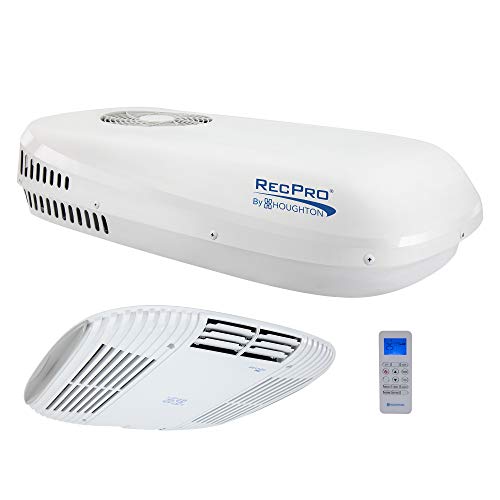
If you have a smaller RV, pop-up camper, or a specific zone that needs efficient, non-ducted cooling with the added benefit of heat, this 9.5K BTU RecPro unit is a solid contender. Its low-profile design is great for reducing rooftop bulk, and it delivers its power with a respectable 54.7 dB quiet operation. The built-in heat pump ensures you’re prepared for any season, making it a compact yet powerful climate control solution.
Key Features:
* Energy-Efficient Low Amp Draw
* Rugged, Durable, Low-Profile Design
* Ultra-Quiet Operation – Just 54.7 dB
* Multi-Function Remote + LED Touch Display
* Built-In Heat Pump for 4-Season Comfort
* Non-Ducted configuration
Pros:
* Ideal for smaller RVs, pop-ups, or single-zone cooling
* Low-profile design minimizes rooftop footprint
* Combines cooling and heating for versatile use
* Energy-efficient and relatively quiet for a non-ducted unit
Cons:
* 9.5K BTU is not suitable for larger RVs
* Only compatible with non-ducted systems, limiting flexibility
User Impressions: Owners of smaller RVs appreciate its compact size and effective cooling for their space. The heat pump is a bonus for extending their camping season.
6. Furrion Chill Cube 18k BTU Variable Speed RV Rooftop Air Conditioner

The Furrion Chill Cube is a powerhouse, boasting an impressive 18,000 BTU cooling capacity with a variable speed compressor, setting it apart from many standard RV ACs. This variable speed technology means it can adjust its output, leading to faster, more efficient cooling and quieter operation by eliminating abrupt starts and stops. It’s ideal for larger RVs or those who demand superior cooling performance and energy efficiency for off-grid adventures.
Key Features:
* EASY TO INSTALL (unit only, ADB sold separately)
* SUPERIOR PERFORMANCE with variable speed compressors
* HIGH CAPACITY (18K BTU) & Efficiency
* QUIET OPERATION due to constant variable speed running
* COMPACT DESIGN – 10% lighter with aerodynamic profile
Pros:
* Exceptional cooling power for larger RVs
* Variable speed compressor enhances energy efficiency and quietness
* Reduced weight and aerodynamic design improve RV performance
* Provides more battery runtime for boondocking
Cons:
* Air Distribution Box (ADB) sold separately, adding to the overall cost
* Higher initial investment compared to fixed-speed units
* May require specific electrical setup for variable speed technology
User Impressions: Users are incredibly impressed by its cooling speed and efficiency, especially in very hot climates. The quieter operation and lighter design are also frequently highlighted as major benefits.
7. TOSOT 16000 BTU GO Cool RV Air Conditioner, Non-Ducted

The TOSOT GoCool series offers robust, all-weather comfort with its 16,000 BTU cooling and 12,500 BTU heating capacity, making it perfect for larger RVs up to 600 sq ft. This non-ducted unit excels in versatility, built to handle a wide range of outdoor temperatures and offering smart WiFi control for ultimate convenience. Its straightforward non-ducted configuration also ensures an easy installation process for compatible RVs.
Key Features:
* All-Weather Comfort (16K BTU Cooling, 12.5K BTU Heating)
* Flexible Operation with Smart WiFi Control (Gree+ app)
* Versatile Performance in extreme outdoor temperatures (23°F to 115°F)
* Easy Installation for non-ducted systems (fits standard 14.25″ x 14.25″ opening)
* Accessory Kit included for quick setup
Pros:
* High cooling and heating capacity for year-round comfort
* Convenient smart control via smartphone app
* Wide operational temperature range
* Simple, hassle-free non-ducted installation
Cons:
* Not compatible with RVs that have ductwork
* Higher BTU might draw more power, though efficiency is good
User Impressions: RVers love the smart features and the powerful cooling and heating capabilities. The ease of installation for non-ducted setups is a big plus for DIY enthusiasts.
8. TURBRO RV Air Conditioner, 15,000 BTU Cooling with 1,500W Heat

The TURBRO RV Air Conditioner delivers year-round comfort with a strong 15,000 BTU cooling capacity and 1,500W electric heating, plus fan and dry modes. What makes this unit stand out is its quiet operation, as low as 52 dB, and enhanced user experience through remote or smart app control, along with a unique atmosphere lamp function in the ceiling assembly. Its “modular ducting” feature is intriguing, suggesting flexible installation to adapt to different needs, making it a strong contender in the ducted vs non ducted RV air conditioner discussion for those seeking versatility.
Key Features:
* Year-round Comfort (15K BTU Cooling, 1,500W Heating)
* Quiet Operation (as low as 52 dB) with Sleep Mode
* Enhanced User Experience (Remote, Smart App, Atmosphere Lamp)
* Universal Compatibility (14.25″ x 14.25″ opening, modular ducting)
* Lower operational costs with 9.6 EER rating
Pros:
* Comprehensive climate control for all seasons
* Very quiet, promoting restful sleep
* Modern controls and unique ambiance lighting
* Flexible modular ducting allows adaptation to various RV setups
Cons:
* Requires both AC 120V and DC 12V cables (not included) for installation
* Soft starter recommended for generator use (purchased separately)
* Installation might be more involved due to dual power requirements
User Impressions: Customers appreciate the unit’s quietness and the added heating function. The smart app control and ambient lighting receive positive feedback for convenience and aesthetic appeal.
9. weideer RV A/C Ducted Air Grille for Dometic, Duo-Therm

While not a full air conditioner unit itself, this weideer RV A/C Ducted Air Grille is an essential component for RVs equipped with Dometic or Duo-Therm ducted air conditioning systems. It’s designed as a direct replacement for existing grilles, ensuring your ducted system maintains optimal airflow and appearance. Its high-quality construction and included filter pad help protect your AC system and ensure clean, well-directed air distribution within your RV.
Key Features:
* Compatible with Dometic 3104928.019 (and other Duo-Therm)
* Made of high-quality ABS and PP plastic for durability
* Comes with a black filter pad to prevent dust and debris
* Washable and reusable
* Easy installation and removal
Pros:
* Perfect fit and direct replacement for compatible ducted systems
* Improves air quality and protects AC components with filter
* Durable materials for long-lasting use
* Simple to clean and maintain
Cons:
* This is an accessory, not a full AC unit, so it doesn’t cool on its own
* Only compatible with specific ducted AC brands/models
User Impressions: Users find this grille to be a perfect fit and a great quality replacement for their aging or damaged ducted AC grilles. The included filter is a bonus for maintaining air quality.
10. VEVOR RV Air Conditioner, 13500 BTU Non-Ducted Rooftop RV

The VEVOR RV Air Conditioner is a robust 13,500 BTU non-ducted unit designed for rapid and efficient cooling of RV spaces up to 107.6 sq ft. Its powerful compressor and R32 refrigerant ensure you get a refreshing breeze within minutes. This unit offers flexible cooling and ventilation options with Auto, Cooling, and 3-Speed Fan modes, all easily controlled via an intuitive panel. Its ductless design makes installation straightforward for RVs without existing ductwork.
Key Features:
* Efficient Cooling for Large Spaces (13,500 BTU, up to 107.6 sq ft)
* Cooling and Ventilation Options (Auto, Cooling, 3-Speed Fan, Timer)
* Easy Installation (ductless design, fits standard 14.25″ x 14.25″ opening)
* Quiet Operation (ultra-low noise levels of just 65dB)
* Heat-Resistant Exterior (EPP material for insulation and durability)
Pros:
* Fast and effective cooling performance
* User-friendly controls and multiple modes
* Simple, hassle-free non-ducted installation
* Durable, insulating exterior shell
* Relatively quiet for a non-ducted rooftop unit
Cons:
* Not compatible with ducted RV systems
* 65dB, while “ultra-low” by some standards, might still be noticeable for very noise-sensitive individuals compared to ducted systems.
User Impressions: Customers appreciate the VEVOR’s quick cooling ability and straightforward installation. The durable exterior and multiple fan modes are also popular features for reliable climate control.
FAQ: Ducted vs. Non-Ducted RV Air Conditioners
Let’s clear up some common questions to help you make the best decision for your RV comfort.
Q1: What is the main difference between ducted and non-ducted RV AC units?
A1: The primary difference lies in air distribution. A ducted system distributes cool air through a network of vents in the ceiling, offering more even cooling throughout the RV. A non-ducted system blows air directly down into the RV from a central unit, providing concentrated cooling in one area.
Q2: How do I know if my RV has a ducted or non-ducted system?
A2: Look up at your RV’s ceiling. If you see multiple small vents scattered across the ceiling, especially in different rooms, you likely have a ducted system. If you see one large grille directly under the main AC unit where all the air comes out, it’s a non-ducted system.
Q3: Can I convert a non-ducted RV AC to a ducted one (or vice versa)?
A3: Converting a non-ducted system to a ducted one is usually extremely difficult and expensive, as it requires installing extensive ductwork within your RV’s ceiling structure. Converting a ducted RV to a non-ducted system is theoretically possible by blocking off the ducts and installing a non-ducted air distribution box, but it’s generally not recommended as it can lead to inefficient cooling and may require electrical modifications. Many modern units, like some RecPro models, are designed to be compatible with both setups by changing the interior air distribution box, offering more flexibility for replacements.
Q4: How do I determine the right BTU for my RV?
A4: A general rule of thumb is 1,000 BTUs per 50 square feet of living space. However, factors like RV insulation, number of windows, climate, and desired temperature all play a role. For example, a 20-foot RV (around 160 sq ft) might need 13,500 BTU, while a 30-foot RV (around 240 sq ft) might be better off with 15,000 BTU or more. Always consider going slightly higher if you camp in very hot climates or have many slide-outs.
Q5: Are ducted RV ACs always quieter than non-ducted ones?
A5: Generally, yes. With ducted systems, the fan and compressor noise is mostly contained within the rooftop unit, and the sound reaching the living space is primarily the gentle whoosh of air through the vents. Non-ducted units have their noisy components directly exposed to the interior, making them inherently louder. However, modern non-ducted units have made significant strides in noise reduction.
Q6: What maintenance do RV air conditioners require?
A6: Regular maintenance includes cleaning or replacing air filters (usually every few weeks of heavy use), cleaning the condenser and evaporator coils, checking for debris on the rooftop unit, and ensuring condensate drains are clear. For ducted systems, periodically inspecting and cleaning the ducts can also be beneficial.
Q7: Do RV AC units come with heat pumps?
A7: Many modern RV AC units, especially higher-end models, do come with integrated heat pumps. A heat pump allows the unit to provide supplemental heating in cooler weather, making it a versatile 4-season climate control solution. Always check the product specifications if a heat pump is a feature you desire.
Q8: Can I run my RV AC on a generator?
A8: Yes, most RV air conditioners can run on a generator, but you need to ensure your generator has sufficient wattage. A 13,500 BTU AC typically requires at least 2,500-3,000 running watts, and a 15,000 BTU AC needs 3,000-3,500 running watts. Many RVers also use a soft starter (like the Micro-Air EasyStart) to reduce the initial surge of power needed when the AC compressor kicks on, allowing smaller generators to power the unit.
Conclusion
Navigating the choices between a ducted vs non ducted RV air conditioner doesn’t have to be a headache. It really boils down to your RV’s existing setup, its size, your personal preferences for noise, and your budget. Ducted systems offer quiet, even cooling, ideal for larger RVs with existing infrastructure. Non-ducted units provide powerful, direct cooling with simpler installation, perfect for smaller rigs or as a straightforward replacement.
No matter which path you take, investing in a good quality RV air conditioner will drastically improve your comfort on the road, allowing you to enjoy every adventure, come heat or shine. We hope these reviews and insights help you confidently choose the perfect unit to keep your rolling home cool and comfortable!

