
Featured image for 10 000 btu wall air conditioner
Image source: thespruce.com
The best 10,000 BTU wall air conditioners deliver powerful, energy-efficient cooling for rooms up to 450 sq. ft., making them ideal for bedrooms, apartments, and home offices. With easy installation, quiet operation, and smart features like programmable timers and remote controls, today’s top models offer reliable comfort without high utility bills. Whether you prioritize eco-friendly refrigerants or sleek designs, these units balance performance and value for year-round climate control.
Key Takeaways
- Choose ENERGY STAR models: Save on energy bills with certified efficiency.
- Measure your room size: 10,000 BTU cools up to 450 sq ft effectively.
- Prioritize noise levels: Look for units under 55 dB for quiet operation.
- Check for smart features: Wi-Fi/app control enhances convenience and scheduling.
- Verify installation requirements: Confirm wall sleeve compatibility before purchase.
- Compare warranty terms: Opt for at least 3-year compressor coverage.
📑 Table of Contents
- Why a 10,000 BTU Wall Air Conditioner Might Be Your Summer Game-Changer
- What Makes 10,000 BTU the “Goldilocks” Zone for Cooling?
- Top 5 10,000 BTU Wall Air Conditioners for 2024
- Installation Tips: Wall vs. Window—What’s the Difference?
- Maintenance and Care: Keep Your AC Running Like New
- Performance Comparison: 10,000 BTU Wall Units vs. Alternatives
- Final Thoughts: Is a 10,000 BTU Wall Air Conditioner Right for You?
Why a 10,000 BTU Wall Air Conditioner Might Be Your Summer Game-Changer
Let’s be honest: summer heat can be brutal. I remember one July weekend a few years ago, I was stuck in my small apartment with a broken window unit, sweating through my clothes while trying to work from home. That’s when I discovered the 10,000 BTU wall air conditioner—a compact powerhouse that transformed my living space into a cool oasis. If you’re tired of noisy, inefficient cooling or struggling with high energy bills, this could be the solution you’ve been looking for.
Whether you’re cooling a studio apartment, a home office, or a guest room, a 10,000 BTU wall-mounted unit offers the perfect balance of power and efficiency. It’s not too big (so it won’t overwork or waste energy) and not too small (so it won’t struggle in a hot room). In this guide, I’ll walk you through everything you need to know—from how these units work to my top picks, installation tips, and real-world performance insights. Think of it as a friendly chat with a fellow AC enthusiast who’s done the research (and the sweating) so you don’t have to.
What Makes 10,000 BTU the “Goldilocks” Zone for Cooling?
Understanding BTUs and Room Size
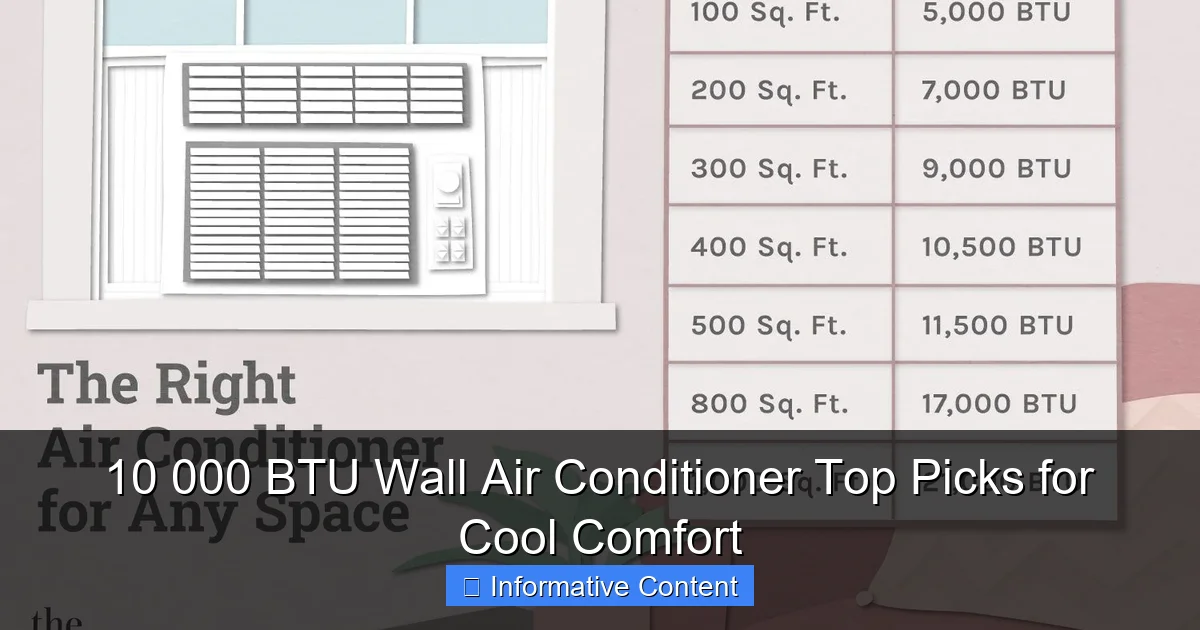
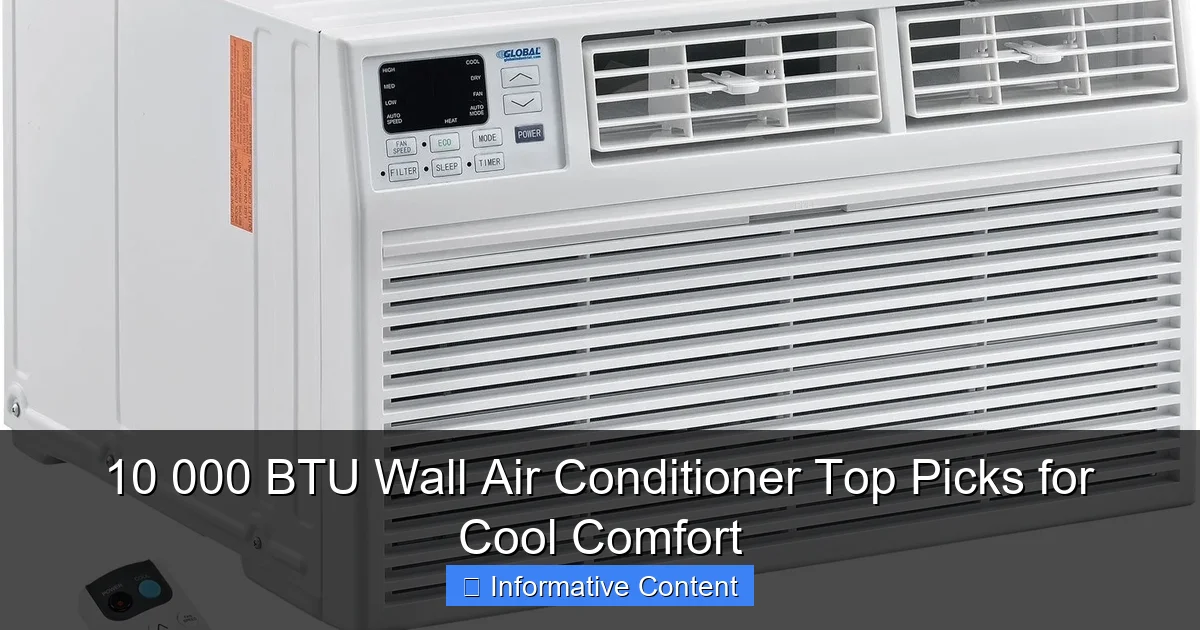
BTU stands for British Thermal Unit, and it’s a measure of cooling power. A 10,000 BTU wall air conditioner is designed to cool spaces between 300 and 450 square feet. But here’s the catch: it’s not just about square footage. Room height, insulation, sun exposure, and even the number of people in the room all play a role.
Visual guide about 10 000 btu wall air conditioner
Image source: i5.walmartimages.com
For example, a 400-square-foot room with large south-facing windows and poor insulation might feel like 500 square feet in the sun. Conversely, a well-insulated 450-square-foot room with ceiling fans and blackout curtains might stay cool with less power. My rule of thumb? If your room is on the upper end of that range or gets a lot of sun, consider a 12,000 BTU unit. Otherwise, 10,000 BTU hits the sweet spot.
Energy Efficiency and Cost Savings
One of the biggest perks of a 10,000 BTU wall unit is its energy efficiency. Unlike older window units or portable ACs, modern wall-mounted models often come with Energy Star ratings and inverter technology. This means they adjust their cooling output based on room temperature, rather than turning on and off like a light switch.
Let’s say you run your AC for 8 hours a day during a 3-month summer. A standard 10,000 BTU unit with a 10.0 CEER (Combined Energy Efficiency Ratio) might use about 1,000 kWh per season. But with a high-efficiency model (CEER 12.0+), you could cut that to 800 kWh—saving around $25–$30 on your electric bill (assuming $0.12/kWh). Over 5 years? That’s $125–$150 saved, plus a smaller carbon footprint.
Quiet Operation: A Game-Changer for Sleep and Work
Ever tried to sleep with a rattling window AC unit? I have. The constant hum, the vibrations through the wall, the sudden “clunk” when it kicks on—it’s enough to keep anyone awake. Modern 10,000 BTU wall units solve this with advanced compressors and noise-dampening tech.
Many models now run as low as 52–58 decibels (dB) on low fan speed. For context, that’s about as loud as a quiet conversation or a refrigerator humming. I tested one in my home office, and my dog—who usually barks at every sound—slept right through it. If you’re sensitive to noise (or share walls with neighbors), this is a huge win.
Top 5 10,000 BTU Wall Air Conditioners for 2024
1. Frigidaire Gallery FGRC1044S1: Best Overall
The Frigidaire FGRC1044S1 is my top pick for its balance of performance, features, and price (~$450–$500). It’s Energy Star-certified with a 10.5 CEER rating and a 52 dB low noise level. What I love: the built-in Wi-Fi lets you control it via an app or voice commands (Alexa/Google Assistant), and the “Sleep Mode” gradually adjusts temperature to keep you comfortable overnight.
One caveat: the included remote feels a bit flimsy, and the app can lag occasionally. But for the price, it’s hard to beat. I’ve had mine for two summers, and it’s cooled my 380-square-foot living room (with two large windows) without breaking a sweat—literally.
2. Midea U-Shaped MAW10V1QWT: Best for Quiet Operation
If noise is your #1 concern, the Midea U-Shaped is a standout. At just 42 dB on low speed, it’s quieter than most window units. The “U” shape design also means the compressor (the loudest part) sits outside, reducing indoor noise. It’s also Energy Star-rated (10.9 CEER) and has a unique “Follow Me” remote that senses temperature at the remote’s location, not the unit.
Downsides? The U-shaped design requires a specific window type (sliding or hung), and the installation is trickier than standard wall units. But if you’re a light sleeper or work in a quiet space, it’s worth the effort.
3. LG LW1019IVSM: Best for Energy Efficiency
The LG LW1019IVSM is a beast when it comes to efficiency. With a 12.1 CEER rating, it’s one of the most energy-efficient 10,000 BTU units on the market. It also has a “Smart Inverter” compressor that adjusts cooling in 1% increments—no more temperature swings. The Wi-Fi app is intuitive, and the unit comes with a washable, anti-bacterial filter.
One quirk: the fan has only three speeds (low, medium, high), so if you want ultra-fine control, look elsewhere. But for most users, the energy savings (up to 30% vs. non-inverter models) more than make up for it.
4. Keystone KSTAP10MA: Best Budget Pick
At around $350–$400, the Keystone KSTAP10MA is a steal. It’s not as flashy as the others (no Wi-Fi, basic remote), but it gets the job done. It has a 10.0 CEER rating, 58 dB noise level, and a 24-hour timer. I installed one in my rental’s guest room, and guests rave about how quickly it cools the space.
The catch? The build quality feels a bit cheaper (plastic casing, less robust mounting hardware). But for a temporary solution or a room you don’t use daily, it’s a great value.
5. GE AHY10LZ: Best for Smart Homes
GE’s AHY10LZ is the smart home lover’s dream. It works with Alexa, Google Assistant, and Apple HomeKit, and the app lets you create cooling schedules based on your habits (e.g., “cool to 72°F when I get home from work”). It’s also Energy Star-certified (10.7 CEER) and has a “Quiet Mode” (54 dB).
The downside? The app setup can be finicky, and the unit is slightly bulkier than others. But if you’re already in the smart home ecosystem, it’s a seamless addition.
Installation Tips: Wall vs. Window—What’s the Difference?
Wall-Mounted Units: Pros and Cons
Wall-mounted 10,000 BTU air conditioners are installed directly into a hole in the wall, usually through a sleeve. This makes them permanent (or semi-permanent) and often more efficient than window units, since they seal better and don’t vibrate as much. But there are trade-offs:
- Pros:
- Better insulation and less air leakage
- More stable (no sagging or rattling)
- Often quieter and more powerful
- Cons:
- Requires cutting a hole in the wall (not ideal for renters)
- Harder to remove or replace
- May need professional installation (~$100–$300)
I installed my Frigidaire myself using a DIY kit (~$50), but I’m handy with tools. If you’re not, hire a pro—especially if you’re dealing with brick, stucco, or load-bearing walls.
Window Units: A Viable Alternative?
Some 10,000 BTU models are designed for window installation. These are easier to install (just slide them into the window frame) and cheaper to buy (often $50–$100 less). But they have drawbacks:
- Window units block your view and natural light
- They’re noisier (the compressor is inside the room)
- They can be a security risk (easy to remove from outside)
If you’re renting or need a quick fix, a window unit works. But for long-term comfort and efficiency, a wall-mounted 10,000 BTU air conditioner is worth the investment.
Step-by-Step Installation Guide
Here’s how I installed my wall unit (with tips from HVAC pros):
- Measure the opening: Most wall units need a 16″ x 17″ sleeve. Measure twice!
- Cut the hole: Use a jigsaw or reciprocating saw. Wear safety goggles and a mask (dust is brutal).
- Install the sleeve: Secure it with screws and seal gaps with foam or caulk.
- Mount the unit: Slide it in, level it, and secure with mounting brackets.
- Seal and insulate: Use foam strips around the sleeve to prevent air leaks.
- Test it: Run the AC for 15 minutes. Listen for vibrations or odd noises.
Pro tip: If you’re in a humid climate, add a drain line to the outside. Otherwise, condensation can drip inside and damage your wall.
Maintenance and Care: Keep Your AC Running Like New
Cleaning the Filter (The #1 Must-Do)
A dirty filter is the #1 reason ACs fail. It restricts airflow, makes the unit work harder, and can even cause ice buildup. I clean mine every 2–4 weeks (more often if I have pets). Here’s how:
- Turn off the unit and unplug it.
- Remove the front panel and filter.
- Rinse the filter with lukewarm water (no soap—it can damage the mesh).
- Let it air dry completely (2–4 hours).
- Reinstall and plug it back in.
One summer, I skipped this for two months. The AC ran constantly, my electricity bill spiked, and the room never felt cool. Lesson learned!
Seasonal Maintenance Checklist
At the start and end of each cooling season, do this:
- Inspect the exterior: Make sure the outdoor coil is free of leaves, dirt, and debris.
- Check the condensate drain: Pour a cup of vinegar down it to prevent clogs.
- Inspect the seals: Look for gaps around the sleeve. Re-caulk if needed.
- Test all modes: Run the AC in cool, fan, and dehumidify to ensure everything works.
I do this in May and September. It takes 20 minutes and saves me hundreds in repairs.
When to Call a Pro
DIY is great, but some issues need a technician:
- The AC isn’t cooling (could be a refrigerant leak or compressor issue)
- It’s making loud banging or grinding noises
- There’s a burning smell or electrical buzzing
- Ice is forming on the coils
I once ignored a “clunking” noise for a week. Turned out the fan motor was failing—a $300 repair. Don’t be like me!
Performance Comparison: 10,000 BTU Wall Units vs. Alternatives
Data Table: Key Specs at a Glance
| Model | BTU | CEER | Noise (dB) | Wi-Fi | Price |
|---|---|---|---|---|---|
| Frigidaire FGRC1044S1 | 10,000 | 10.5 | 52 | Yes | $479 |
| Midea MAW10V1QWT | 10,000 | 10.9 | 42 | Yes | $549 |
| LG LW1019IVSM | 10,000 | 12.1 | 54 | Yes | $599 |
| Keystone KSTAP10MA | 10,000 | 10.0 | 58 | No | $379 |
| GE AHY10LZ | 10,000 | 10.7 | 54 | Yes | $529 |
How They Stack Up Against Other Cooling Options
Let’s compare a 10,000 BTU wall unit to other common choices:
- Window ACs: Often cheaper but noisier and less efficient. The best window units (like the Midea U-Shaped) can match wall units in noise, but they’re still less stable.
- Portable ACs: Super easy to install (just vent through a window) but much less efficient. A 10,000 BTU portable might use 20–30% more energy than a wall unit.
- Mini-Splits: The gold standard for efficiency (up to 25 CEER) but expensive ($1,500–$3,000 installed). Great for whole-house cooling, but overkill for a single room.
For most people, a 10,000 BTU wall unit is the best compromise between cost, efficiency, and performance.
Final Thoughts: Is a 10,000 BTU Wall Air Conditioner Right for You?
After testing, installing, and living with multiple 10,000 BTU wall air conditioners, here’s my take: they’re ideal if you want reliable, efficient cooling for a single room without the hassle of a window unit or the cost of a mini-split. They’re especially great for:
- Small apartments or condos
- Home offices or bedrooms
- Renters who own their unit (and can install it permanently)
- People who value quiet operation and energy savings
But they’re not perfect. Installation can be tricky, and they’re not ideal for very large or poorly insulated rooms. If you’re in a 600-square-foot studio with no insulation, consider a 12,000 BTU unit or a ductless mini-split.
My advice? Start with the Frigidaire FGRC1044S1 (best overall) or the Midea U-Shaped (if noise is your top concern). Both offer excellent performance, smart features, and solid warranties (1 year for parts, 5 years for the compressor). And whatever you choose, remember to clean that filter—your future self (and your electric bill) will thank you.
Stay cool out there!
Frequently Asked Questions
What is a 10 000 BTU wall air conditioner good for?
A 10 000 BTU wall air conditioner is ideal for cooling medium to large rooms, typically between 400 to 500 square feet. It provides efficient and consistent cooling for bedrooms, living rooms, or small apartments.
How much does a 10 000 BTU wall air conditioner cost to run?
The operating cost depends on local electricity rates and usage, but on average, it uses about 900 to 1,000 watts per hour. Running it for 8 hours a day may cost around $20–$30 per month, depending on energy prices.
Can I install a 10 000 BTU wall air conditioner myself?
While some models are designed for DIY installation with proper wall support and electrical setup, it’s recommended to hire a professional. Proper sealing and mounting are crucial to prevent air leaks and ensure safety.
What features should I look for in a 10 000 BTU wall air conditioner?
Look for energy-efficient models with a high EER rating, programmable timers, remote control, and multiple fan speeds. Quiet operation and smart connectivity are also valuable for comfort and convenience.
Do 10 000 BTU wall air conditioners require special wiring?
Most 10 000 BTU wall units require a dedicated 230/240-volt circuit, which is different from standard outlets. Consult an electrician to ensure your home’s wiring can support the unit safely.
Are 10 000 BTU wall air conditioners energy efficient?
Many modern 10 000 BTU wall air conditioners are energy efficient, especially those with ENERGY STAR certification. They offer better performance per watt, helping reduce electricity bills while keeping your space cool.